100 Years Ago: Condition of Arthur McGlashon Still Serious, Ad for Kellogg’s Corn Flakes

The Intelligencer December 29, 1917 (page 2)

“Condition Still Serious. Sergt. McGlashon, caretaker of the Belleville Armouries, was this morning in receipt of the following telegram: Ottawa, Dec. 28, 1917. Mr. James McGlashon, Armouries, Belleville. 55406 cable received today states 412076 Sergt. Arthur Edward McGlashon, infantry, officially reported still seriously ill, 1st General Hospital, Etaples, Dec. 16, 1917. Director of Records.

On the 22nd of August last Sergt. McGlashon was severely wounded, and it is apparent from the above message that his condition is serious. His injuries were such that he has been unable to write since that date.”

The Intelligencer December 29, 1917 (page 3)

“The Food Controller Has Licensed the Makers of Kellogg’s Toasted Corn Flakes to continue to put up and sell—in the original Red, White and Green package—the delicious Toasted Corn Flakes you have always used.

Save Wheat! And Use the Ideal Food—Kellogg’s Toasted Corn Flakes.

The Battle Creek Toasted Corn Flake Co. Limited. Head Office and Factory: London, Ont.”

100 Years Ago: Quiet Christmas on Battlefront

The Intelligencer December 28, 1917 (page 4)

“Canadian Headquarters in France, via London. Christmas has come and gone. The front line was quiet Christmas Day, which was wet and stormy. …  Behind the firing line the officers and men celebrated the day in wooden Armstrong huts or iron Nissen dwellings, or in the basements of shattered French houses or deep dugouts won back from the enemy.

They paused in the midst of action to drink old toasts, to celebrate old customs, and remember old associations. …

Stricken fighting men at the rest station in the green hills amidst the quiet surroundings of a quiet old chateau, celebrated the season at a happy banquet in a great hut which was cool with evergreen, brightened with innumerable red, white and blue and green streamers, lightened by many Red Cross lamps and Chinese lanterns and warmed by two big stoves. …  There were maple leaves to decorate the walls and many flags to add to the cheeriness of the room, and a real Christmas tree, groaning under a load of presents from home.”

100 Years Ago: Christmas Message from Canadian Corps to Dominion, Prime Minister Sends Greetings to Soldiers

The Intelligencer December 27, 1917 (page 1)

“Men Fighting in France Send Christmas Message to Dominion. Canadian Army Headquarters. ‘To comrades and friends in support in Canada, this Christmas message is from the Canadian corps from every division, brigade, battalion and man. It is our deeply sincere wish for a year of future happiness and for our early reunion. We feel today that the race behind us is of such strength and magnitude that it will inspire each of us to greater deeds and will surely lead us to the goal of victory, peace and home.’

Such is the message to the Dominion from its fighting men in France, while to the fighting men themselves, the corps commander has sent the following message:

‘The corps commander has taken this opportunity of sending every officer, non-commissioned officer and man in the Canadian corps all good wishes for Christmas. He trusts that the coming year may bring with it the attainment of our great objective—victorious peace and a happy return to our near and dear ones in Canada. This is not a mere stereotyped wish. …  Your actions have made the name of our homeland one to be revered, respected and honored now and throughout the years to come.’ ”

The Intelligencer December 27, 1917 (page 2)

“Greetings to the Soldiers Overseas. The Prime Minister has sent to General Turner the following Christmas message for the Canadian troops overseas:

‘It is again my great privilege to convey to you from the government and people of Canada the greetings and gratitude which during this season are deep in the heart of every Canadian. This Christmas we recall in loving and solemn memory the many thousands of your gallant comrades who have passed into their perfect peace. They died that Canada might live. They gave up their lives that we might have peace on Earth. But their spirit lives to inspire the nation, which can never forget. …  In the new year now approaching we shall resolve anew that as the army struggles and suffers for the nation, so the nation will strive and endure for the army, and do both for the great common cause of liberty and civilization to which we have consecrated our efforts. …  R. L. Borden.’ “

100 Years Ago: Christmas in the City

The Intelligencer December 26, 1917 (page 5)

“The Merry Makers. The Arena Rink was a favored spot for holiday merry-makers yesterday afternoon and evening and large crowds enjoyed excellent skating. The musical programmes rendered by the band were very much appreciated by the skaters and spectators.

“Christmas Dance. The Kiora Circle were at home to their many friends in Johnstone’s academy last evening. The academy was beautifully decorated with many Xmas emblems. Lunch was served and a Serpentine dance took place. A Belleville orchestra furnished the music and a most enjoyable time was spent by all until the wee small hours.

“Christmas at the Theatres. A little bit of war, a considerable bit of love interest and some genuine thrills favored the holiday crowds at Griffin’s theatre yesterday matinee and evening. Jolly Billie Burke in ‘Arms and the Man’ was the feature, and a very satisfying feature it was, the story affording this dainty and clever little actress abundant opportunity for the display of her exceptional talent. The Palace also had a good program and was largely patronized.

“Santa Claus Made Many Calls. Christmas was appropriately observed at local institutions yesterday. Santa Claus came to the Children’s Shelter and delighted the lads and lassies there with beautiful and satisfying gifts. At the Ontario School for the Deaf the pupils enjoyed an excellent Christmas celebration prepared by the staff. Santa Claus also proved that he was a friend of those domiciled at the Home for the Friendless and their hearts were cheered with many evidences of the Christmas spirit. …

“Christmas in the County Jail. At Belleville jail 12 inmates, all men, partook of a Christmas dinner which had been especially provided by Governor Ketcheson and Mrs. Ketcheson. It was an extra meal, and was well served. Fruit and sweetmeats were also provided, and at the conclusion cigars were given the compulsory guests at the County Bastile, a treat which was much enjoyed. Governor and Mrs. Ketcheson were thanked for the manner in which they had looked after the welfare of the unfortunates.

“Kiddies Christmas at the Shelter. Through the generosity of many citizens of Belleville the children who are domiciled at the children’s Shelter in this city, were on Christmas Day made exceedingly happy by gifts and sweetmeats provided. After a most tempting dinner had been served the staff and children welcomed visitors, who from 3 to 6 made their appearance. The hour of 3.30 was delightful to the little ones, for at that hour Santa Claus made his appearance and he was well laden with gifts and good things which were distributed to the children, who were more than delighted. Had the donors been present they would have been more than repaid for any gift they made when they beheld the joy it gave the tots to receive the gifts.

“Christmas Dinner at the Quinte. One of the traditional features of Christmas observance is the Christmas dinner with its roast turkey, cranberry sauce and delicious dressing, supplemented with good old English plum pudding. Turkeys roosted as high as twelve dollars each on the city market this year and consequently the royal bird was absent from many boards. A number of Belleville folks yesterday very wisely saved themselves the trouble of getting up a Christmas dinner and dined at the Hotel Quinte where another of the Christmas dinners for which that famous hostelry is noted was served. The large dining-room was filled with a merry gathering and the Christmas spirit was very much in evidence in the atmosphere of good fellowship which graced the occasion. The menu was eminently satisfactory from soup to nuts and the booking and service was excellent. Christmas dinner at the Quinte was indeed a pleasant feature of a perfect Christmas day.”


100 Years Ago: Santa Claus Fund for Children’s Shelter, Sergeant Harris Returns Home, Thomas Yateman Buried in Belleville, A Happy Christmas to Readers

The Intelligencer December 24, 1917 (page 1)

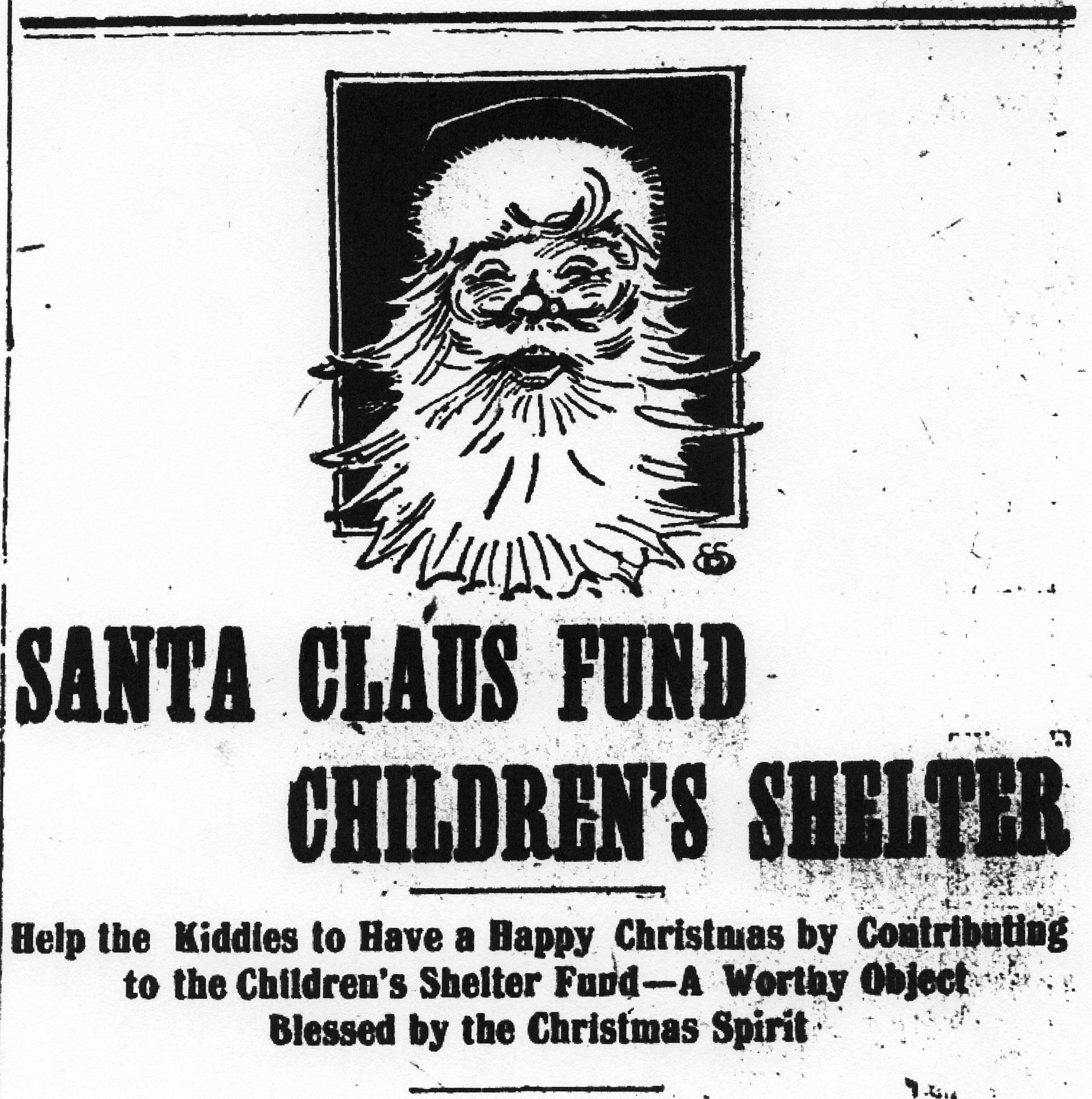
“Santa Claus Fund Children’s Shelter. Help the Kiddies to Have a Happy Christmas by Contributing to the Children’s Shelter Fund—A Worthy Object Blessed by the Christmas Spirit.

Dear Reader,—The children and staff will be delighted to welcome you tomorrow (Christmas Day) from 3 to 6 p.m. Father Christmas will visit the Shelter at 3.30 by special arrangement. Come and see old Santa distribute the good things to the children. The children and staff join in wishing you all a very happy Christmas and a prosperous new year. May the King of Peace reign in all your hearts. Yours sincerely, Thos. D. Ruston.”

The Intelligencer December 24, 1917 (page 2)

“Sergeant Harris Returned Home. There was great joy at an early hour on Sunday morning at the residence of Mr. and Mrs. Jesse Harris, 152 James street, when their only son, Sergeant Albert E. Harris, walked in, having just arrived home from England. When the war broke out the young man enlisted and went overseas with the 34th Battery, being a bombardier.

He was instructor for some time at Shorncliffe, but he spent 26 months in France and on the 10th of May last was severely wounded in the right knee. Since that time he has been in a hospital. Sergt. Harris merited promotion but his modesty thus far has prevented public recognition of his gallant deeds.

Albert even today bears upon his face evidences of the injuries he received from a bursting shell—upon his forehead, nose, lip and eyelids are embedded pieces of shrapnel. After remaining home for a few days he will report at the convalescent hospital at Kingston. His many friends in Belleville will extend him a hearty welcome home.”

The Intelligencer December 24, 1917 (page 2)

“Died from Wounds. Buried in Belleville. That the late Private Thomas Yateman, of this city, had many friends here was evidenced on Saturday afternoon when his remains were laid at rest in Belleville cemetery. A large concourse of citizens followed the remains to their last resting place and members of the War Veterans in uniform and civilian clothes were present in large numbers.

From the family residence, Mill street, the cortege proceeded to Christ Church, where the impressive burial service of the Anglican Church was conducted by the Rector, Rev. Dr. Blagrave, who also officiated at the interment. The ‘Last Post’ was sounded at the grave. The floral tributes were many and beautiful in design. The bearers were returned soldier heroes, namely, Sergt. Reynard, Sergt. Tett, Sergt.-Major Spafford, Corp. Stiles, Bomb. Blaylock, Driver Saunders and Gunner Newton.”

The Intelligencer December 24, 1917 (page 4)

“A Happy Christmas to Our Readers. The Intelligencer wishes every one of its many readers a very happy Christmas, and may the homes where the blighting hand of war has left its mark in empty chairs and sorrowful memories of cross-marked mounds in distant lands be blessed with the consolation of the Man of Sorrows who was also acquainted with grief, but Whose touch always brings healing to the world’s sorrows. May the dawn of peace bless the world before another Christmas season comes around. …  Let us all seek that true happiness in the Christ spirit of making others happy, and may the Christmas spirit warm every home with the blessings of unselfishness and service.”

100 Years Ago: Funeral Notice by Great War Veterans’ Association, Letter of Thanks for Christmas Box, Exhibition of Sports by Men from Convalescent Homes

The Intelligencer December 21, 1917 (page 2)

“Funeral Notice. Great War Veterans’ Association are requested to meet at their Club rooms 157 Front Street at 3 o’clock on Saturday afternoon to attend funeral of our late comrade Thomas Yateman. All men requested to attend in uniform.”

The Intelligencer December 21, 1917 (page 7)

“Soldiers Appreciate Christmas Boxes. The following letter from one of the boys at the front is an evidence of how parcels are appreciated. France, Nov. 21, 1917. Mrs. K. M. Leach, Belleville.

Dear Madam and Friend:—I am greatly pleased to acknowledge receipt of the most excellent ‘Xmas box, arrived to-day (my birthday), and I wish, through you, to thank very heartily the women of the Red Cross & Patriotic Association for the dandy parcel, and also the excellent work they are doing for the comfort and general benefit of ‘Boys in France.’

Your parcel is in the very best condition and came at a most opportune time, as we have just returned from a very rough trip in Belgium, and the luxuries contained in your box were just the proper thing to cheer a fellow up and make the old world look brighter.

Again thanking the W. R. C. & P. Association for their kindness on my behalf, and wishing them a very Merry Xmas and every success in the New Year, I am

Very gratefully yours, Homer E. Leavitt.”

The Intelligencer December 21, 1917 (page 9)

“Wonderful Results of Treatment at Hart House Shown at Sports. Toronto. The necessity of the gymnasium in the rehabilitation of the men who, through their services overseas, have been crippled or paralyzed was plainly evidenced at an exhibition of sports in the Hart House at the University yesterday afternoon.

Men from all the different convalescent homes throughout the city took part, and keen enjoyment was evinced in the different exercises. The program lasted from two o’clock until four o’clock, and included in it were walking races, indoor baseball, volley ball, tug-of-war, badminton match and various other exercises.

There were also tests showing how the various exercises the men were put through in the gymnasiums tended to make the diseased or artificial parts once more useful. …  The desire is to have a gymnasium at all of the convalescent hospitals.”

100 Years Ago: Wounded Canadians Dock at New York, Dancing with Aviators

The Intelligencer December 20, 1917 (page 1)

“Wounded Canadians Arrive at New York. The first ship to put in at an American port, carrying as its cargo human war wreckage—the wounded and maimed from the battlefields in France—arrived here today. It was a British liner with more than 2,000 Canadians aboard.

Under normal conditions the ship would have gone direct to Halifax. Owing to the explosion which partially wrecked that city the convalescent wounded were taken off here, and will be sent to Canada as rapidly as possible.

Canadian officers and their staffs are here to care for the wounded. Arrangements have been made for special docking privileges for the men, which will bring the wounded men as close to transportation centres as possible so that they can readily be moved in ambulances to Dominion-bound trains.

Scenes new to America, despite the fact that she has been in the war since April, were presented as the British ship moved slowly up the bay today. Men with heads bandaged and swathed in yards of gauze, men with their arms strapped tightly to their bodies, or hobbling on crutches, were to be seen lining the rails. These were the most lightly wounded soldiers. More serious cases were below decks. It was to care for them that ambulances were summoned from hospitals, and automobiles were sent hurrying toward the waterfront. …

The British Red Cross flag flew from the mast of the liner, as she brought her touch of war closer to America. In her war paint, a dizzy mixture of lines and colors, the liner made her way through warships now in the harbor and proceeded toward her pier, after being quickly passed by officials of the port.”

The Intelligencer December 20, 1917 (page 2)

“Dancing with the Aviators. Flight Cadets of Mohawk Camp Gave Most Enjoyable Assembly, Last Evening.

And the night shall be full of music, / And the cares which infest the day / Shall fold their tents like the Arab / And as silently steal away.

The above lines are but faintly typical of the glorious evening of unalloyed pleasure enjoyed by many of the fairest daughters of Belleville and other nearby places at Mohawk Camp last evening, where they were the guests of the young aviators in training at an assembly which will long be remembered as the brightest and most successful social event which ever took place in this vicinity.

Upon arrival at the camp the guests were escorted to an assembly hall decorated with flags and many Christmas emblems. Here a concert was given showing the ability and talent that can be produced and so successfully carried out among such a happy group of young manhood, khaki clad. Many encores were generously responded to and while the programme was not of a lengthy nature, it was most gratefully appreciated.

Dancing then took place in the lounging and study quarters of the cadets. …  The quarters were turned into a perfect ball room most elaborately decorated with evergreens and flags, giving it the spirit of Christmas cheer.

Moshers Orchestra, of Toronto, in an alcove banked by evergreens, furnished the music, and were most liberal with encores. At intermission luncheon was served on the buffet plan most generously to all by Morrisons, caterers, of Toronto, and excellent is not the appropriate word for the ‘eats.’

The programme was then fulfilled and finished with God Save the King, and the Merry Happy Weary crowd tripped to the Mohawk Camp Depot to catch their trains both East and West homeward bound.”

100 Years Ago: Thomas Yateman Dies at Belleville Hospital, Belleville Thanked for $10,000 to British Red Cross, Presentation at Knitting Circle

The Intelligencer December 19, 1917 (page 2)

“Answered the Last Call. Private Thomas Yateman, of this city, who for months has been a cripple, owing to wounds received on the battle field at Ypres, this morning passed away at the Belleville hospital. Deceased who was a son of Mr. Thomas Yateman enlisted and went overseas with the first Canadian contingent. At the battle of Ypres he was terribly wounded, in the side and back, and his spine was injured to such an extent that he was paralyzed from the shoulders to his feet.

After remaining some time in a hospital in England he was brought home and has since been an inmate of the Belleville hospital. Since his arrival home an operation was performed and by the removal of some pieces of shrapnel he was able to use his arms, but he was never able to use the lower portion of his body.

He bore his suffering without a murmur like the brave soldier he was. His father is at present overseas with the Forestry Battalion, also another brother. Another brother was recently discharged. The family have certainly done their duty for King and country, and at the present time the heartfelt sympathy of all citizens will be extended to them in their hour of affliction.”

[Note: Gunner Thomas Andrew Yatman died on December 19, 1917. He is commemorated on Page 354 of the First World War Book of Remembrance.]

The Intelligencer December 19, 1917 (page 3)

“Belleville’s contribution of $10,000 to the British Red Cross Fund has been acknowledged as follows: Parliament Buildings, Toronto, December 13, 1917. David Price Esq., Treasurer, Belleville, Ont. Dear Sir,—We are in receipt of your favor of the 15th instant with the enclosed contribution of $10,000.00 for the British Red Cross, which has already been acknowledged by the Provincial Treasurer.

I would ask you to kindly convey to the members of the City Council, the teachers and pupils of the schools, the members of the Women’s Organizations and to all those who so generously contributed to this amount, the thanks of His Honour, the Lieutenant-Governor, the Organization of Resources Committee, which is in charge of this campaign for Ontario, and the British Red Cross, for the response which has been made to this appeal.

You have helped to make Ontario’s contribution this year more splendid than ever before, and you may have the consciousness that the gratitude of our brave men overseas is going out continually to all those who are helping to make the work of the British Red Cross possible. Yours faithfully, Albert H. Abbott, Secretary.”

The Intelligencer December 19, 1917 (page 7)

“The Nile Green Knitting Circle held their regular weekly meeting at the home of Mrs. Barlow, Forin Street, about seventeen members being present. At the close of the usual routine business Mrs. Joly called the members to order and the secretary read a short address to the convenor, Mrs. J. Waddell, South Ann Street, and Mrs. Joly handed her a dainty server. Mrs. Barlow, secretary, was also presented with a beautiful basket of flowers. Both ladies were almost speechless with surprise, but managed to say a few words of thanks.

Following is the address to Mrs. J. Waddell: As the season of peace and good-will draws near we feel that we would like to let you know how much we appreciate your kind and willing service as convenor of our Circle. We feel sure, with you, as with us, it has indeed been a labor of love to work for our dear boys who are overseas fighting for home and freedom.

We ask you to accept this little gift, and when peace has been proclaimed and we are done knitting socks for the soldiers now so far from home, we hope it will remind you of the very pleasant Tuesday afternoons which we have enjoyed in the various homes of the members of the Nile Green Knitting Circle.”

100 Years Ago: Vote Passes for Union Government and E. Guss Porter, Christmas Cheer for Poor Children, Soldiers Voting in Trench and Hospital

The Intelligencer December 18, 1917 (page 1)

“Union Government and E. Guss Porter. There was great rejoicing in Belleville last night over the triumph of Union Government and the election of E. Guss Porter, K.C., and up until midnight there were many sounds of celebration and cheers of the victors. …

The City Hall was the mecca of Mr. Porter’s supporters and here a telegraph instrument had been installed and the returns national and local received and announced, interspersed with speeches from well-known citizens. …

A feature of the City Hall gathering was the presence of many returned soldiers in uniform, several of them making snappy speeches. The soldiers had a grievance and were highly indignant at the treatment they received in various polling booths in the city. The charge was made from the platform, that agents for Mr. Graham in the polling booths, acting under written instructions from Graham head quarters, challenged every returned soldier and required him to take an oath that he was entitled to vote. This of course resulted in such ballots not being counted, but placed in a separate envelope for judicial action later if necessary. The story occasioned general indignation as it was felt that to challenge the vote of a returned soldier was going entirely too far.

The soldiers were so enthusiastic for Union Government and Mr. Porter that they insisted upon drawing the victorious candidate about the city in a large sleigh. Mr. Porter can boast of a ride behind a splendid brigade of the heroes of Vimy Ridge, Ypres, Courcelette and other fields of carnage and honor where the name of Canada was written in undying letters of blood upon the history of the world.”

The Intelligencer December 18, 1917 (page 3)

“Christmas Cheer For Poor Little Kiddies. The following letter from the Superintendent of the Children’s Aid Society needs no comment—it is an appeal for a happy Xmas for the kiddies who are becoming good citizens of Canada through the offices of the Children’s Aid Society. Will Santa Claus come to the Shelter with his team of Rheindeers and bags of beautiful presents, is the haunting joy and fear of the little ones there, while the Superintendent wonders whether the Christmas spirit will send needed funds to keep the work going as it should go.

The Intelligencer will be pleased to accept any sums for the Children’s Shelter Santa Claus Fund and give due acknowledgment for same in these columns.

Dig down, now folks, ‘every mickle makes a muckle,’ and if this don’t move you read Dicken’s Christmas Carol and see what happened. ‘Old Scrooge’ who was transformed by the blessed Christmas spirit which is worth any amount of money to acquire.

All together now for the kiddies’ Santa Claus. Here is the appeal from the Children’s Shelter.

Children’s Aid Society City of Belleville and Hastings County To The Editor of The Intelligencer. Dear Sir:—Permit me to ask on behalf of our Management Board if you would kindly open a Santa Claus Fund through the columns of your paper, on behalf of the Children’s Shelter. We are in urgent need of assistance so that we can help the helpless little ones. We would like to raise one thousand dollars, $1,000.00 so that we can start the New Year with a clean sheet.

You know that owing to the dreadful war everything has gone up in price and to meet our present requirements we urgently need liberal assistance. The society is supported by voluntary contributions and we have to look to the generous hearted friends to help us to carry on this great work of saving the children. Will you kindly help us to bring our needs before the public for we feel if they only had the chance given them they would respond liberally.

Thanking you in anticipation of your kind favor on behalf of the Management Board. I remain. Yours sincerely, Thos. D. Ruston.”

The Intelligencer December 18, 1917 (page 4)

“Soldiers Voting In Trench and Hospital. Canadian Army Headquarters in the Field, via London. As I cabled some days ago, voting has been extended right into the firing trenches, while the gunners have voted beside their guns.

The most dramatic of all the incidents of the war election to date has been the securing of votes of men wounded in action. …  the deputy presiding officers, scrutineers and poll clerks have brought their ballot boxes with them to the advanced dressing stations and voted men as they lay in bed, men who were so weak from suffering that it was all they could do to mark their ballots.

The election officers have taken their boxes with them on the tramways behind the lines and have voted the men as they worked. In the same way they have gone through the frontline trenches, giving men in the firing line their opportunity to exercise the franchise.”

100 Years Ago: Thomas Yateman Returns to Hospital, Melburn Sprague Passes Civil Service Exam, Alex McFarlane Killed in Action, Memorial Service for Martin Deibert, Letter of Thanks for Socks

The Intelligencer December 17, 1917 (page 2)

“Returned to Hospital. Mr. Thos. Yateman, who was for so long in the General Hospital here, and has been for the past two or three months in Euclid Hall, Home for Incurables in Toronto, has returned to Belleville Hospital.”

The Intelligencer December 17, 1917 (page 2)

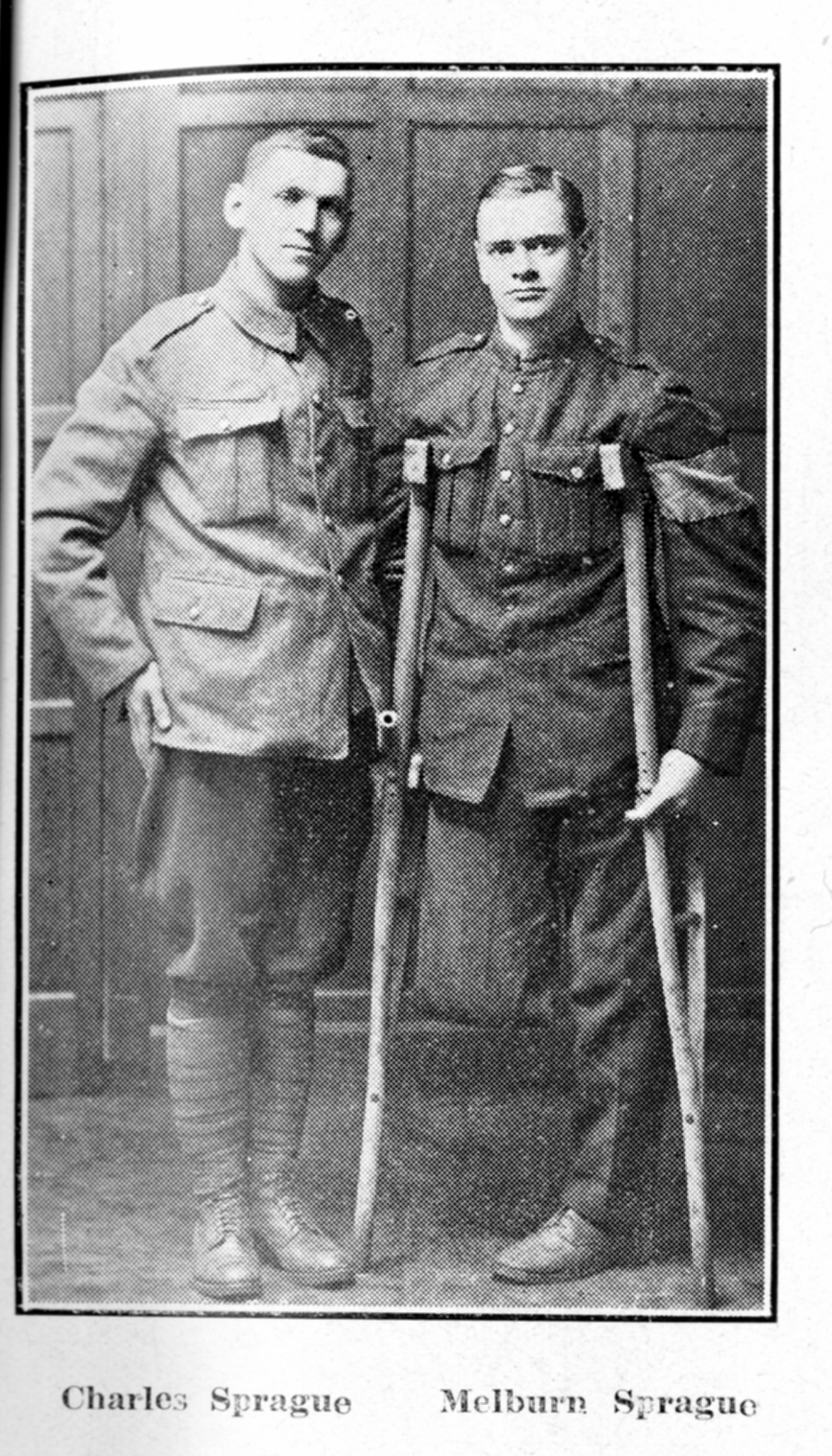
“Passed Civil Service Exam. M. P. Sprague, who went overseas with the 8th C.M.R. was wounded and taken prisoner and lost one of his legs in his country’s service, has successfully passed the qualifying examination for the outside division of the Civil Service held at Hamilton. He is a son of Mr. E. B. Sprague, 87 North Front street.”

The Intelligencer December 17, 1917 (page 2)

“An Afflicted Family. Pte. Alex. McFarlane, son of Mrs. [Elizabeth] McFarlane, of Marmora has been reported killed in action. Two brothers had previously been seriously injured, Michael losing his sight and Joseph being discharged as unfit for service, owing to wounds in his arm and leg. The bereaved family have the sympathy of the community in their sorrow.”

[Note: Private Alexander Mitchell McFarlane died on November 9, 1917. He is commemorated on Page 282 of the First World War Book of Remembrance.]

The Intelligencer December 17, 1917 (page 2)

“Memorial Services. At Holloway Street Methodist Church last evening an impressive memorial service was held for Martin Deibert of this city, who gave his life for King and Country. The R. T. of T., of which he was a member, were out in goodly numbers, and assisted in the service. The pastor, Rev. J. N. Clarry had charge of the service.”

The Intelligencer December 17, 1917 (page 7)

“Received Socks from Knitting Circle. Somewhere in France, Nov. 6, 1917. Mrs. H. J. Sharpe, 43 Hillside St., Belleville. Dear Mrs. Sharpe,—I received a few days ago a bundle of socks from the R. T. knitting circle and on behalf of my chums and myself who greatly benefitted by them, I thank you. The ladies at home have helped us a great deal, even more than you realize and it is very much appreciated.

The rainy season is on again and it is very hard on socks. It is so muddy, but thanks to the ladies at home, we are very seldom in need. Wishing your circle every success in their work and may there be no need to continue it much longer. I am yours truly. (Sgd) A. L. Yerex.”