100 Years Ago: All Canadian Butter Commandeered by Government, Ad for Dr. Chase’s Nerve Food, Donald McKenzie Waters Wounded

The Intelligencer October 1, 1918 (page 5)

“All Canadian Butter Is Commandeered by Government. Ottawa. All creamery butter made in the Provinces of Alberta, Saskatchewan, Manitoba, Ontario and Quebec, between the 30th day of September and the 9th day of November, 1918, both days inclusive, will be commandeered under the authority of an order-in-council passed yesterday.

The reason for this action is that Great Britain and her allies need Canadian creamery butter. The British Ministry of Food urgently asks Canada to increase her shipments of creamery butter. …  The order-in-council puts Canadian consumers on a creamery butter allowance of two pounds of butter per person per month, as compared with the half-pound allowance in Great Britain.”

The Intelligencer October 1, 1918 (page 5)

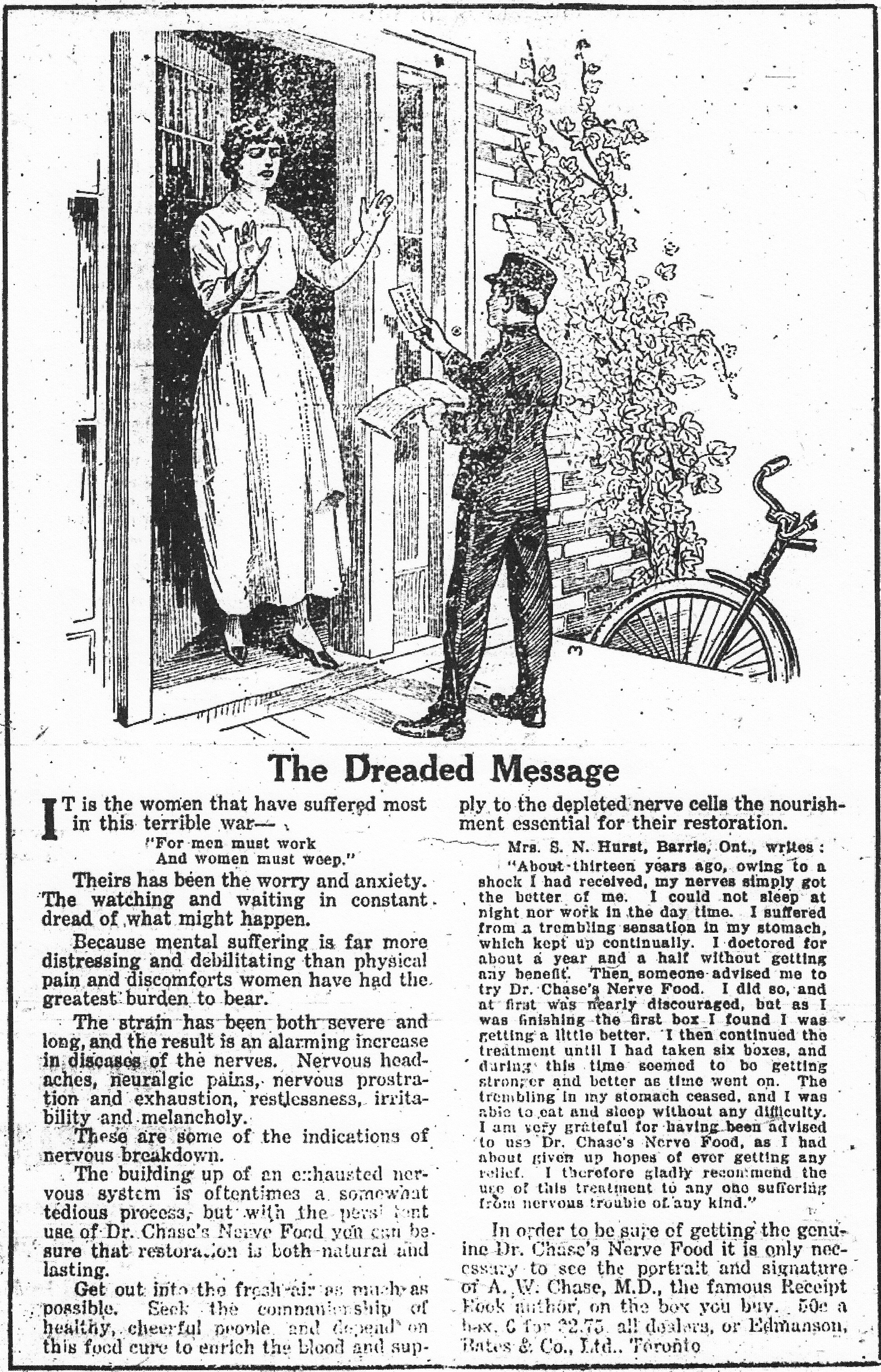
Ad for Dr. Chase's Nerve Food“The Dreaded Message. It is the women that have suffered most in this terrible war—’For men must work / And women must weep.’

The strain has been both severe and long, and the result is an alarming increase in diseases of the nerves.

The building up of an exhausted nervous system is oftentimes a somewhat tedious process, but with the persistent use of Dr. Chase’s Nerve Food you can be sure that restoration is both natural and lasting.

Get out into the fresh air as much as possible. Seek the companionship of healthy, cheerful people and depend on this food cure to enrich the blood and supply to the depleted nerve cells the nourishment essential for their restoration.”

The Intelligencer October 1, 1918 (page 5)

“Acting Capt. Waters Wounded. An official message was received this morning from the Director of Records by Mr. D. M. Waters, stating that his son, Lieut. and Acting Captain Donald McKenzie Waters, artillery, was admitted to No. 5 British Red Cross Hospital, at Winnereaux on September 28, with gunshot wound in the head, severe.

Capt. Waters enlisted in 1916 and trained with an artillery unit at Kingston and Petawawa. Upon entering upon active service in France he was transferred to the trench mortar division in which he rendered valuable service to the Empire. To-day is his twenty-fourth birthday. His many friends trust that he will have a speedy recovery.”


100 Years Ago: Spanish Influenza Invades Toronto, Ad for Gillette, George Conboy Wounded, Sacred Concert at Griffin’s Opera House, Another Gasless Sunday, No Spanish Influenza in Belleville

The Intelligencer September 30, 1918 (page 1)

“Spanish ‘Flu’ Invades Toronto. Toronto. The so-called ‘Spanish influenza’ which has been very prevalent in the United States and Eastern Canada for some weeks past, has apparently invaded Toronto in a very mild form. To all appearances hundreds of cases have developed during the past three or four days, but no deaths have been reported from it locally.

While the epidemic is very active throughout the city, it is not severe and this fact is thought to be largely due to the measures which people themselves took to avoid getting it. The largest number of cases which have so far been reported are in the Royal Air Force of which unit about 150 men are in the Base Hospital, no less than fifty being admitted yesterday.”

The Intelligencer September 30, 1918 (page 3)

Ad for Gillette

“For Thrift. To win the war, Money is needed. So that—Thrift is a War Service. Every dollar you save instead of spending thoughtlessly, releases labour in some form—labour sorely needed for war purposes. Thrift is enforced in the use of many things today, such as flour, sugar, and coal, by the simple expedient of limiting the amount one may buy.

But thousands of extravagant habits flourish unchecked, and these are contributory hindrances to an early peace. Such habits are accomplices of the Kaiser. For instance, there is no excuse for a man hiring another man to shave him. It wastes time, money and vital labour. You can shave yourself better with a Gillette Safety Razor in five minutes.

Any jeweler, druggist, or hardware dealer will be glad to show you his assortment of Gillette Razors today. The price is five dollars.

Gillette Safety Razor Co. of Canada Limited.”

The Intelligencer September 30, 1918 (page 5)

“Corbyville Boy Wounded. Mr. Geo. F. Reed, of Corbyville, has received word that Pte. George Conboy, (No. 636107) has been wounded in the right ankle on August 28, on the Arras front. Pte. Conboy left Belleville with the 234th Battalion. He has been admitted to the hospital and is doing nicely.”

The Intelligencer September 30, 1918 (page 5)

“Pleasing Sacred Concert. Griffin’s Opera House was last night filled with an appreciative audience which assembled to hear a sacred concert given by the Fifteenth Regimental Band of this city. A silver collection was taken on behalf of the K. of C. hut campaign and upwards of $80 was realized. Previous to the commencement of the programme Mr. J. Laly, who is Chief Knight of the Belleville branch, gave a brief address, thanking the citizens of Belleville for their generous support towards the campaign just completed, also to those who assisted in the campaign and tag day. The results of the campaign he stated, were most gratifying.

The programme, which was thoroughly enjoyed, consisted of six selections by the band under the capable leadership of Bandmaster F. W. Robinson. Each number was rendered in a most capable manner and demonstrated that in the band the city has a first-class musical organization. …  Every feature of the program was all that could have been desired. The pleasing function was brought to a close by the rendering of the National Anthem.”

The Intelligencer September 30, 1918 (page 5)

“Still Saving Gasoline. The third ‘gasless’ Sunday was well observed in this vicinity yesterday and few cars were seen on the streets of Belleville except those on business.”

The Intelligencer September 30, 1918 (page 5)

“Watching for Spanish ‘Flu.’ While there are a number of cases of influenza in Belleville, under medical treatment, so far as known none of the cases are of the ‘Spanish’ influenza type.”


100 Years Ago: Malcolm Linford French Killed in Action, Dr. Hastings Advises Rest and Isolation for Spanish Influenza, Letter of Sympathy for Alexander Beaton’s Mother, In Memoriam for Frederick Coburn, Ad for Sacred Concert, Poster for Thrift

The Intelligencer September 28, 1918 (page 1)

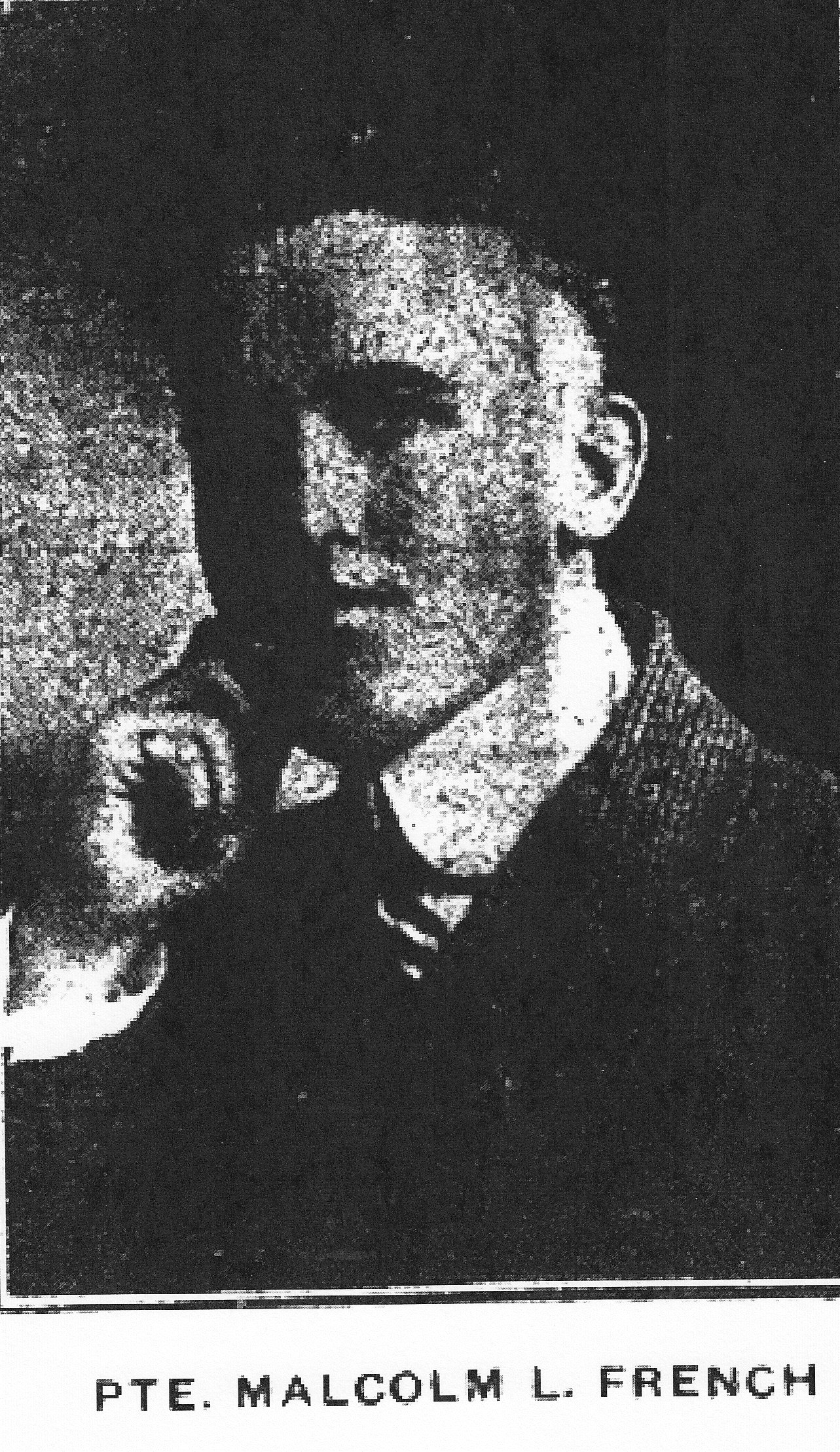
Malcolm Linford French

“Pte. Malcolm L. French only child of Mr. and Mrs. Gilbert H. French, West Bridge Street, killed in action in France, Aug. 30th, 1918. Previous to enlisting he was a pupil of Belleville High School.”

The Intelligencer September 28, 1918 (page 1)

“If You Have the Flu Don’t Try to Fight It. Toronto. ‘If you feel any of the symptoms of influenza, whether of the Spanish, American or Canadian types, don’t fight it—go to bed.’ This was the advice given by Dr. Hastings when asked if he had any message for the citizens, in view of the prevalence of Spanish influenza in some of the cities of the United States, particularly Boston. ‘The great trouble is they think that they can fight the disease and stay up until symptoms of pneumonia develop.’ The doctor emphasized the importance of isolating persons suffering from influenza.’ ”

The Intelligencer September 28, 1918 (page 7)

“Government Sympathy. Mrs. Flora Beaton whose soldier son, Pte. Alexander Beaton, was killed in action September 2, has received a letter conveying the sympathy of the Dominion Government as follows: ‘The Prime Minister and members of the Government of Canada send their deepest sympathy in the bereavement which you have sustained.”

The Intelligencer September 28, 1918 (page 7)

“In Memoriam. Frederick Coburn. In loving memory of my beloved husband, who died of wounds, received in action, September 28th, 1915. Gone but not forgotten. WIFE.”

The Intelligencer September 28, 1918 (page 7)

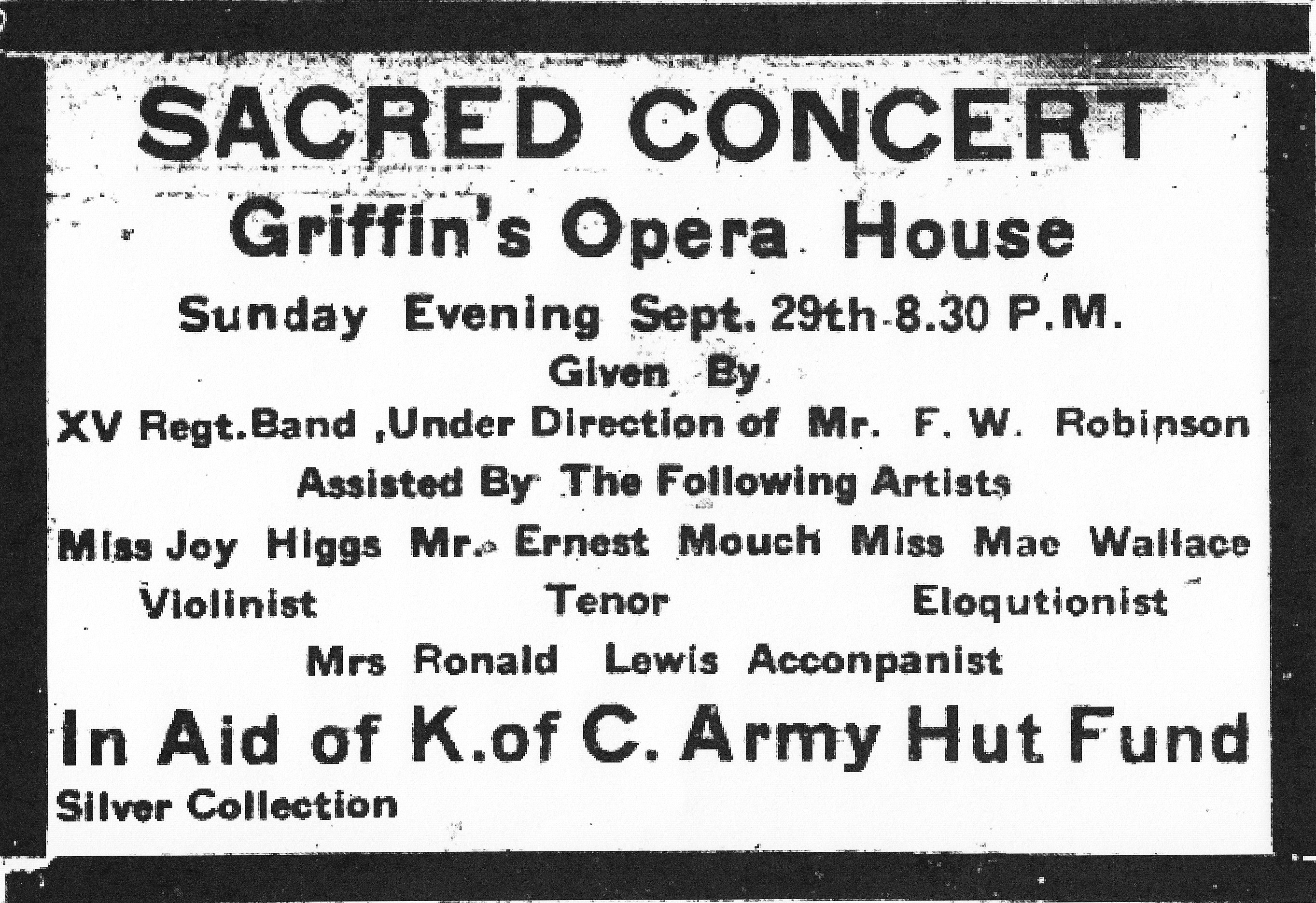
Ad for sacred concert

“Sacred Concert. Griffin’s Opera House. Sunday Evening Sept. 29th 8.30 P.M. Given by XV Regt. Band, Under Direction of Mr. F. W. Robinson.

In Aid of K. of C. Army Hut Fund. Silver Collection.”

The Intelligencer September 28, 1918 (page 9)

Poster for thrift

“Kitchener was right when he said—’Either the Civilian population must go short of many things to which it is accustomed in times of peace or our armies must go short of munitions and other things indispensable to them.’

For the sake of your country and the boys ‘over there,’ spend cautiously. Think of what Lord Kitchener has said, and ask yourself first, ‘Is this something I really need or can I do without it?’

Published under the authority of the Minister of Finance of Canada.”

100 Years Ago: Letter of Sympathy for William Woods’s Wife, Spanish Influenza in 26 States, Army Huts Drive a Success, Herbert Maxwell Killed in Action, Arthur Leslie Yerex Wounded, Alexander Beaton Killed in Action

The Intelligencer September 27, 1918 (page 2)

“Sympathy of Pals Of Pte. W. Wood. The following letter of sympathy has been received by Mrs. W. Woods, whose husband was recently reported killed in action:

France, Sept. 7, 1918. Mrs. W. Woods, 20 Waters Street, Belleville, Ont. Dear Mrs. Woods:—It grieves me to inform you of the death of your husband, Pte. W. Woods, who was killed in action during the advance of Sept. 2nd. He was making headway to our objective when he was hit by a machine gun bullet. He died instantly and suffered no pain. His pals will miss him greatly as he was a great favorite in the company.

On behalf of the officers of the company and battalion I extend their heartfelt sympathy. Sincerely yours, W. C. Tobias, Lieut.”

The Intelligencer September 27, 1918 (page 2)

“Has Now Spread Over 26 States. Washington. Spanish influenza has spread over the country so rapidly that officials of the public health service, the War and Navy Department, and the Red Cross conferred on Wednesday on measures to help local communities in combating the disease. …

The disease is epidemic in New England, where it first made its appearance, and officials in that section are considering drastic steps to curb its spread, including the prevention of public gatherings. …  The disease continued to spread Wednesday in army camps, 5,324 new cases being reported to the office of the Surgeon-General of the army up to noon. The total reported from the camps Wednesday was the largest in any one day, and brought the total for all camps to 29,002 cases.”

The Intelligencer September 27, 1918 (page 3)

“K. of C. Army Hut Drive Success. The Knights of Columbus Army Hut Drive, which began on Sept. 15th to continue throughout the week, has far excelled the most optimistic expectations of the Committee. While the amount sought in this District was $5,000 Belleville alone has far exceeded this amount, and it is expected that when the returns are all in from the outlying places the total will reach nearly $10,000.

While the persons in charge of the campaign are delighted with the large sum realized, there is another point which has been a source of greater satisfaction and that is the spirit that has accompanied the gifts. Never was money given with a better grace. The canvassers and workers report nothing but courteous receptions and cheerful encouragements wherever they went. There was a spirit of comradeship and friendliness throughout the entire campaign.

People of all classes and all creeds vied with each other to encourage the work of helping to lighten the burden of our soldiers over there and as our brave boys are fighting shoulder to shoulder without regard to race, creed or color, and as the casualty lists bring the same sad tidings to all homes over here, without distinction of creed or class so also have the workers in K. of C. Hut Fund Drive shown the same spirit of comradeship. Men and women in all ranks of life and all classes and creeds have gone out and worked together for this glorious common cause.

This terrible war has changed many things, but there is nothing so remarkable or pleasing as the way the community has been brought together, and it is to be hoped that this result of the most terrible of wars will last forever, that all classes of our community will live together with that same blessed spirit of brotherhood, sacred to the memory of those who lie side by side beneath the waving poppies in Flanders Field.

The ladies are deserving of the greatest praise for the excellent work done on Tag Day, having realized the magnificent sum of $712.15. …

Ald. Chas. Hanna and all the members of the 15th Regt. Band are giving a sacred concert at Griffin’s Opera House Sunday night at 8 o’clock in aid of the Fund. A silver collection will be taken at the door. Mr. John Griffin, President of The Griffin Amusement Corporation, with his usual generosity to anything patriotic or charitable, is donating the theatre free of charge.”

The Intelligencer September 27, 1918 (page 7)

“Made Supreme Sacrifice. A message of condolence from the military authorities, received on Tuesday, was the first intimation Mr. Thos. Maxwell of Bancroft received that his son, Gr. Herb. Maxwell, had been killed in action. His name appeared in the casualty list the same day. Herb. enlisted in October, 1915, and went overseas with the 80th battalion from Belleville. He had been in France over two years. Previous to enlisting he was employed in the Bank of Nova Scotia in Bancroft.”

[Note: Private Herbert Edward Maxwell died on September 2, 1918. He is commemorated on Page 469 of the First World War Book of Remembrance.]

The Intelligencer September 27, 1918 (page 7)

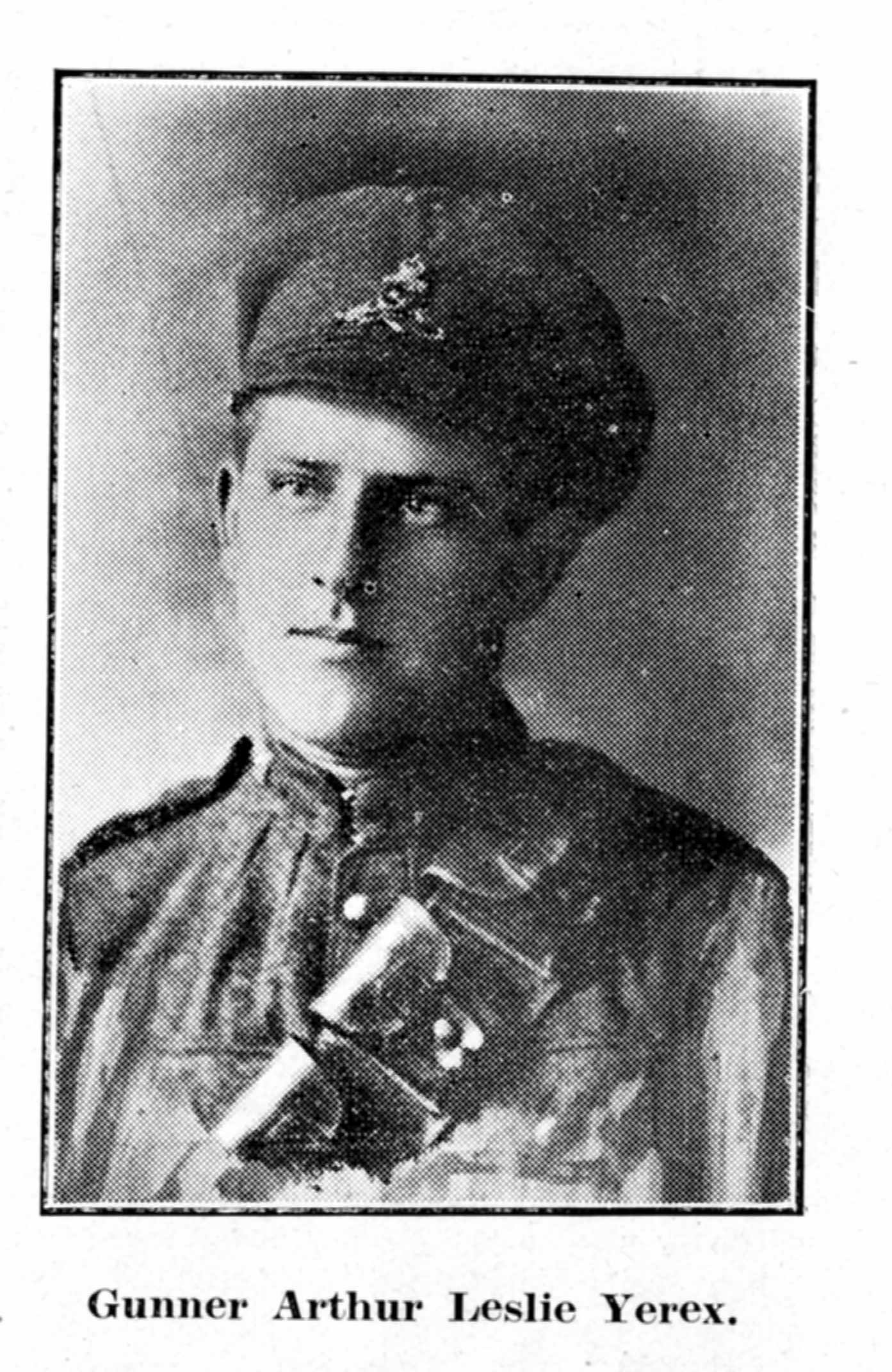
Arthur Leslie Yerex“Gunner Yerex Wounded. Mr. Wm. Yerex of 68 Sinclair Street, city, has received an official telegram from the Director of Records at Ottawa that Pte. Arthur Leslie Yerex, artillery, is reported as slightly wounded on September 5, but remaining on duty. Gunner Yerex has been in the fighting since July 11, 1916, and this is his first fatality.”

The Intelligencer September 27, 1918 (page 7)

“Pte. Alexander Beaton Killed. Mrs. Flora Beaton, 63 Alexander street, city, received an official telegram yesterday afternoon from the Director of Records at Ottawa, that her son, Pte. Alexander Beaton, was killed in action on September 2. In the morning Mrs. Beaton received two cheery letters from her soldier son, bright with hope and courage, but in the afternoon the dread message came apprising her that he had made the supreme sacrifice for God and Home and Native Land.

Pte. Alexander Beaton enlisted on July 29, 1915, with the 59th Battalion and trained in Kingston and Brockville. Proceeding overseas he passed through some of the severe battles in France and was wounded in 1916, spending eight months in an English military hospital, returning to active service in November, 1917.

Previous to enlisting he was an employee of the G.T.R. and had many friends in Belleville who will sincerely regret his death. Pte. Beaton was in his twenty-fourth year and is survived by his widowed mother, two brothers, John and Donald, at home. A brother, Pte. John Y. Beaton, of the 155th Battalion, was killed by a train at Kingston on Sept. 2, 1916, the same month and the same day of the month on which Pte. Alexander Beaton was killed in action in France.”

[Note: Private Alexander Beaton died on September 2, 1918. He is commemorated on Page 365 of the First World War Book of Remembrance.]


100 Years Ago: Letters of Sympathy for William John Howard Black’s Mother, Letter of Sympathy for David James McGlashon’s Mother, Letter of Sympathy for Henry Edgar Carter’s Wife, F. E. Baker Wounded, Carpet Bowling Club Formed, Griffin’s Opera House Improvements, Soldiers of the Soil Buttons for Girls, Letter of Sympathy for Georges Thibault’s Wife

The Intelligencer September 26, 1918 (page 2)

“Letters Concerning Death of Pte. Black. Mrs. R. D. Black, 24 Hillside street, city, has received the following letters in connection with the death from wounds of her soldier son overseas: France Sept. 1, 1918. Dear Mrs. Black:—I very much regret to tell you that Pte. Black, Can. Inf. Battalion, is wounded. His condition is very serious. A surgeon specialist has seen him and is doing every thing he can to save his life. He has every care and attention and the chaplain has seen him. If there is any improvement in his condition I will write and let you know. With my sympathy. Yours sincerely C. E. Crawford, Sister in Charge.

From Rev. F. E. Walker, C. F., No. 7, C.C.S., B. E. F., France. Dear Mrs. Black:—May I express my very sincere sympathy with you in the sad loss you have sustained by the death of your son, Pte. W. F. H. Black, of the Canadians. He died of wounds at No. 33 C. C. S. on Sept. 5th, and was buried by me at the British Cemetery at Ligny, St. Flockel.

He has given his life for his country in the cause of Freedom and Right and he has not lived in vain. He is one of that great company of gallant men who have made the supreme sacrifice and every one of us will forever hold these men in honor. They have served and loved in honor. Your loved one is now in God’s gracious keeping. May He comfort your heart in this time of your sorrow. With deepest sympathy. Yours very sincerely, F. E. Walker, Chaplain.”

The Intelligencer September 26, 1918 (page 3)

“Kindly Sympathy Of Army Chaplain. Mrs. McGlashon, wife of Sergt. McGlashon, caretaker of the Armories, is in receipt of the following sympathetic letter from the Chaplain of the Battalion in which their son, Pte. David James McGlashon, was a member when he fell in action on August 11th: France, Sept. 6, 1918. Dear Mrs. McGlashon:—I am writing to assure you of the sincere sympathy of our Battalion with you in the death of your son, who was killed in action on August 11th. I should have written to you sooner, but I, myself, was wounded a few days later and have only now rejoined the battalion.

He was with his machine gun section during the attack of a strong enemy post and was seen to fall by the platoon sergeant. This was near the village of Fouquescourt and I believe his body was subsequently buried there when the line of battle had advanced. Our men did splendid work in the fighting in front of Amiens and won back miles of France for the Allied cause, and in all the battle none fought better than the platoon to which your son belonged. …

May the knowledge of your son’s self-sacrifice be a source of comfort to you. In all sympathy, believe me dear Mrs. McGlashon, I am Very faithfully yours, A. H. Priest, Chaplain.”

The Intelligencer September 26, 1918 (page 3)

“Fearless and Faithful Was This Soldier. Mrs. F. A. Carter has received the following letter from Major R. Vanderwater, officer commanding the battalion to which her husband was attached. Pte. Carter went overseas with the 155th Battalion from Belleville and was killed in action August 30, 1918:

Field, Sept. 5th, 1918. Mrs. F. A. Carter, 5 Boswell Street, Belleville, Ont. Dear Madam:—It is with the deepest regret that I have to confirm the official notification of the death of your husband, No. 636069, Pte. H. E. Carter. During the period of his connection with the Battalion he has always willingly and fearlessly performed any duty for which he was selected, and had in any other respect an excellent record.

His sacrifice of his life for the great cause for which we fight was a matter of great sorrow among his many friends here who join with me in the expression of sincere sympathy for you in your bereavement. Yours in sympathy, R. Vanderwater, Major, O.C., Canadian Infantry Battalion, Eastern Ontario Regiment.”

The Intelligencer September 26, 1918 (page 7)

“Pte. Baker Wounded. Rev. Dr. Baker has received a telegram stating that his son, Pte. F. E. Baker, has been wounded. Pte. Baker is suffering from a gunshot wound in the leg and is now at a clearing station in France. He left last March with the Cobourg Heavy Battery.”

The Intelligencer September 26, 1918 (page 7)

“Carpet Bowling. A very enthusiastic meeting was held last night at Mr. F. H. Naylor’s studio for the purpose of organizing a carpet bowling club. …  After a friendly discussion it was decided to adopt the title of Belleville Carpet Bowling Club, all members present, being very keen players, and good sportsmen. Some enjoyable and evenly contested games are anticipated during the long winter evenings. The following officers were unanimously elected: President, Mr. P. K. Fisher; Vice-Pres., Mr. Don G. Bleecker; Sec. Treas., Mr. H. A. Lennox.”

The Intelligencer September 26, 1918 (page 7)

“Theatre Improvements. As a result of Mr. John Griffin’s visit to Belleville this week plans are being prepared for improvements to Griffin’s Opera House. Lavatories will be installed and the heating system remodelled. Attention will also be paid to the ventilating of the theatre with a modern fan system to ensure purity of atmosphere at all times. Mr. Griffin is the moving spirit of the Griffin Amusement Corporation, which controls a number of theatres.”

The Intelligencer September 26, 1918 (page 7)

“S.O.S. Buttons for Girls. Official buttons for the girls who have participated in the Soldiers of the Soil Movement by engaging in farm work this summer have been received by Mr. Brockel, officer commanding the Soldiers of the Soil in this district, and can be obtained at the Y. M. C. A. office.”

The Intelligencer September 26, 1918 (page 7)

“Sympathy from Premier. Mrs. G. Thibault, residing at 48 Murney street, is in receipt of the following: ‘The Prime Minister and members of the Government of Canada, send their deepest sympathy in the bereavement which you have sustained.’ This refers to her husband who was killed in action August 28th.”


100 Years Ago: Spanish Influenza Deemed Not Alarming, Ad for Sinclair’s, Collection for Soldiers’ Christmas Gifts, Army and Navy Veterans Association, Philip Henry Wills Wounded, Theatre Collection

The Intelligencer September 25, 1918 (page 1)

“Influenza Outbreak Is Not Alarming. Toronto. ‘There is altogether too much made of the seriousness of this Spanish influenza,’ declared Dr. McCullough, Provincial Officer of Health. ‘The epidemic is not so serious as measles, and while a few deaths have occurred among the Poles at Camp Niagara, everything possible has been done to prevent its spread.’

‘As far as I can learn, there is no pathological difference between plain influenza and the so-called Spanish variety,’ said Dr. Hastings today. ‘The symptoms are practically the same.’

Mr. Shutt, who is in charge of the division of contagious diseases, reported that so far the department had received no indication from private physicians or its own inspectors that there were any cases of Spanish influenza in the city.”

The Intelligencer September 25, 1918 (page 2)

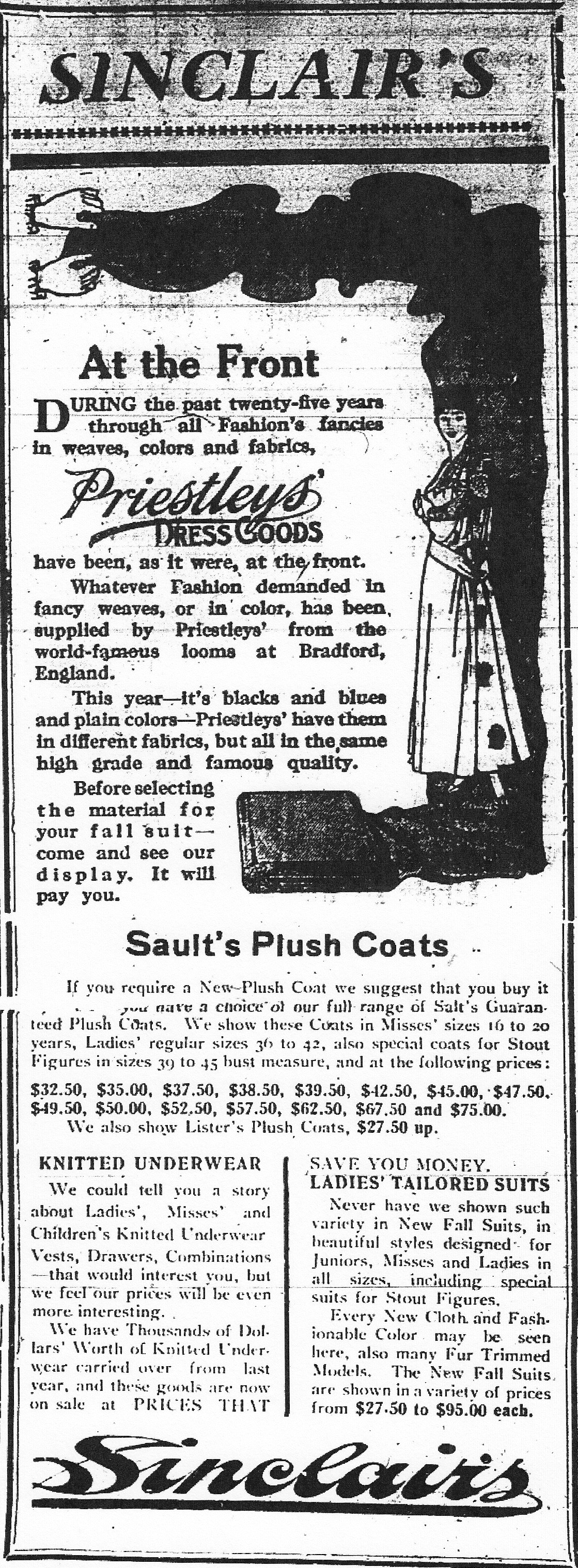
Ad for Sinclair's

“Sinclair’s. At the Front. During the past twenty-five years through all Fashion’s fancies in weaves, colors and fabrics, Priestleys’ Dress Goods have been, as it were, at the front.

This year—it’s blacks and blues and plain colors—Priestleys’ have them in different fabrics, but all in the same high grade and famous quality.”

The Intelligencer September 25, 1918 (page 5)

“The Soldiers’ Christmas. An extra added attraction during the presentation of ‘Have a Heart’ at Griffin’s last evening was the taking up of a collection from the audience between the acts for Christmas gifts for the boys ‘over there.’ The collection was under the auspices of the Quinte Chapter, Daughters of the Empire, and the collectors were the girls of the company, while Joseph Keno (‘Henry’) the chief laugh provoker of the play, appeared before the curtain and in a humorous way speeded up the shower of small change which will help to add brightness to many a soldiers Christmas in the war zone. The collection was a distinct success.”

The Intelligencer September 25, 1918 (page 5)

“Army and Navy Veterans. A branch of the Army and Navy Veterans Association of Canada is being organized in Belleville by Capt. Mouck of Kingston, chief organizer for Eastern Canada. Capt. Mouck is meeting success in his canvass for members who will include veterans of the present war, South Africa, Riel Rebellion and Fenian Raid.

It is proposed to secure club rooms for the organization to be open at all times to members. The object of the association of Army and Navy Veterans is to care for the soldier and his dependents. One of the first charter members to sign the roll in Belleville was Mr. Alexander Foxton, 49 Herkimer street, over eighty years of age, who is a Fenian Raid veteran.

The society is incorporated by Act of Parliament and the patrons include the King and Queen, H. R. H. the Duke of Connaught, His Excellency the Right Honorable the Duke of Devonshire, K. C., C. C. M. G., C. C. U. O., P. C., and Lord Aberdeen.”

The Intelligencer September 25, 1918 (page 5)

“Severely Wounded. Lieut. P. H. Wills, nephew of Judge Wills, of this city, who was wounded in the Arras push, has been transferred from the Red Cross hospital, France, to one of the London, England, hospitals. ‘Fay,’ as he is familiarly known in Belleville, received a severe wound in the knee, having been hit by a large piece of shrapnel just after his company had obtained their objective.”

The Intelligencer September 25, 1918 (page 5)

“$84.02 Theatre Collection. Through the courtesy of Mr. Forhan Manager of Griffin’s Opera House, and the ‘Have a Heart Company,’ and the liberality of the audience, a collection taken up during last night’s performance realized the sum of $84.02 for the Quinte Chapter I. O. D. E., which will be used for the comforts of our boys overseas.”

100 Years Ago: Tips to Avoid Spanish Influenza, Letter of Sympathy for William Woods’s Wife, Poster for Thrift, Y.M.C.A. Beaver Hut in London

The Intelligencer September 24, 1918 (page 1)

“Dr. Hastings’ Tips To Avoid Influenza. Toronto. Now that Spanish influenza has crossed the ocean to America and is spreading so rapidly over this continent, Dr. C. J. O. Hastings, M. O. H., counsels the public to observe the following …  safeguards against contracting the disease.

Avoid needless crowding; influenza is a crowd disease. Smother your coughs and sneezes, others do not want the germs which you would throw away. Your nose, not your mouth, was made to breathe through. Get the habit. Remember the three C’s—A clean mouth, a clean skin and clean clothes. Try to keep cool when you walk and warm when you ride and sleep. Open the windows always at home at night; at the office when practicable.”

The Intelligencer September 24, 1918 (page 5)

“Premier’s Sympathy. Mrs. Susanna Woods, residing at 20 Water Street, city, is in receipt of the following telegram: ‘The Prime Minister and members of the Government of Canada send their deepest sympathy in the bereavement which you have sustained.’ This refers to her husband, Pte. William Woods, who was killed in action on September 2nd.”

[Note: Private William Woods died on September 2, 1918. He is commemorated on Page 526 of the First World War Book of Remembrance.]

The Intelligencer September 24, 1918 (page 5)

Poster for thrift

“Keeping up with the Joneses. One great bar to the practice of thrift to-day is the tendency to let others set for us our standards of living. Mrs. Jones appears on the street in a new gown and at once her neighbour vows she’ll have one like it. Or if a new motor car is delivered to a certain home, a nearby family, not to be handicapped in the social race, plan to discard their old car for a new one.

Such silly rivalry is bad enough indeed in normal periods. It is positively unpatriotic in times like these when the country needs all available labor and material and every available dollar with which to carry on the war.

For the money we spend in satisfying these desires represents equipment, clothing, shot and shell that are so urgently needed for our boys in France.

Published under the authority of the Minister of Finance of Canada.”

The Intelligencer September 24, 1918 (page 6)

“Comfort in London For Canadian Soldier. A bed, including bath, towel, soap and kit storage in London costs the Canadian Tommy 18 cents—that is if he goes to the new Canadian Y.M.C.A. ‘Beaver Hut’ in the Strand. A meal costs him the same with the strains of an orchestra thrown in.

Needless to relate our boys overseas are ‘tickled to death’ with their new metropolitan centre. Costing $100,000 and situated in the most famous thoroughfare in the Empire, the Beaver Hut is run primarily by the Canadians for Canadians, although its hospitality is free to all the men of the allied forces on leave visiting London.

A voluntary staff of 200 ladies, superintended by Miss Helen Fitzgerald of Fredericton, N.B., attend to the preparation and service of meals. Dormitories, with nearly 200 beds are under the same efficient care, and the ladies work in four-hour shifts, maintaining a twenty-four hour service. No matter at what hour a tired and hungry Canadian soldier arrives in London he finds an open door, a smiling welcome, and a hot meal at the ‘Beaver Hut.’ ”


100 Years Ago: Canadian Deaths from Spanish Influenza, Canadian Casualties, David James McGlashon Killed in Action, Letter of Sympathy for William Hunter’s Mother, Memorial Service at Salvation Army Citadel, Ad for Wrigley’s

The Intelligencer September 23, 1918 (page 1)

“Several Deaths From Spanish Influenza. Toronto. Spanish influenza has claimed five victims, who died in the Polish infantry camp at Niagara and there are 168 soldiers suffering from this disease there at present. The Canadian camp has not yet been attacked, although there are many cases of severe colds there. Quebec despatch today tells of the closing and quarantining of the college at Victoriaville, Que., on account of the influenza there. Two of the teaching staff and one student having succumbed. Nine sailors on ships in port at Quebec have died during the last few days of this disease.”

The Intelligencer September 23, 1918 (page 2)

“Many Heroes Fell. No casualty list issued since the Canadians made their great drive into the German lines below Amiens has so emphasized the price of victory as that sent over the wires Sunday night. The lists for days past have been long, but most of the names have been those of men wounded. Last night’s roll of honor was remarkable for the number of men reported killed in action. The men whose names appeared there came from every part of the Dominion, from the Maritime Provinces to the Pacific coast, not a few of them being Quebecers. Among fallen were a number whose names are in Hastings and Prince Edward County.”

The Intelligencer September 23, 1918 (page 2)

“Pte. D. J. McGlashon Killed. A few days ago Sergt. and Mrs. McGlashon of this city received a message that their son, Pte. David James McGlashon, was wounded and missing. Today they were in receipt of another message which conveyed the sad intelligence that he was killed in action on August 11th.

Pte. McGlashon enlisted and went overseas with the 155th Battalion from Belleville. Subsequently he was transferred to another unit and had been in France for some time. The brave young soldier was well known in Belleville, where he had many friends. To the bereaved parents will be extended the heartfelt sympathy of all citizens. An elder brother is at present home suffering from severe wounds received in action.”

[Note: Private David James McGlashon died on August 11, 1918. He is commemorated on Page 458 of the First World War Book of Remembrance.]

The Intelligencer September 23, 1918 (page 5)

“Sympathy of Premier. Mrs. James Hunter is in receipt of the following: ‘The Prime Minister and members of the Government of Canada send their deepest sympathy in the bereavement which you have sustained.’ This refers to her son Pte. W. Hunter, who was recently recorded among that great silent army of heroes who have made the supreme sacrifice for Canada.”

[Note: Private William Hunter died on September 2, 1918. He is commemorated on Page 433 of the First World War Book of Remembrance.]

The Intelligencer September 23, 1918 (page 5)

“Memorial Service. A very large crowd, completely filling the auditorium of the S. A. Citadel, was present at the Memorial Service of Ptes. H. Carter and G. Thibault, who last week were killed in action. Mrs. B. W. Brown, who has charge of the Sunday School work sang and expressed the sympathy of the members of the school to which the children attended. Adjt. Trickey spoke of the words of David, ‘There is a step between me and death.’

A very impressive service was held, and a number of persons held up their hands for prayers on their behalf. There are 32 men, soldiers and adherents who have left from the S. A. in Belleville. Five have been killed, eight or ten wounded and one is now a prisoner in Germany. A special service of prayer is being held this afternoon at the Citadel on behalf of the allies.”

The Intelligencer September 23, 1918 (page 5)

Ad for WRigley's gum

“Wrigley’s. Any Way You Turn you will find WRIGLEY’S. Everybody thinks of Wrigley’s when chewing gum is mentioned. This is the result of years of effort to give mankind the benefits and enjoyment of this low-cost sweetmeat.

Wrigley’s helps appetite and digestion—allays thirst—renews vigour. Sealed tight—kept right. The Flavour Lasts.”

100 Years Ago: Coal Enough If Care Taken, Families Without Coal, Spanish Influenza Under Control, Campaign for Army Huts, Power of Dollars, Patriot or Shirker, Depot Battalion to Arrive, Weather Poor for Farmers, Gasless Sunday Tomorrow, Memorial Service for Privates Carter and Thibault, Great War Veterans Support Army Huts Campaign, Poster for Thrift

The Intelligencer September 21, 1918 (page 1)

“Coal Enough If It Is Husbanded. Ottawa. Unless the coming winter is one of exceptional severity the supply of coal available for use in Canada, in the opinion of Fuel Controller C. A. Magrath, should be sufficient if properly husbanded. Of anthracite coal Canada’s allotment is somewhat smaller this year than last, but of bituminous coal some 1,200,000 tons more are being brought into the country. …  Municipal authorities, he holds, must do their part by appointing fuel controllers to ensure proper distribution of coal available for consumption in their own localities. …

Representatives of firms engaged in the manufacture of musical instruments, automobiles, liquors and clay products were here to-day conferring together and with the Fuel Controller respecting the manner in which the proposed limitation of coal consumption by those industries is to be carried out.”

The Intelligencer September 21, 1918 (page 2)

“Families Without Coal. To The Editor of The Intelligencer: Dear Sir:—It is reasonably certain that there are many families in the City of Belleville without fuel at the present time.

Would it not be a good suggestion for the editors of both papers to select five representative citizens in each ward and ask them to make a canvass of the poorer class of people in their ward with a view of ascertaining what supply of coal they have on hand, what their requirements for the year would be, why they have made no purchases? etc. After this information has been ascertained a report to the Local Fuel Controller could be made with a view to supplying the needs of these citizens. …  In collecting this information special attention should be given to the needs of soldiers’ wives. Yours truly, W. E. Shuster.”

The Intelligencer September 21, 1918 (page 3)

“Spanish Influenza Now Under Control. Toronto. ‘The department is doing everything possible to check the outbreak of Spanish influenza which was reported to us from the Polish camp at Niagara, and we feel that we have this new but aggravating complaint well under control,’ was the statement made by Col. J. W. S. McCullough, Chief officer of the Provincial Board of Health.”

The Intelligencer September 21, 1918 (page 4)

“Last Call—Is Your Name Written There? The campaign to raise funds for the Knights of Columbus Army Comfort Huts for the soldiers on the firing line has swept forward with enthusiasm and success. The publicity part of the local campaign is in charge of Mr. W. L. Doyle, who has been so successful in previous campaigns for various patriotic purposes, and as a result of Mr. Doyle’s ability and novel advertising methods no one who can read will be able to say that the aims and objects of the campaign were not strikingly brought forth. …  What we owe the brave soldier boys can never be measured in money and the slogan of ‘Give, Give, Give ‘Till it Hurts’ is but a reminder of one more opportunity to pay a small installment on our great debt to our soldier protectors. …

There are no creed barriers on the battlefield and only one God to bless the religion of service in the great cause of humanity. The K. of C. workers are welcomed beside the Y.M.C.A. and Salvation Army and all will work in perfect harmony and co-operation ministering to the needs of the soldiers and by their unselfish services inspiring the soldier to even greater efforts in the cause of world freedom. …

This is the last day of the Drive and those who have not as yet given in their subscriptions can do so this evening at Campaign Headquarters, corner of Bridge and Front Streets.”

The Intelligencer September 21, 1918 (page 4)

“The Power of the Dollar. Never were extravagances and useless buying regarded as so serious an evil as today. A greater evil still is the spending of one’s money on silly pleasures. Canadians carry too serious a determination to ride through to Victory and to vindicate the stalwartness and endurance of the men at the front to tolerate any such laxity in their expenditures.

Our people generally are sizing up the power of the dollar as never before, and are investing their surpluses against a possible landslide after the war. This is real patriotism. It is carrying common-sense into national business. It is proving that the strength of a nation lies in her saving citizens.”

The Intelligencer September 21, 1918 (page 4)

“The Patriot or The Shirker. To save and serve or to spend and shirk—that is the question. If we decide—as we will—on saving and serving, then we must cut down on all luxuries to the limit.

Motoring for pleasure is a luxury. Most of the Sunday motoring is for pleasure, and as long as the Fuel Controller asks us to desist from Sunday motoring, it is our patriotic duty to respond.

By refraining from pleasure-motoring to-morrow we discharge a double duty. We save the gasoline needed overseas. We save the money which Canada must have to finish the war. The car in the garage tomorrow is the Patriot’s car. The car on the Highway, if there for pleasure, is the car of the Shirker. Which is YOURS?”

The Intelligencer September 21, 1918 (page 7)

“Soldiers Next Week. The Depot Battalion, which is being transferred from Kingston to Belleville, did not arrive yesterday as anticipated, quarters not being quite ready for them. They will arrive early next week.”

The Intelligencer September 21, 1918 (page 7)

“Anxiety for Farmers. The past couple of weeks have been anxious ones for the farmers in this section, many of whom have a great deal of grain in the fields yet. Wheat is commencing to sprout and the straw will be almost useless for feed. While the weather does not look any too favorable yet it gives promise of improving and a few days of sunshine would change the aspect considerably.—Bancroft Times.”

The Intelligencer September 21, 1918 (page 7)

“Everybody Walks But—the call comes strong and insistent from those in a position to know that there is urgent necessity to save gasoline for war purposes. This is not the time to argue the pros and cons of Sunday pleasure riding in automobiles. Canadians are placed upon their honor and requested to save gasoline tomorrow by cutting out the use of motor cars except for deeds of necessity and mercy. …  Let’s make it unanimous and ALL WALK. What say? Yes, of course—YES!”

The Intelligencer September 21, 1918 (page 7)

“Memorial Service. A memorial service will be held at the S. A. Citadel on Sunday evening next at 7 p.m. for Ptes. Carter and Thibault, who were both killed in action this week. They were adherents of the Salvation Army and the wives and family reside in the city, the former on Boswell street and the latter on Murney street.”

The Intelligencer September 21, 1918 (page 7)

“War Veterans Endorse K. of C. Army Hut Fund. Toronto, Sept. 20, 1918. E. D. O’Flynn, Esq., Standard Bank Chambers, Belleville, Ont. Dear Comrade:

The following letter was given to the representative of the Knights of Columbus in the City of Toronto, after consultation with the President and Vice-President: ‘We who have shared in the mud, misery and blood of trench warfare know the need of such aid to courage and endurance as the Knights of Columbus Huts afford to the soldiers over there. We have no hesitation in urging Canadians to support the work. …  The folks who give the last cent of their last dollar for the welfare of the boys over there have given less than the man who gives his life.

The Great War Veterans Association in Ontario will support and encourage the money raising campaign of the Knights of Columbus.’

I regret the matter was so urgent I was unable to consult all the members of the Executive before making a departure from our policy to withhold endorsation of the work of other organizations, but I trust the worthy nature of this endeavor will lead to your approval of my action in this matter. Yours fraternally, W. E. Turley. Sec. G.W.V.A. (Ont. Prov. Branch).”

The Intelligencer September 21, 1918 (page 9)

Poster for thrift

“Fellow Canadians! How much thought do you give to the War—I mean honest, sincere thought on how we should live in order to win the war?

You have no idea what it means to stand knee-deep in mud—in a dirty trench—with a cold drizzle chilling you to the bone. But you know these things are.

And we—the soldiers who make those armies. Do you think we could ‘carry-on’ if we thought for a moment you were not backing us to the limit?

If you could know—as I know—all that war means—you’d stint yourselves down to the barest necessities—so that Canada’s money and Canada’s material and Canada’s labor could all go into guns and shells and boots and uniforms and food—for our boys over in France to fight with.

Published under the authority of the Minister of Finance of Canada.”


100 Years Ago: Private Roy Buck Killed in Action, Army Huts Campaign Total Climbs, Frank Sweet Killed in Action, Howard Black Dies of Wounds, Spanish Flu Enters Ontario, Letter from Nursing Sister for A. E. Baldwin, Salvation Army Campaign, Soldiers Arrive in Belleville, George Thibault Killed in Action, William Neilson Casselman Five Times Wounded

The Intelligencer September 20, 1918 (page 1)

Roy Buck

“Killed in Action. Private Roy Buck. A former member of the Ritchie staff, killed in action on September 3, 1918. His mother resides at 18 Everett Street.”

The Intelligencer September 20, 1918 (page 5)

“K. of C. Army Hut Fund Reaches $3,200. With one day left in which to obtain the objective of $5,000 for Belleville District the workers connected with the K. of C. Army Hut Fund are redoubling their efforts to reach that mark. Canvasses are being made night and day, and at headquarters corner of Bridge and Front street, the secretary is on the job all the time. Last night the total had reached $3,200. This is most encouraging. …

To-day and to-morrow canvassers in Trenton will cover the British Chemical Co., where it is expected that a large sum will be realized. This is the first time a direct canvass of these works has been made for any fund, and the committee of the Knights of Columbus Army Hut Fund appreciates the very great favor that is being shown them by the management. The management in turn realizes the very great work that is being done by this Army Hut Fund.

The works of the Canada Cement Plant at Point Anne will also be canvassed this afternoon, through the kindness of the management. If everyone will get together for one more day, Belleville will surpass the $5,000 objective.”

The Intelligencer September 20, 1918 (page 5)

“Pte. Frank Sweet Killed in Action. Uncle of Pte. Howard Black Who Recently Died of Wounds. Mrs. Richard Black, 24 Hillside street, has received the following notice: (413035) Pte. Frank Sweet. Dear madam:—I regret to have to advise you that notice has been received here that the above mentioned soldier has been reported to have been killed in action on the 8th of August, 1918. Yours truly, E. Baker. For Director of S.A. & A.P.

Frank Sweet enlisted with the 39th Battalion in this city, and went overseas with that battalion. In England he was transferred to another unit, and went to France, where he served his country faithfully for over a year as a sharp shooter, and later as military police. He was invalided to England with trench rheumatism and he remained there until April, 1918, when he again went to France and on August the 8th made his supreme sacrifice for King and country. He was the fifth and youngest son of the late Wm. Sweet of Bancroft, and brother of Mrs. R. Black of this city.

The Intelligencer September 20, 1918 (page 5)

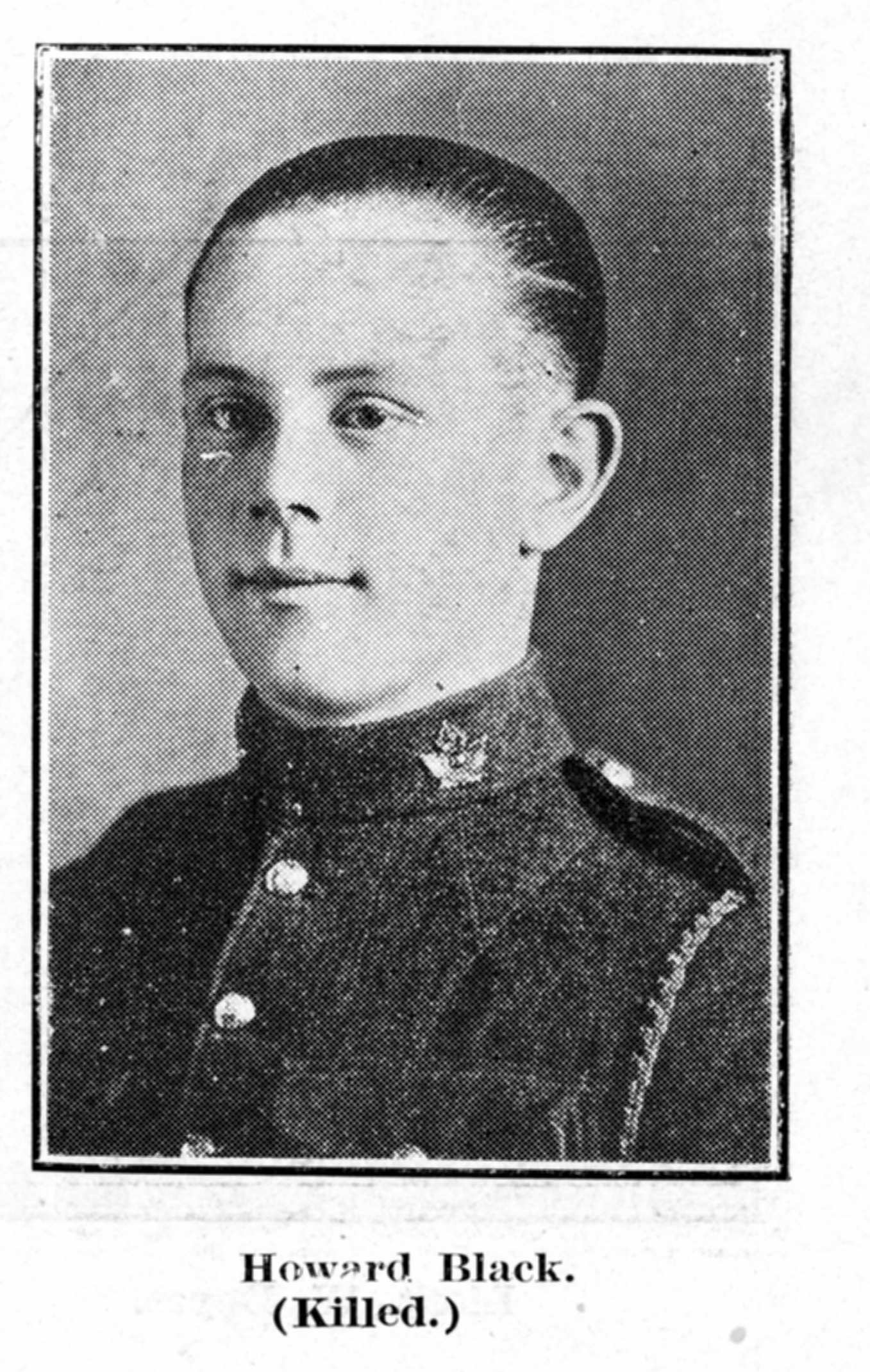
Howard Black“Pte. Howard Black. This family has been doubly bereaved as this is the second loss within a few days. Frank Sweet was an uncle of Pte. Howard Black, whose death from gun shot wounds was previously announced. Howard was a bright and promising student. He received his education at Queen Mary School and was a pupil of the High School when he enlisted at the age of 16 in the bugle band of the 155th Battalion. He was with this battalion while it was in camp at Barriefield, but did not go overseas with it as he was too young.

On being transferred to the Special Corps he was sent to Lindsay as bugler to the Arsenal Guard and volunteered to go with the 252nd Battalion in May of 1917 which battalion went overseas at the same time as the 254th from this city.

In England he attended the Signalling School at Seaford, graduating fourth in a class of fifty. In March of this year he went to France where he very cheerfully and faithfully performed all duties, and September 5th gave up his brave young life for the liberty and peace of all nations. In religion he was a Presbyterian, being identified with John Street Presbyterian church.”

[Note: Private William John Howard Black died on September 5, 1918. He is commemorated on Page 369 of the First World War Book of Remembrance.]

The Intelligencer September 20, 1918 (page 5)

“European Scourge Enters Ontario. Toronto. Spanish influenza which raged throughout large sections of Europe and made serious inroads upon the German armies in France, has made its appearance in Ontario. So far most of the cases reported in the province are in the camp of the Polish Legion at Niagara, and the authorities there have had to place part of the camp in quarantine and confine all the Polish soldiers to barracks.

The disease has already become epidemic in certain parts of the United States, particularly in one or two cantonments, and in order to prevent it getting established here Hon. W. D. McPherson, Provincial Secretary, and Col. J. W. S. McCullough, Provincial Officer of Health, had an extended conference. As a result steps will be taken to warn the public and to circularize all the physicians in the province regarding the matter. …

The disease resembles influenza, the most important symptoms being sudden onset with chills, severe headache with pain in the back and limbs, and a general feeling of malaise. The face is flushed and herpes appears on the lips in some cases. The fever runs from 99 to 102 and occasionally to 103 or 104. The highest point is reached on the second day when there is a sudden drop, and by the fourth day the patient is well. Many cases develop a harsh cough with thick sputum and some develop into pneumonia.

Dr. McCullough stated that the disease is spread by germs carried in the nose and throat and the infection is generally passed from one person to another by direct personal contact, drinking utensils, the use of common towels, etc.

The Provincial Officer urges people to avoid contact with persons with the disease or showing symptoms and those infected are advised to remain in bed and have a physician called.”

The Intelligencer September 20, 1918 (page 7)

“Recommended for Medal. Mrs. A. E. Baldwin, 22 Green St. has received a letter from Nursing Sister L. E. Walker, of the Third Western General Hospital, at Neath, S. Wales, of which the following is a part: ‘I am writing a few lines to you for your husband, who is in this hospital, and who at present is not able to write himself. He was admitted here on August 21st. He had been gassed and was suffering from some burns.

He is now going on well, but his eyes are still very troublesome and he cannot stand the light, and has to have them bandaged up; but you must not worry, he is getting on quite all right, though of course it will take time to get over the effect of the wretched gas the Germans use. The burns take some time to heal, but he is progressing well and steadily, and before long will be writing to you himself.

He would like you to know he got recommended for the Military Medal on the 9th of this month when he went over the top. He sends love to the children and yourself. I must tell you he is a very good patient.’ ”

The Intelligencer September 20, 1918 (page 7)

“S. A. Campaign. The Salvation Army local workers have received much encouragement in their appeal to the public this week, many of the small envelopes being returned without a call being made. There is every indication that the objective will be reached and the good work of the S. A. continued. …

It looks as if Belleville is to lead the list of cities and towns of Ontario in the annual Harvest Thanksgiving financial effort of the Salvation Army. The men in khaki, 32 in number, who were active members or adherents of the local branch, will have the satisfaction that those at home who ‘stay by the stuff’ are also doing their bit. The Salvation Army makes a specialty of helping the wives and children of these men who are away.”

The Intelligencer September 20, 1918 (page 7)

“Soldiers Arrive Today. Two hundred members of the Depot Battalion at Barriefield Camp under Lt.-Col. Smart leave Kingston today for Belleville, and will be quartered in the Armouries until the new barracks at Barriefield are completed. It is thought that the barracks will be finished in eight weeks, and then will be ready for occupation. Four hundred men will shortly be at work at the new buildings at Barriefield and already bunk-houses to accommodate that number have been erected.”

The Intelligencer September 20, 1918 (page 7)

“Killed in Action. On Monday Mrs. G. Thibault residing at 18 Murney street, city, received a telegram stating that her husband, Pte. George Thibault, was reported missing on August 28th. To-day she received a message stating that he was killed in action on the above date. In 1915 he enlisted and went overseas with the 59th Battalion of Peterboro.”

[Note: Private Georges Thibault died on August 28, 1918. He is commemorated on Page 511 of the First World War Book of Remembrance.]

The Intelligencer September 20, 1918 (page 7)

“Five Times Wounded. Mr. George Casselman of this city, is in receipt of the following official telegram, which refers to her son: ‘Sincerely regret to inform you Pte. Wm. Neilson Casselman, infantry, reported admitted to Nov. 4 General Hospital, Dannies-Camiers, Sept. 4th, gunshot wound in right shoulder.’

Pte. Casselman enlisted and left Belleville with the 39th Battalion three years ago. Since being on active service he has been wounded five times.”