100 Years Ago: Bread Regulations in Force, What to Send to Soldiers Overseas, Questionnaires to Exempted Men, Easter Greeting to Soldiers and Sailors

The Intelligencer March 1, 1918 (page 1)

“New Bread Regulations Came In Force To-Day. Ottawa. Bakers throughout Canada began upon the new bread making regulations today, the only exception being in the case of the regulations regarding standard flour, the date for which has been postponed until March 15th.

The Canada Food Board today issued a manifesto emphasizing the fact that the new standard flour, instead of being of an inferior quality, is of a slightly higher quality than the strong bakers’ flour which has generally been used by bread makers.”

The Intelligencer March 1, 1918 (page 3)

“What To Send To Soldiers and How. Wallbridge & Clarke are receiving from time to time letters from the Front giving the best information obtainable concerning the things the soldiers want and also reports on the condition parcels arrive in.

A recent letter mentions cakes ‘but they must be of a variety that will keep, or in a package that will prevent spoiling or drying out.’ Jams are tabooed, excepting strawberry and ‘never plum’, maple cream, maple butter, salted nuts, hickory nuts, maple syrup, canned corn and peas and tomatoes, sardines, salmon, lobster would be appreciated.

Canadian chocolates and chocolate creams are especially desired. Soap is useful, but will flavor other goods unless specially packed. Canadian cigarettes and tobacco are wanted. ‘The English brands are cheap in France but don’t fill the bill like the home stuff.’ …

Don’t send to France—Baked beans, sugar or butter, unless asked for, as they are in the rations.

Slip a photograph or picture of Belleville in the parcels. Anything sticky or leaky should be well protected. Use elastic packing such as paper, newspapers, shavings and excelsior, strong cord and heavy paper. Cardboard boxes travel very well, better than tin boxes which get twisted and battered, and stay that way. …  Addresses written on cotton coverings, run into a blot when wet. Tags should be put on in addition.”

The Intelligencer March 1, 1918 (page 7)

“Every Detail Probed By The Questionaires. Ottawa. Questionaires have been prepared by the Military Service Council to be filled in by men who have already been exempted. If the questionaires are not filled in three days after delivery by the post office the exemption heretofore granted will be subject to forfeiture.

A special list of questions are to be answered by all exemptees. They include name and address, age, weight, height; whether exempted has not full use of all faculties; …  nature of occupations in which engaged since the age of 18, and how long engaged in each, and name and address of nearest grown-up relatives. …

All persons employed in agriculture must state whether farm on which employed is ‘dairy, grain, or stock’; must give name, sex and age of all the people working on it; …  how uncultivated land is being used; number and kind of livestock; what would happen if exemptee left the farm, and whether the man who works the farm owns it or rents it. …

Those who claim exemption on any grounds but occupation or physical conditions, must give names, addresses and relationship of dependents; extent of support, and how long supported. …  Other special circumstances connected with domestic position must be stated. …

The questionaire concludes: If the answers you give are not disputed, your answer may, without notice to you, be submitted to a tribunal for the purpose of having the exemption granted you re-considered. You should theretofore state any other facts upon which you rely for exemption from military service.”

The Intelligencer March 1, 1918 (page 8)

“God Save Our Splendid Men. Send Them Safe Home Again. Easter Greetings to our soldiers and sailors overseas from the Fathers, Mothers, Sisters, Brothers, Wives and Children, Friends and Sweethearts, is the beautiful thought expressed in a tasty, well printed folder just published by Rev. A. M. Hubly, rector of Emmanuel Church, Belleville.

The message is an Easter greeting to the boys over there and copies can be obtained by application to Rev. Mr. Hubly.”
100 Years Ago: Christ Church A.Y.P.A. Holds Red Cross Shower

The Intelligencer February 28, 1918 (page 7)

“Christ Church, A. Y. P. A. The members of Christ Church A. Y. P. A. held a Red Cross shower in the Parish Hall, Wednesday, Feb. 27. There was a large attendance and a large number of parcels containing smokes, candies, etc., were collected, which will be sent overseas to the boys.

A guessing competition as to what the contents of the parcels were gave some amusement. Mr. Harold Barrett rendered several solos, his rendering of ‘Thora’ being very fine. A couple of guitar solos were given by Mr. Herbert Wolfe and Miss Kathleen Diamond accompanied on the piano. Refreshments were served at the close of the meeting.”

[Note: A. Y. P. A. = Anglican Young People’s Association.]

100 Years Ago: Douglas Reid Appointed Instructor at Fort Worth

The Intelligencer February 27, 1918 (page 1)

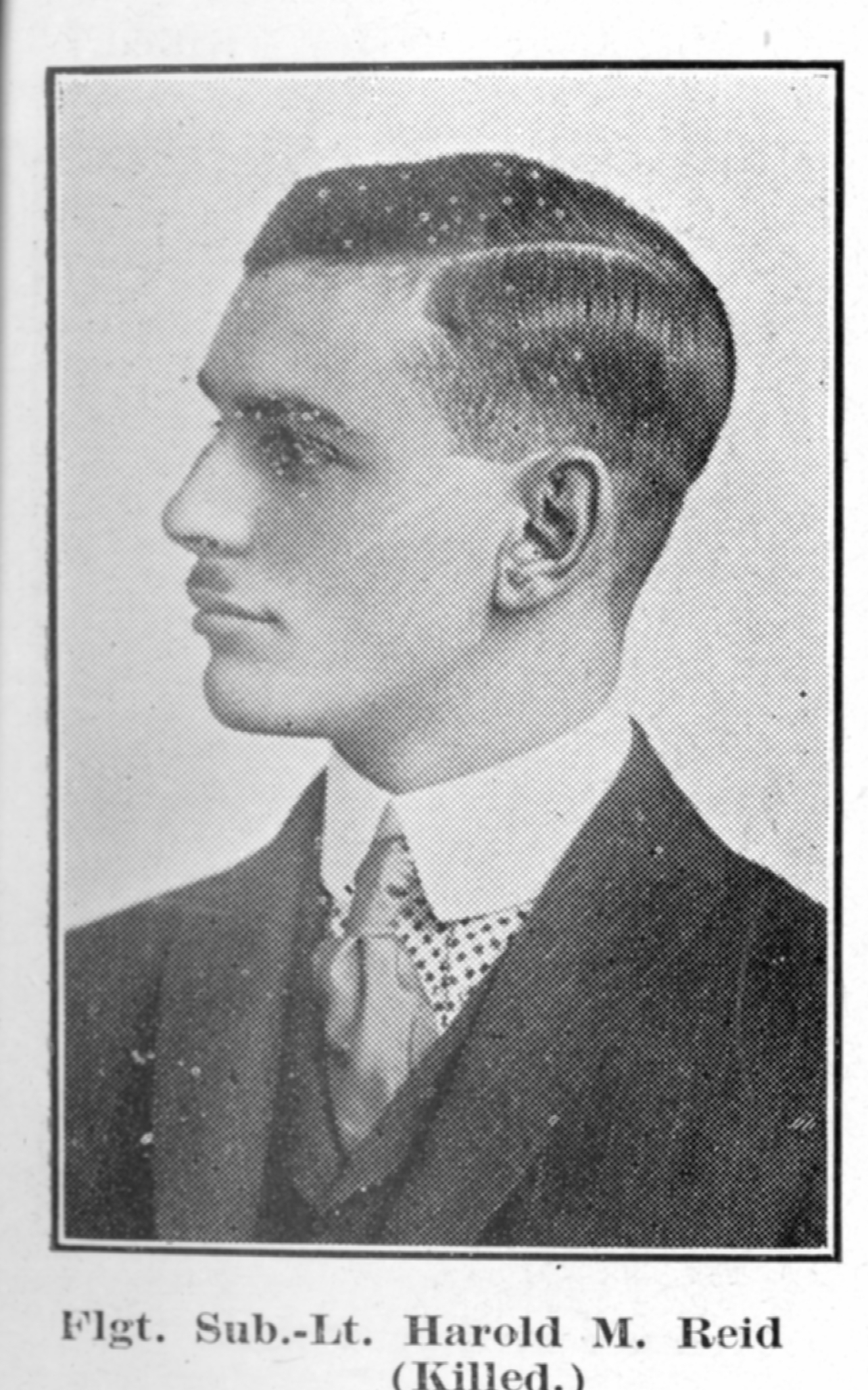
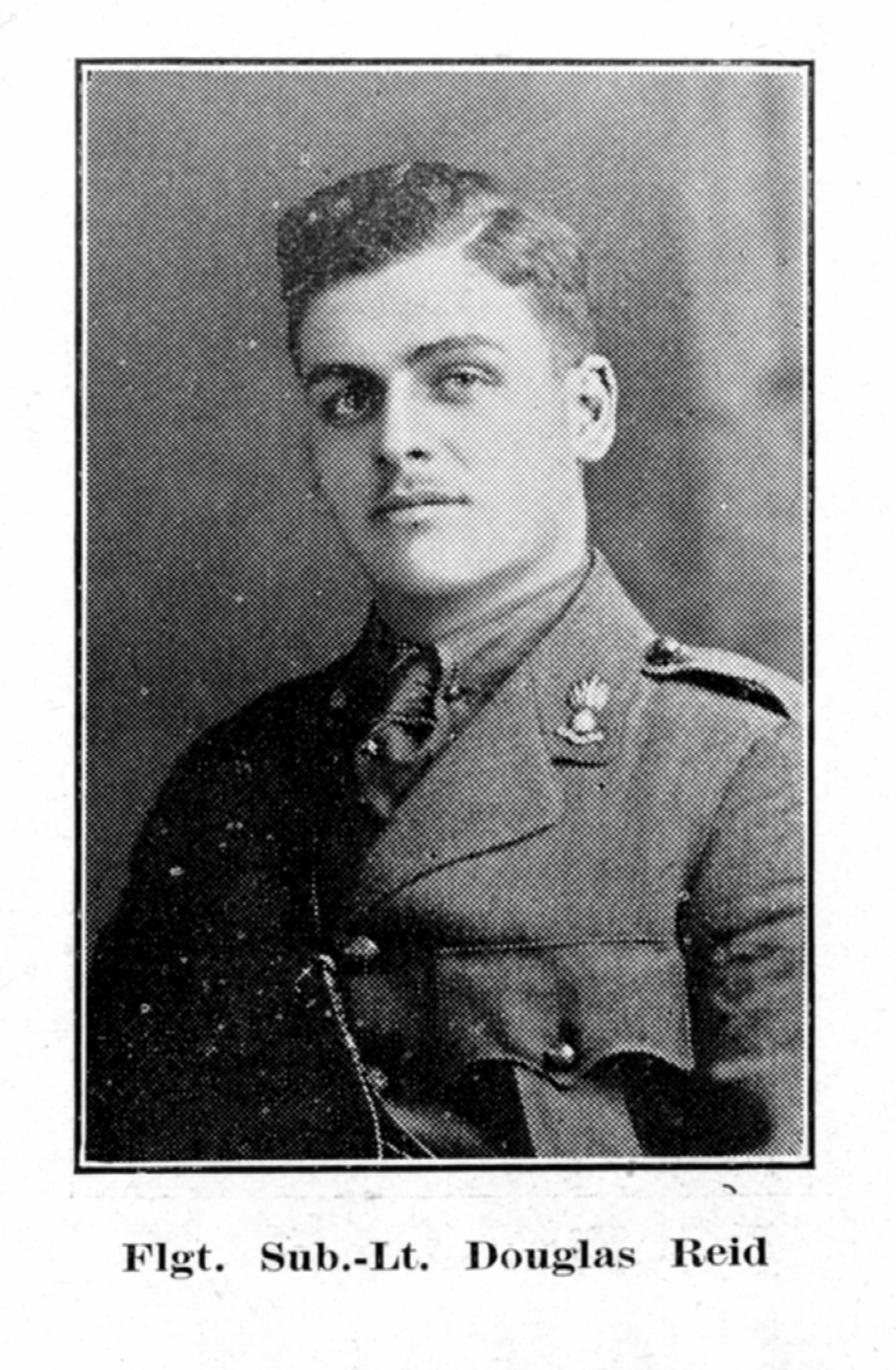
Douglas Reid“Belleville Aviator Appointed Instructor. Douglas Reid Completes Aviation Training in Texas and Is Appointed Instructor.

The following telegram was received today by Mr. C. M. Reid from his son Douglas, who is in the Royal Flying Corps at Fort Worth, Texas:

‘Received the terrible news about Harold’s death Monday. Finished my training as a cadet and have been chosen to remain instructing at Hick’s Camp, will not be home for some time. Hope mother will feel easy as I am not likely to go overseas for some time.’ Douglas Reid.”

100 Years Ago: Belleville Aviator Harold Mackenzie Reid Dies in Collision, Ritchie Company Flag at Half-Mast

The Intelligencer February 25, 1918 (page 1)

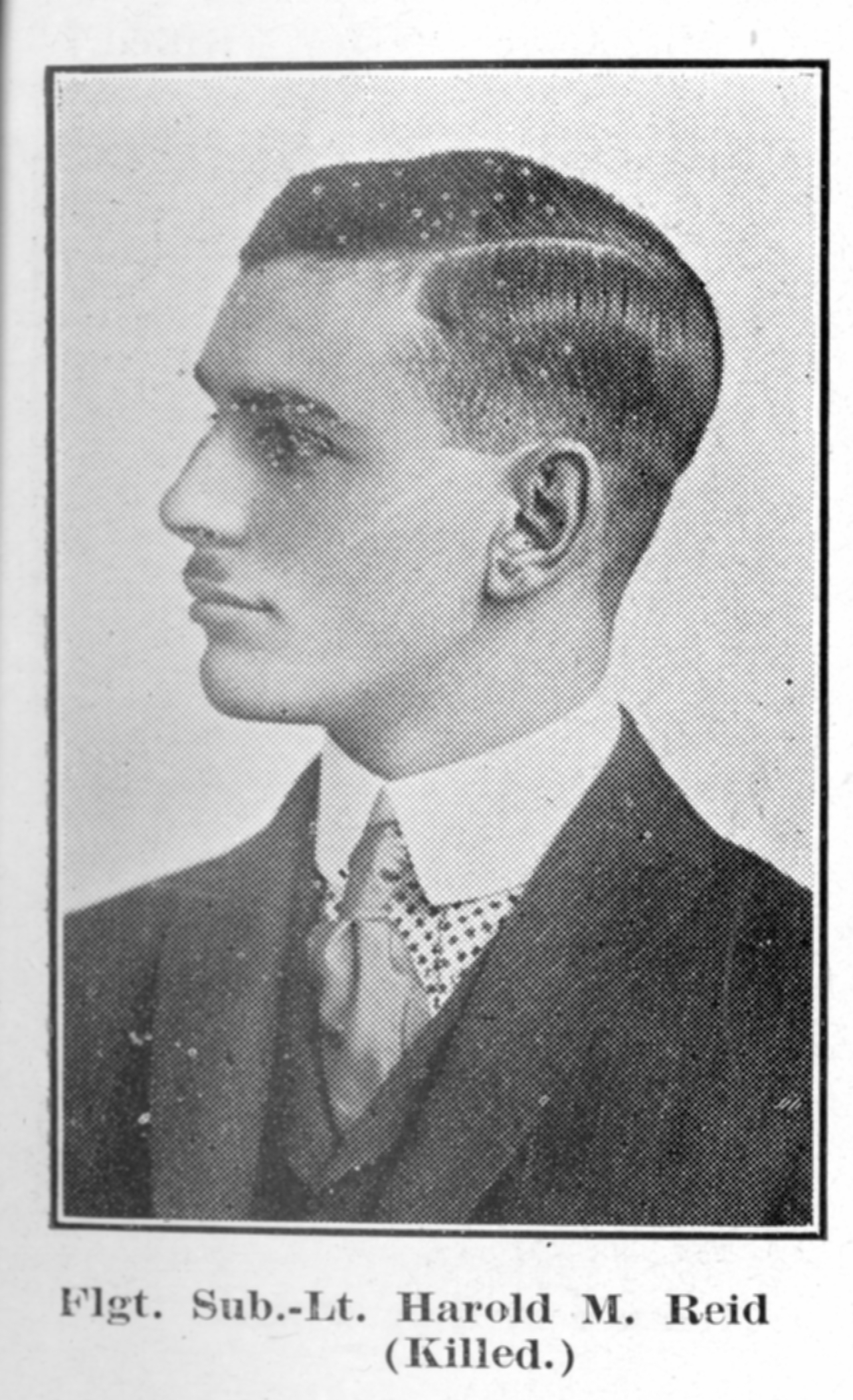
Reid, Harold M.“ ‘Young Belleville Aviator Was Killed in England. ‘Deeply regret inform you Flight Sub-Lieut. Harold Mackenzie Reid killed in aeroplane collision at East Church, Sussex. Letter following. Admiralty.’

The above cablegram from the British Admiralty arrived in the city Sunday morning and thus brought the sad intelligence that another of Belleville’s fine young men had been called upon to make the supreme sacrifice, and another home saddened. The news cast a gloom over the city yesterday when it became generally known, for Harold was one of Belleville’s most popular young men, and his untimely death came as a distinct shock to all who knew him.

Lieut. Reid joined the Royal Naval Air Service in December, 1916, and received his preliminary training in France. He had seen six months active flying and fighting on the western front, and only a few weeks ago he was moved to England for nerve rest and instruction on new types of machines. …

Harold was 20 years l month of age and received his education in the Belleville Public and High Schools. Just previous to enlisting he entered the men’s department of The Ritchie Co. store and was exceedingly popular with all his fellow employees, who all feel very keenly his sudden death.

He was a faithful member of Bridge Street church and Sunday School and at the Sunday School service yesterday afternoon Mr. F. S. Deacon paid a splendid tribute to the life and qualities of his former pupil.

By fateful coincidence Lieutenant Reid was killed on his grandmother’s ninety-second birthday—he was a grandnephew of the late Sir Mackenzie Bowell. He leaves to mourn his demise, his mother and father, Mr. and Mrs. C. M. Reid, a sister Helen, at home, and two brothers: Douglas, who has just finished his training as an aviator at Fort Worth, Texas, and Gordon, of Syracuse. Mr. Reid has cabled the Admiralty to have the body shipped home.”

[Note: Flight Sub Lieutenant Harold MacKenzie Reid died on February 23, 1918. He is commemorated on Page 592 of the First World War Book of Remembrance.]

The Intelligencer February 25, 1918 (page 5)

“Token of Respect. The flag above the Ritchie Company store on Front street is floating at half-mast out of respect to the late Flight Lieut. H. Reid, who was killed in England.”

Nurses of World War I: Gertrude Ethel Comerford

Gertrude Ethel Comerford was born in Detroit, Michigan on June 29, 1892 the daughter of Frederick Comerford and Louise Empey. The father of our subject was a native of Eldorado, a successful farmer on Concession 5, Lot W ½ 16, and served for some years as councillor for Madoc Township.

She was educated in the schools local to Eldorado and was a graduate of the Nursing School in Belleville in 1916. Miss Comerford enlisted in the Canadian Army Medical Corps on April 17, 1917 in Kingston.

Height:  5’ 3”

Weight:  125lb

Age: 24

Nursing Sister Comerford served in the # 16 Canadian General Hospital in Orpington, England and later in France. She was hospitalized at the Westcliffe Eye and Ear Hospital at Folkestone, England in October 1917 with Vincent’s Angina (trench mouth).

West Cliff Hotel, used as the Westcliffe Eye and Ear Hospital in World War I

Miss Comerford returned to Canada, setting sail on August 26, 1919 aboard the S.S. Celtic and was discharged on September 11, 1919.

She immigrated to the United States in March 1924 to work for the Detroit Board of Health and later nursed at the Portland, Oregon ENT Hospital. Miss Comerford was united in marriage on November 2, 1928 to Vernon Beckwith Durling, a native of Lawrencetown, Nova Scotia, a graduate of Agriculture in 1914 from McGill University and a Veteran of the Canadian Expeditionary Force in World War 1. The couple established themselves at Queen’s County, New York where they raised their family.

Gertrude Ethel Durling died on April 2, 1954 aged 61 years 9 months 3 days. She is interred at the Fresh Pond Crematory and Columbarium in Middle Village, Queen’s County, New York.

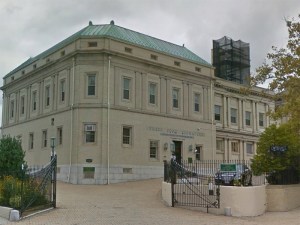
Fresh Pond Crematory

100 Years Ago: Vimy to Be Rebuilt by Canada, Griffin and Palace Employees to Be Paid for Heatless Days

The Intelligencer February 23, 1918 (page 6)

Vimy to be rebuilt by Canada“VIMY To be Rebuilt by Canada through the Secours National. France has gratefully accepted Canada’s offer to rebuild Vimy. One can imagine that the proud French people would never have asked for more than a loan to start life again in the devastated area. But Canada, through the Canadian Secours National, asks, as a proud privilege, to undertake the work. It will be a joyful thing for us to give this enduring pledge of our appreciation of all France has done in this war.

Give liberally. Hold concerts, plays, etc., to raise funds for Vimy; organize your society work for funds for Vimy. Make Vimy an enduring monument—and one well worth while—to our boys who, at Vimy Ridge, made the world proud of Canada.

Contributions Should Be Sent Without Delay to W. R. Johnston, Esq., Hon. Treas., 14 King St. W., Toronto, Ont. Secours National.”

The Intelligencer February 23, 1918 (page 8)

“Employees of Griffin’s and Palace Looked After for Heatless Day. Employees of Griffin’s and the Palace, and all Griffin Theatres throughout Canada will be paid full time for last Monday’s heatless day, and for the next five Monday’s in which the theatres will be closed by order of the provincial fuel controller.

This information has been secured by Manager Forhan of the two local Griffin Theatres, and is another instance of the splendid treatment accorded their employees by the Griffin Amusement Company of Toronto.”

100 Years Ago: Meatless Days Altered for Religious Reason, Coal Situation Not Improved

The Intelligencer February 22, 1918 (page 7)

“Meatless Days Are Altered. With the advent of Lent and the consequent restriction upon adherents of the Roman Catholic Church in the matter of eating meats on Wednesday and Friday, a change has been made in the Food Controller’s regulations.

Instead of meatless days being Tuesday and Friday, they are now to be Wednesdays and Fridays. Hotels and restaurants will be ordered to govern themselves according to the new regulation.”

The Intelligencer February 22, 1918 (page 7)

“Coal Situation Not Improved. The coal situation in this city was by no means improved today. It was confidently expected that there would be at least one or two cars of nut coal brought into the city last night or today, but up to the present time it has failed to arrive. There is no nut coal here. Today many orders were issued by the fuel controller for soft pea, and mixed coal.”

100 Years Ago: Canadian Women to Get Franchise, More Recruits for Depot Battalion

The Intelligencer February 19, 1918 (page 1)

“Women of Canada Get the Franchise. Ottawa. Universal women’s franchise in the Dominion is assured. Whether it will be enacted next session or not makes little difference.

Before the next election comes every woman in Canada who possesses the qualification in age, residence, etc., necessary for the present male franchise will obtain the vote. The assurance that the entry of women into the industrial arena would be protected by according them equal political rights with men was, it is stated, given to the Labor delegation which met here some days ago, and the results of whose deliberations with the Government on purely Labor matters was made public this morning.

About a million and a half new voters will be added to the Canadian franchise lists before another polling day is set in Ottawa.”

The Intelligencer February 19, 1918 (page 2)

“More Recruits Arrive. Thirty-five new recruits from Kingston came to Belleville last evening to be attached to the depot battalion which is being formed here. Others are expected to arrive here in the near future. At present there is 60 here including three officers.”

100 Years Ago: Officers Commemorate Arrival Three Years Ago, Dr. Capt. McCulloch Home

The Intelligencer February 18, 1918 (page 1)

“Canadians Celebrate Third Anniversary at the Front. Canadian Army Headquarters in France. Friday night more than one hundred officers of the original First Expeditionary Force who landed in France in the middle of February, 1915, met at dinner to commemorate their arrival three years ago. …

Late Friday morning Canadian Headquarters was the scene of a pleasing ceremony, in which Belgium, honoring the Canadian Corps, gave a striking appreciation of Canadian service at Passchendaele and in other historic combats in the salient. Fourteen Canadian officers were decorated by Gen. Sir H. S. Horne, commanding the First Army, with the Belgian Croix de Guerre. The same decoration has been awarded to six other officers and 187 non-commissioned officers and men.”

The Intelligencer February 18, 1918 (page 5)

“Capt. Dr. R. J. P. McCulloch of this city, who left here in July, 1915, for overseas service arrived home yesterday. He gave up his practice here and enlisted as specialist, since which time he has been engaged in hospital work devoting his skill as a specialist in ear, eye and throat work to the welfare of the soldiers. His many friends in Belleville heartily welcome him home again.”

Nurses of World War I: Olive Marie Campbell

Olive Marie Campbell was born in Cannifton on May 7, 1890 daughter of John Campbell, a cattle merchant and butcher, and Margaret Mather.
She received her primary education in Belleville and was a graduate of the Nursing School at the Hospital for Sick Children in 1914; she took the first place scholarship at graduation for general proficiency. Listing her residence as 173 Bridge Street, Belleville, Miss Campbell enlisted in the Canadian Army Medical Corps on November 19, 1917 in Kingston.

173 Bridge Street East, Belleville

Height: 5’ 5”
Weight: 126lb
Stated age: 26 (actual: 27)

Nursing Sister Campbell served at the Granville Canadian Special Hospital in Buxton, England but resigned her commission on May 20, 1918 and was soon united in marriage to Dr. Percival Keith Menzies; she set sail in December 1918 aboard the S.S. Olympic. Dr. Menzies was a native of Ontario, a graduate of the University of Toronto Medical School in 1910, and served in World War I as a Lieutenant Colonel in the Royal Canadian Army Medical Corps. The couple settled in Syracuse, N.Y. where he practiced general surgery and was later professor emeritus of surgery at the Upstate Medical Center and the former Syracuse University College of Medicine. They had two sons.

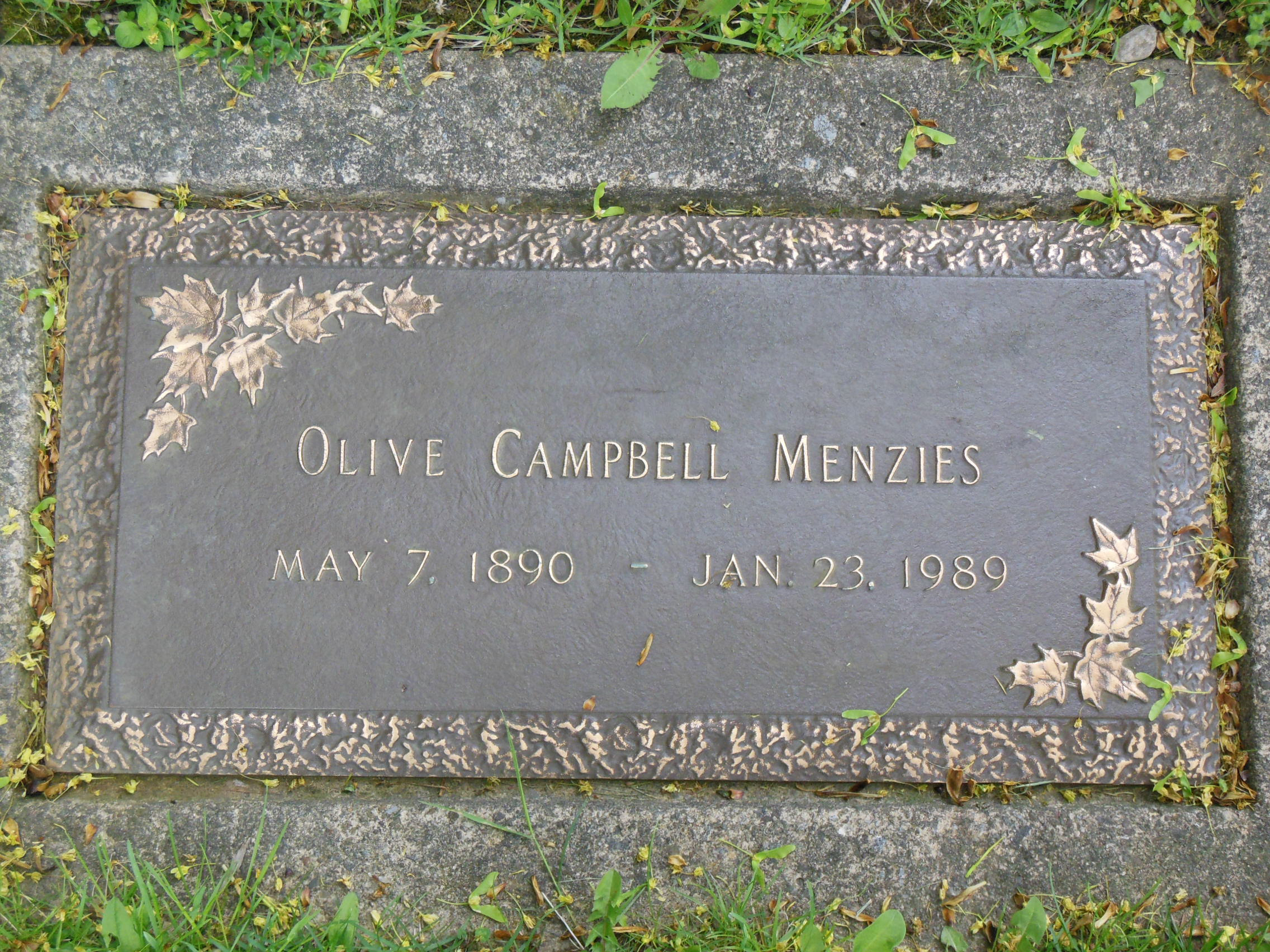
Olive Marie Menzies died on January 23, 1989 aged 98 years 8 months 16 days. She is interred at the Oakwood Cemetery in Syracuse Section B, Lot 56.

Olive Campbell Menzies headstone