Nurses of World War I: Celestina Geen

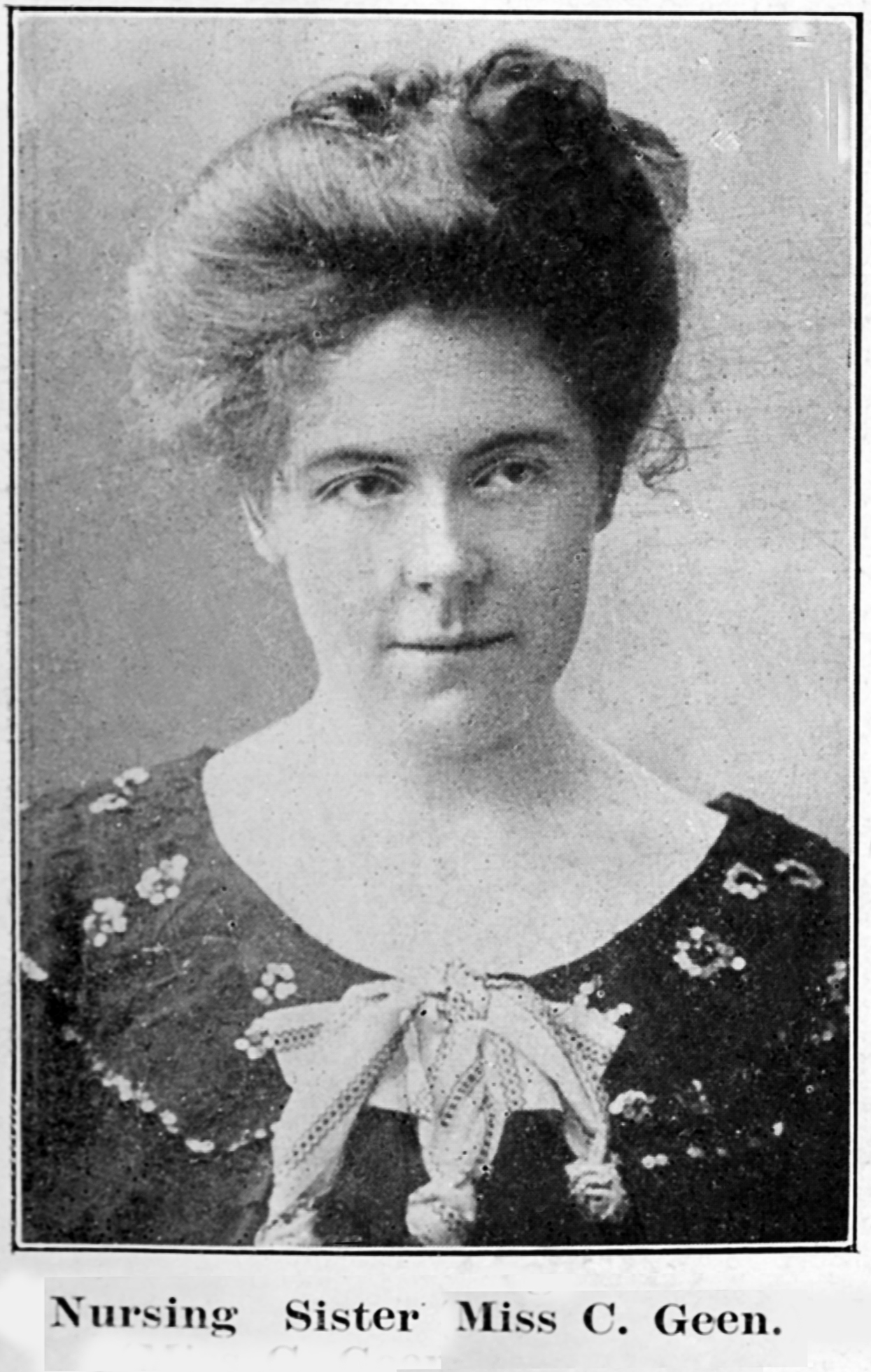
Celestina Geen was born in Belleville on February 7, 1878 daughter of Albert Geen and Sara Ann Consuelo Forneri. The father of our subject was a druggist who established Geen’s Pharmacy, served as a city councillor, was a Deacon and preacher of the Church of England and an honorary Mohawk. They resided in the Moodie Cottage.

Moodie Cottage on Bridge Street West and Sinclair Street in Belleville

Celestina was educated locally and was a graduate of the Military Hospital in Halifax in 1910; she was one of the few military nurses in Canada when the call came.

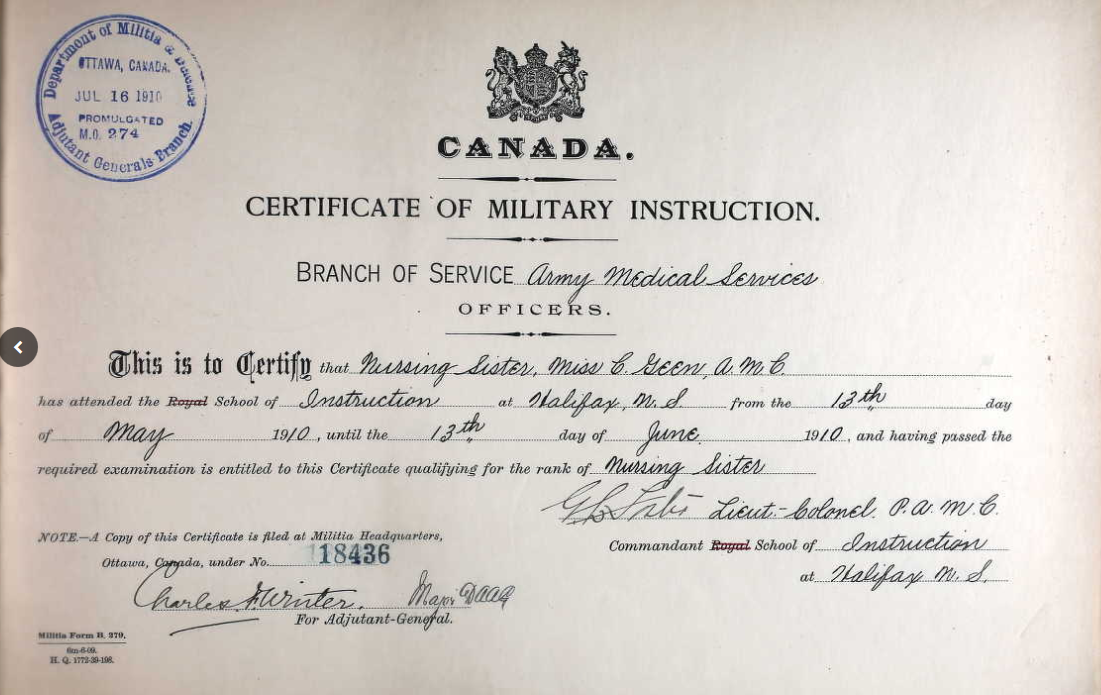
Certificate of Military Instruction for Celestina Geen, 1910

Miss Geen enlisted in the Canadian Army Medical Corps on September 25, 1914 at Quebec City.

Height:  5’ 7”

Weight:  136lb

Age: 36

Nursing Sister Geen was initially attached to the No. 3 Canadian General Hospital in Boulogne, France and also served in England, Belgium and for a time was stationed near Ypres where German shells were continually falling. In January 1916 Miss Geen was admitted to the Westcliffe Eye and Ear Hospital at Folkestone, England for treatment of influenza and nervous exhaustion and subsequently underwent a tonsillectomy.

West Cliff Hotel, used as a Canadian hospital in World War I

She returned to Canada setting sail in November 1917 aboard the S.S. Olympic and was given a medical discharge on May 14, 1918. She was united in marriage to Samuel Steele at Christ Church in Belleville on December 26, 1918; he was a Civil Engineer and a decorated Veteran of World War 1. Mr. Steele died in 1923.

Celestina Steele died in Toronto on August 16, 1972 aged 94 years 6 months 9 days. She is interred at the Belleville Cemetery Section K, Row 5 Grave 1E.

Headstone for Celestina Geen

100 Years Ago: All Are Interested in Casualties, Thirty Thousand Men to Be Available for Duty, Celebration Planned on King’s Birthday, Poster for Canadian Naval Service, Summons to Soldiers of the Soil

The Intelligencer April 20, 1918 (page 1)

“All Are Interested. The great battle now raging in France will no doubt touch with sorrow many Canadian homes, and messages of loved ones having been killed or wounded may be expected to reach Belleville homes. The public are interested in the brave heroes who are sacrificing so much to preserve Canada from German domination, and The Intelligencer will publish news of casualties as soon as received if the relatives will give us the information.

Telephone or personal calls will be appreciated. ‘Phone 36.”

The Intelligencer April 20, 1918 (page 1)

“Canada’s Man Power Bill Passed Commons and Senate. Special Despatch  to The Intelligencer, Canadian Press, Limited. Ottawa. It is stated today that upwards of sixty-six thousand men will be affected by the cancellation of exemptions under the order-in-council approved by both Houses of Parliament last night. Many of the men already exempted in these classes will of course be found physically unfit, but it is thought that thirty thousand men will be made available under the legislation approved by Parliament last night. Details of the calling up of these men are not yet perfected, but it will be done early in May.”

The Intelligencer April 20, 1918 (page 2)

“Soldiers’ Celebration Will Be a Hummer. Never has there been a more representative meeting than last night at the rooms of the Great War Veterans’ Association arranging for the holding of a monster celebration on the King’s Birthday, June 3rd. The citizen’s celebration committee met with the Veterans and appointed the various committees. …  It is needless here to mention the worthy aims and objects of the Veterans Association, for every person is behind our returned soldier boys.”

The Intelligencer April 20, 1918 (page 2)

Poster for Canadian Naval Service

“Officers Wanted for the Canadian Naval Service. Mate, age 23 to 40. Chief Artificer Engineer, age 25-59. Artificer Engineers, age 23-40.

The service also requires Engine Room Artificers, Carpenters, Stokers, Seamen, Cooks and Stewards. Naval Recruiting Officer, 103 Bay Street, Toronto, Ont.”

The Intelligencer April 20, 1918 (page 4)

“The Boys Are Coming. The summons to the Soldiers of the Soil was never more insistent than now when the call comes over the ocean sounding the imperative need of more fighting men to uphold the arms of Canada’s sons. …  ’Teen age boys in Canada have an opportunity now, the greatest in the world’s history, to replace the fighting men who have been called from the fields of production, and by helping to produce the most magnificent harvest in the history of Canada supply the food so urgently needed to ensure final and decisive victory.

Vacation with its pleasant visions of dreamy idleness among the blossoming hills and valleys of fair Canada and the delights of the ‘old swimming hole’ and other diversions, must be resolutely put aside in the higher joys of catching a place of honor on the second line of defence as Soldiers of the Soil.

Come on, boys! Play up and play the game for God and home and native land! and in after years each one of you will treasure with joy that S.O.S. medal which will be an honorable reminder of faithful and valued service to the Empire when the world was saved from the threat of German domination.”


100 Years Ago: Great War Veterans’ Association Activities, George McIntosh Enlisted at 16

The Intelligencer April 19, 1918 (page 7)

“Ypres Anniversary. Members of the Great War Veterans’ Association of Belleville will on Sunday morning attend service at the Salvation Army barracks here. Commandant McElkiney, of Peterboro, will give the address. The occasion is the anniversary of the battle of Ypres. The 15th Battalion band will play the veterans to the barracks.”

The Intelligencer April 19, 1918 (page 7)

“Enlisted at Sixteen. Pte. George Stewart McIntosh arrived home last evening after two years interesting and exciting experience in the Canadian army which he wouldn’t swop for a tidy fortune. He enlisted when sixteen years of age and went overseas with the Queen’s Ambulance Corps and saw active service in France, being through the battle of Passchendaele, where the Canadians won undying glory, and other actions.

On account of his extreme youth he had difficulty remaining on active service and finally was mustered out for this reason. He is a son of Mr. and Mrs. John McIntosh, Hillcrest avenue. Private McIntosh’s brother, John, crossed the sea with the Cobourg Heavy Battery, was gassed and invalided to England, but has just returned to France in time to take part in the ‘big push’ now facing the Canadians, when it is quite on the cards that the Maple Leafs will give the Kaiser his final kick down the hill of defeat.”

[Note: Date of birth on attestation paper is Feb 16th 1898. Note on attestation paper “Actual age claimed on Feb 4th 1918: cable … shows date of birth 16th Feb 1900.]

100 Years Ago: Great War Veterans’ Association Planning Celebration for Funds

The Intelligencer April 18, 1918 (page 5)

“Veterans Will Celebrate. The Belleville branch of the Great War Veterans’ Association purpose holding a celebration on June 3rd primarily to raise funds to carry on the very important work of the association in looking after the interests of returned soldiers and their families, but also as a ‘get-together’ day for the soldiers and their kinfolks and friends and well-wishers when everybody can ‘pack up their troubles in their old kit bags and smile, smile, smile.’

A fine program of sports will be arranged including horse races and other interesting features. The Veterans solicit the co-operation of all patriotic citizens to make the day a big success and are calling a meeting for Friday evening at eight o’clock in the Veterans’ Club rooms, Corby Building, Front street, to which is invited members of the Citizens Celebration Committee, citizens generally and horsemen in particular.”

100 Years Ago: Exemption Cancelled for Men 20 to 23, Norman Dawkins Receives Masonic Ring, Poster for Royal Flying Corps

The Intelligencer April 17, 1918 (page 1)

“Canadian War Machine Will be Speeded Up at Once. Ottawa. Drastic changes will be made in the Military Service Act. All exemptions to men between 20 and 23 will be cancelled and they must report for duty. …  The urgency of the demand for reinforcements to meet the Hun peril at the front, and the failure of the cumbersome machinery provided by the Military Service Act to supply these reinforcements quickly have necessitated the virtual wiping out of the whole machinery of the act and the substitution at once of a direct call to the colors of all unmarried young men physically fit for military service between the ages of twenty and twenty-three. …  It is believed that these young men can be spared with the least disturbances to agriculture and other essential industries. …

The old order is to be reversed. The men are now to be called up and exempted afterwards in exceptional cases instead of calling them only after the exemption process of the selective draft with all its consequent delays has been operated.”

The Intelligencer April 17, 1918 (page 7)

“Presented With a Ring. Mr. Norman Dawkins, of this city, who is about to leave here for overseas service, was presented with a Masonic ring on Tuesday evening at a special meeting of Eureka Lodge, A.F. and A.M., by members of the lodge with which he is identified.

Wor. Bro. J. W. Holmes, occupied the chair and made a few well chosen remarks. V. Wor. Bro. A. R. Walker made the presentation, and brief addresses were given by R. W. Bro. L. R. Terwilliger, Wor. Bros. H. W. Ackerman, C. J. Symons, Mr. A. Day and Geo. Dawkins, father of the young soldier. At the close the brethren sang the National Anthem and Auld Lang Syne.”

The Intelligencer April 17, 1918 (page 7)

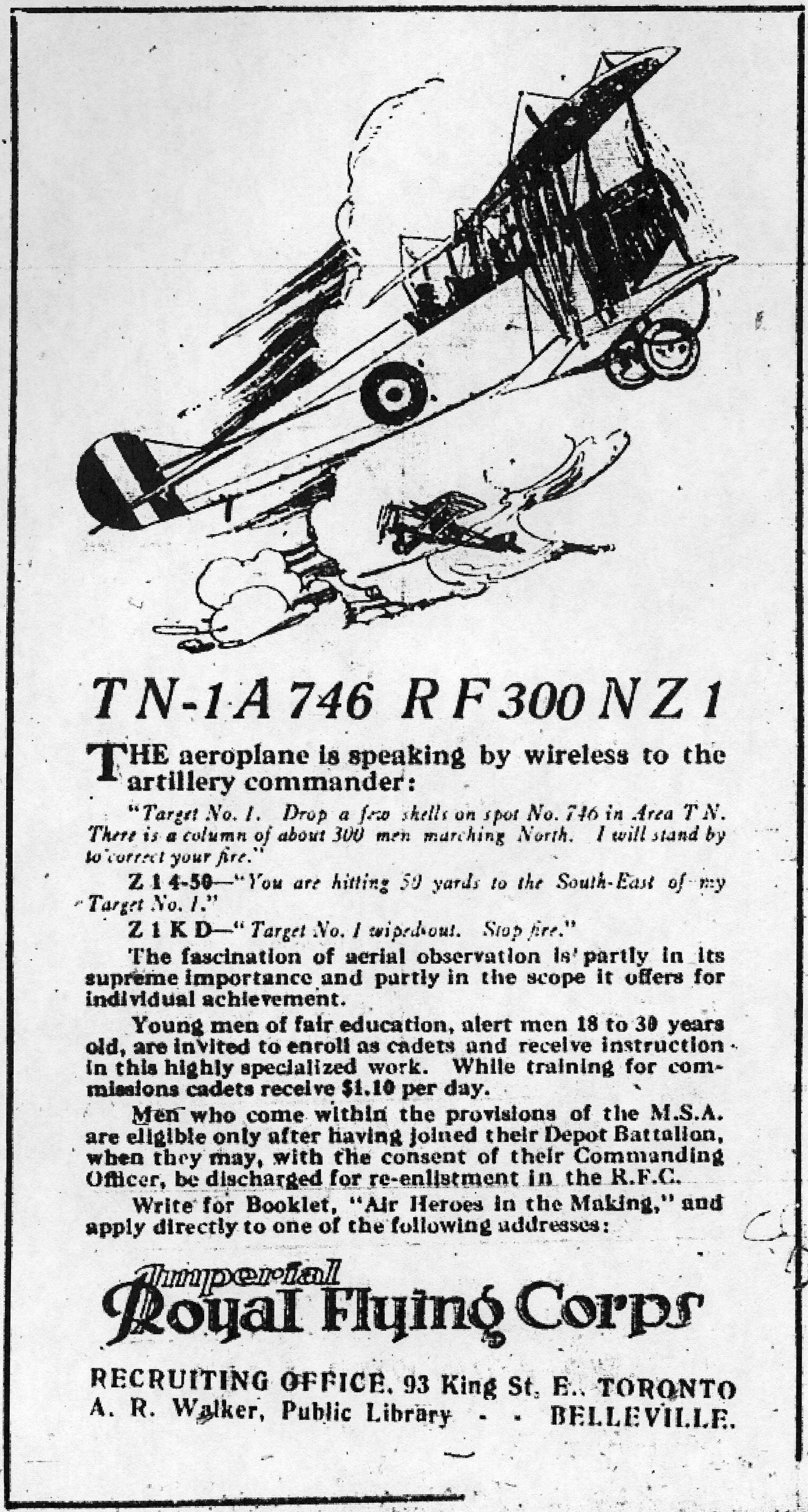
Poster for Royal Flying Corps

“The fascination of aerial observation is partly in its supreme importance and partly in the scope it offers for individual achievement.

Young men of fair education, alert men 18 to 30 years old, are invited to enroll as cadets and receive instruction in this highly specialized work. While training for commissions cadets receive $1.10 per day.

Imperial Royal Flying Corps. Recruiting Office. A. R. Walker, Public Library, Belleville.”

100 Years Ago: William Asselstine Wounded, Harry McCreary Dies of Wounds

The Intelligencer April 16, 1918 (page 7)

“Another Son Wounded. Mr. John Asselstine of this city, has received a telegram from the Director of Records at Ottawa stating that his son, Private William John Asselstine was suffering from gunshot wounds in the head, thigh and leg. Pte. Asselstine left here with the 155th Battalion.

A brother of the wounded soldier, Pte. Charles Asselstine died in England last year, and another brother, Pte. Vincent was on October last severely wounded. The sympathy of all citizens will be extended to the members of the family in their sore trial.”

The Intelligencer April 16, 1918 (page 8)

“Pte. Harry McCreary Dies of Wounds. Another Belleville Boy Gives His Life That the Empire May Live. The sad news reached Belleville this morning that Pte. Harry Earl McCreary had died of wounds at No. 7 Stationary Hospital in France. Harry received gunshot wounds in the face and his skull was fractured on the 28th of March. His friends were anxiously awaiting encouraging news of him when the word came that he had passed away as a result of his injuries on Saturday last, April 13th.

Pte. McCreary was born in Belleville on 10th January 1888, being the third son of Mr. and Mrs. Andrew McCreary, who now reside at 869 Manning Avenue, Toronto. He was educated in Belleville’s schools and went to Winnipeg some years ago, where he was latterly employed with the Canadian Pacific Railway Company as a sleeping car conductor. On his arrival at Moosejaw one night he received a wire from his older brother advising that he had enlisted for overseas service, and Harry immediately insisted on being relieved of his duties and dead-headed into Winnipeg and signed up along with his brother Wesley.

Both brothers went to England with the 197th battalion, Wesley as captain and adjutant and Harry as sergeant. They went to France with the 78th Canadians as lieutenant and private respectively. Harry had won one stripe in the field after being transferred in France to the railway services, but he applied for transfer back to the 78th and again reverted to the rank of private in order to be near his brother and western chums.

Besides the father and mother, and brother overseas, there is a younger brother, Russell, who will graduate from McGill University next session as medical doctor, and another brother, William R., produce merchant of this city.

Harry was a splendid type of young Canadian manhood who was loved and respected by all who knew him. While he will be sorely missed, those who knew him best are proud of his sacrifice, and realize that he has died as he lived, an honorable citizen.”

[Note: Private Harry Earl McCreary died on April 13, 1918. He is commemorated on Page 454 of the First World War Book of Remembrance.]

100 Years Ago: No More Furloughs Granted, Canadian Casualties, In Defence of Tenants Paying Tax, Poster for Bell Telephone, Claude Caverley Dies of Wounds

The Intelligencer April 15, 1918 (page 1)

“No More Furloughs Granted To Canadians On Battle Front. London. With every available trained, physically fit Canadian soldier sent to France, the Overseas Minister of Militia has issued a drastic order for the conservation and allocation of the remaining man-power in England. In the future there will be returned to Canada only those unsuitable for any form of army service. …

Those granted leave on compassionate grounds in the future will be returned to Canada at the public expense. They will not be granted furlough, but will be struck off the overseas strength and placed at the disposal of the home authorities to discharge, return with drafts, or employ at home. …

In March there were approximately 20,000 men in the Forestry Corps in France and England. The staff of the Forestry Corps is being reduced. A number of officers were weeded out last month owing to lack of knowledge of the work. A still further reduction is possible.”

The Intelligencer April 15, 1918 (page 1)

“Casualties Among Canadian Troops. KILLED. Trenton—T. Gunyou. Plainfield—W. J. Gillespie. Harold—M. Richardson. Frankford.—A. A. Ford.

DIED OF WOUNDS. Thurlow—Sergt. C. Caverley.

WOUNDED. Belleville—A. L. Johnson, J. Bradshaw. Springbrook—Corp. A. Linn. Marmora—Corp. F. B. Loveless, H. C. McWilliams. Frankford—O. N. Pearson.”

The Intelligencer April 15, 1918 (page 3)

“The Canadian Relief Fund. To the Editor of The Intelligencer. Dear Sir,—Our country is endangered. The German wolf is at our gates. It is necessary that every citizen should contribute to the support of the families of the fighting men. No class should be exempt, because it is a national matter, and a national debt, therefore why should I, who own a house and lot, be taxed, and my tenant, who is as much a citizen of Canada as myself, go free? Why should not my tenant bear his part of the burden? It is his country as well as my country. …  Every man owes this debt to his country. Why single out one class and make it pay all? Yours truly, OBSERVER.”

The Intelligencer April 15, 1918 (page 4)

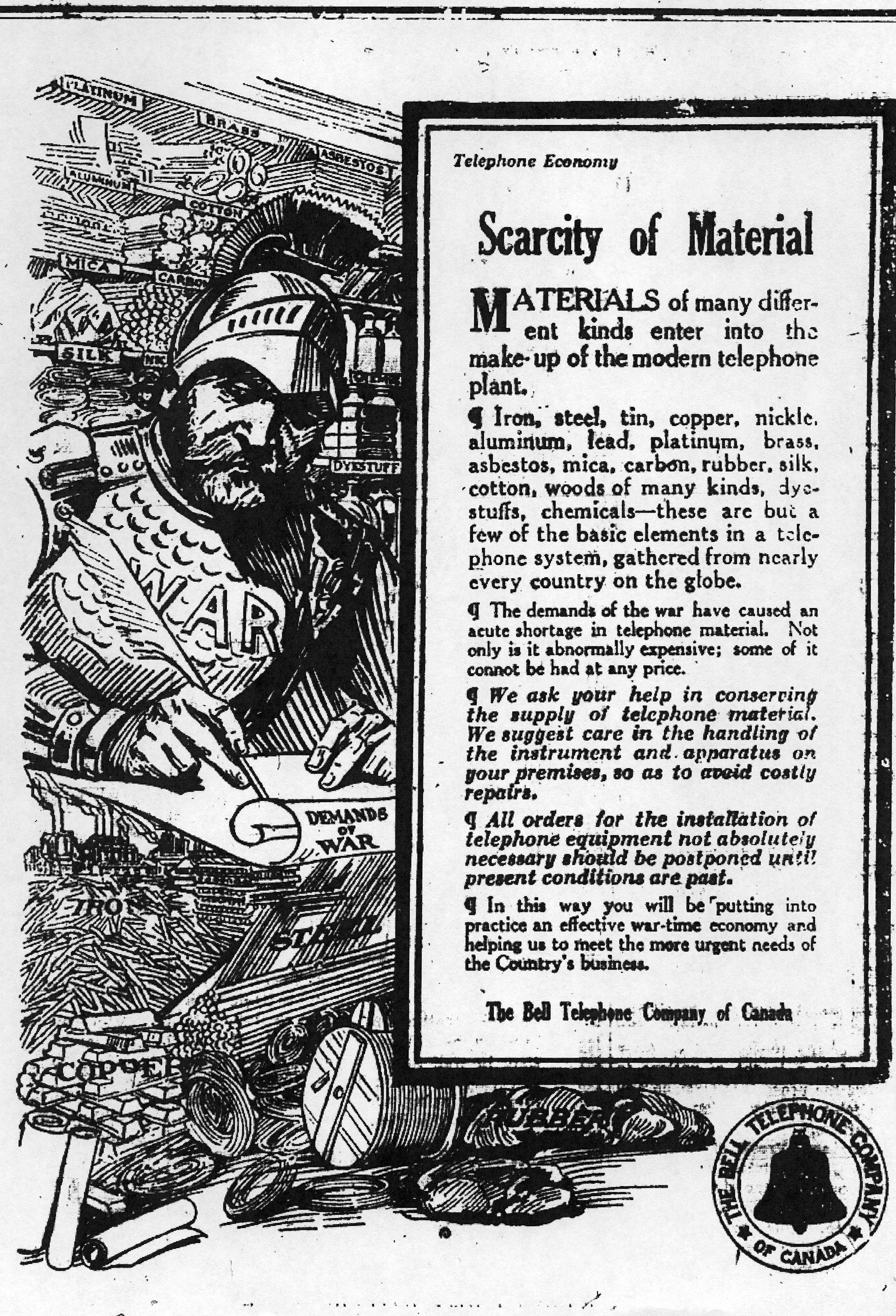
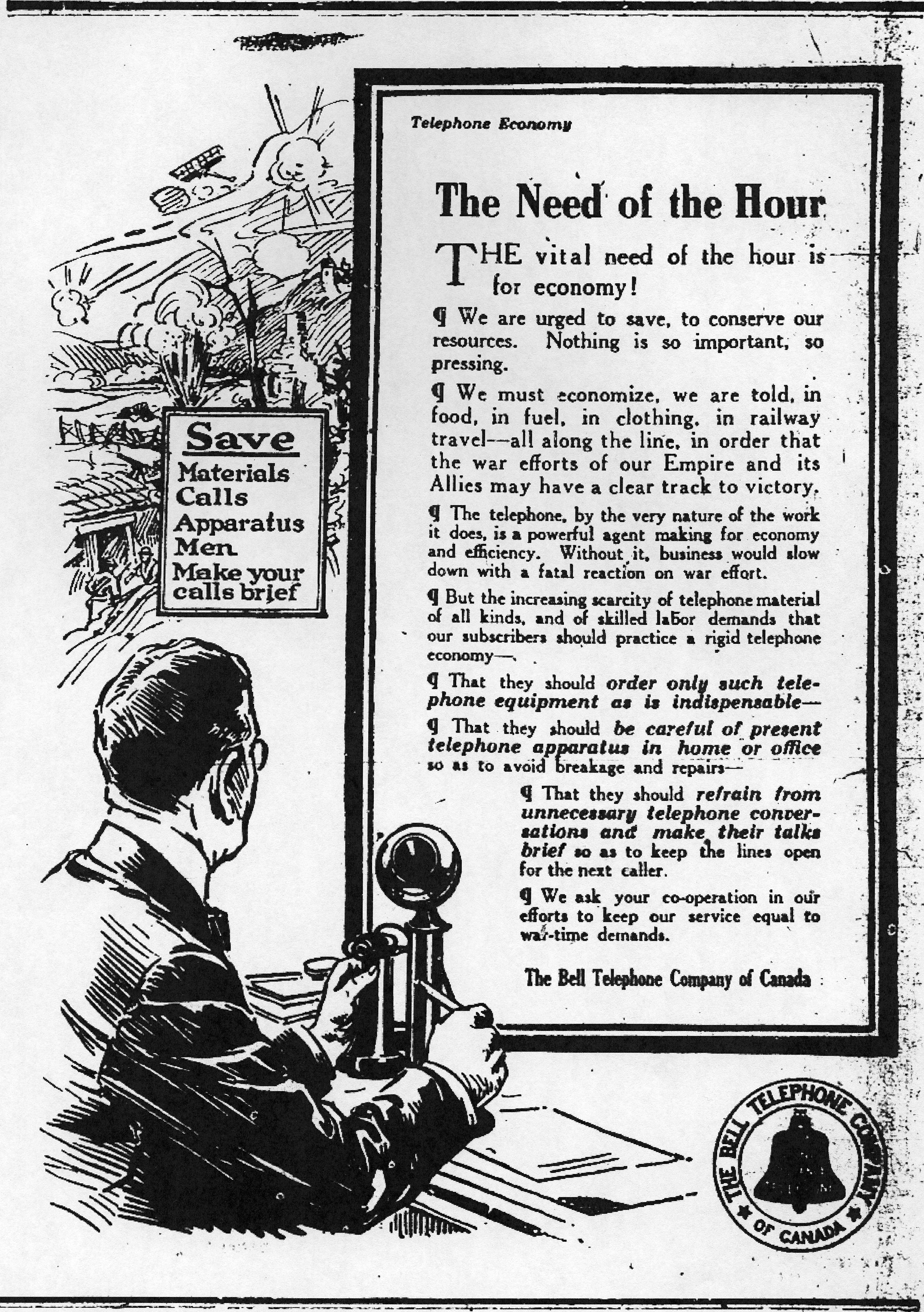
Ad for Bell Telephone

“Telephone Economy. Scarcity of Material. Materials of many different kinds enter into the make-up of the modern telephone plant. Iron, steel, tin, copper, nickel, aluminum, lead, platinum, brass, asbestos, mica, carbon, rubber, silk, cotton, woods of many kinds, dyestuffs, chemicals—these are but a few of the basic elements in a telephone system, gathered from nearly every country on the globe.

The demands of the war have caused an acute shortage in telephone material. Not only is it abnormally expensive; some of it cannot be had at any price.

We ask your help in conserving the supply of telephone material. We suggest care in the handling of the instrument and apparatus on your premises, so as to avoid costly repairs.

The Bell Telephone Company of Canada.”

The Intelligencer April 15, 1918 (page 5)

“Died of Wounds. Sergt. Claude Caverley, of Foxboro, Thurlow township, who went overseas with the 39th Battalion is officially reported dead from wounds. Deceased was 26 years of age and was a son of Mr. Edmund Caverley who died last September. Sergt. Caverley died on the hospital ship Brighton. He was a promising young man and was engaged in the teaching profession when the war broke out.”

[Note: Sergeant Claude Caverley died on April 9, 1918. He is commemorated on Page 382 of the First World War Book of Remembrance.]

Nurses of World War I: Margaret Vitaline Foster

Margaret Vitaline Foster was born at the farm house on the 5th Concession near Bancroft, Dungannon Township, Hastings County on July 28, 1894 daughter of Ira Foster and Agnes Brown.

She was educated in a one-room schoolhouse and walked three miles to school and back every day; the farm house had no electricity and no indoor plumbing. Margaret was a graduate of the Nursing School in Belleville in early 1917, worked at the hospital for three months and enlisted in the Canadian Army Medical Corps on May 5, 1917 at Kingston.

Height: 5’ 7”

Weight: 156lb

Age: 22

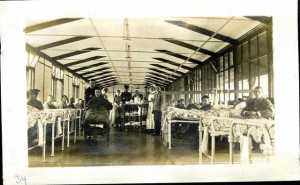
Staff and patients at the Canadian Red Cross Hospital at Cliveden (Grace Waters album)

Nursing Sister Foster served at the Duchess of Connaught Canadian Red Cross Hospital at Cliveden, near Taplow, England. She resigned her commission on January 10, 1919 and was united in marriage to Reverend Ernest Harston on January 11, 1919 at Maidenhead, England. He served in England and France with the Canadian Chaplain Services and rose from Private to Captain. After the wedding they were posted to Kinmel Park, North Wales for four months, were present during the riot of March 1919 and returned to Canada, setting sail on May 24, 1919 aboard the S.S. Metagama. Mrs. Harston kept house for the 23 years of her married life and after her husband died returned to her nursing career at the Toronto East General Hospital and later at the Lockwood Clinic.

Margaret Vitaline Harston died on May 1, 1990 aged 95 years 9 months 3 days.

100 Years Ago: Daylight Saving to Start Sunday, Notice from British Food Controller, Farmers’ Exemptions Conditional, Back Yard Gardens, Ad for Gillette, Ad for McLaughlin Motor Cars, Ad for Ford Motor Cars

The Intelligencer April 13, 1918 (page 1)

“Daylight Saving Effective From Sunday Morning at Two. Ottawa. The going into force of the daylight-saving measure has been definitely fixed for 2 o’clock on Sunday morning, April 14th. It will remain in effect until 2 o’clock on the morning of Thursday, October 31st, 1918. This afternoon Sir Charles Fitzpatrick, Deputy Governor, attended in the Senate and gave the Royal assent to the bill.”

The Intelligencer April 13, 1918 (page 4)

“British Food Controller Says Food Supply Is Up to Canada. The following message addressed to the Organization of Resources Committee has just been received: London, April 5th, 1918.

‘In these stern days it is inspiring to learn that Ontario is tackling the food problem with redoubled energy. …  Germany hoped first to starve the old country by the submarine campaign and then to smash her land forces. She has failed to starve us and she will fail to smash us, but we cannot achieve victory without food. There never was a time when it was more needed.

The Canadian farmer and the Canadian farm hand now have the opportunity to make an effective reply to the enemy’s present onslaught by bending their undivided energies to the increased production of those food supplies for which we depend to such vital extent upon your great Dominion.’ ”

The Intelligencer April 13, 1918 (page 5)

“Must Raise Food or Go and Fight. Ottawa. The need for troops cannot be exaggerated. On the other hand, the necessity of maintaining food production is likewise pressing. The exemption granted farmers is granted solely because of the conviction that they are, or may be, more useful in food production than as troops at the front. …  All such exemptions are for a fixed period, usually until June 1 or July 1 but in some cases until Nov. 1.

In all such cases the person exempted has the privilege of applying for an extention of the exemption period, when it ought to be shown what efforts the applicant has made and is undertaking for the greatest production possible.”

The Intelligencer April 13, 1918 (page 9)

“Get Busy Now on That Back Yard Garden. A new duty has come before the Canadian people. It may be national in its scope, but it is relentlessly personal in its responsibility. It is to shoulder a greater share of war’s burden by growing more food. No other part of the Empire can be Canada’s proxy: for no other part can be reached in the summer of 1918 by British shipping, depleted as it has been by the Hun submarine campaign, even if other parts could really grow the needed foods. …

Especially insistent is the warning of the Food Board that nothing elaborate in the growing of vegetables should be tried. The good old standards, things that man falls back upon when the appetite is cloyed with the fruits of our over-civilization, are the best to take up. …  For ever and again it must be repeated that this is a war measure, made as necessary as the making of munitions was, to make the ‘world safe for democracy.’ …

But one thing the first year man should cultivate besides his land: that is the spirit of community effort. He should join one of the local gardening or vacant lot associations. He will learn more in a week that way than by his own experience all the summer. Another thing to which attention should be drawn is the really splendid series of pamphlets and booklets issued by the Canadian and Provincial Governments.”

The Intelligencer April 13, 1918 (page 9)

Gillet advertisement“Where Life Itself Depends On A Clean Shave. The man who faces a 1918 gas attack with a mask that does not fit quite tight, comes out a casualty—if he comes out at all! Even a two or three days growth of beard under the rubber facing of the mask will let in gas enough to be dangerous—it can be fatal!

That’s why clean shaving means more to our boys than comfort—more even than morale—it means life!

Keen as our own troops are on shaving, our American Allies are going us one better. Every soldier under the Stars and Stripes will be supplied with a Safety Razor.

Gillette Safety Razor Company of Canada Limited.”

The Intelligencer April 13, 1918 (page 10)
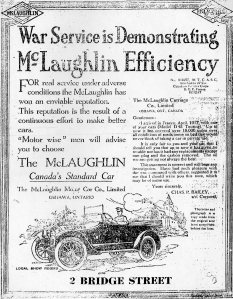
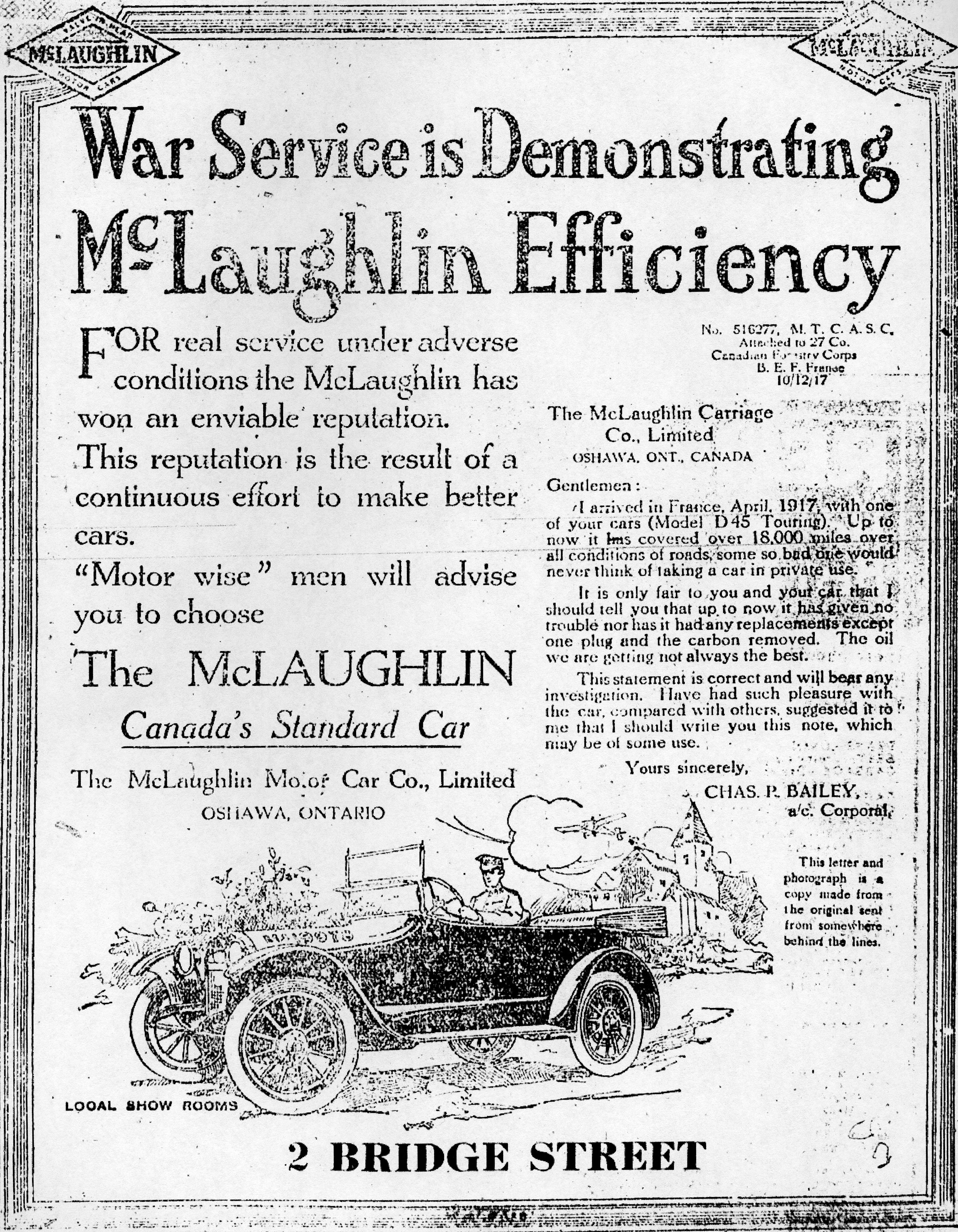
McLaughlin advertisement

“War Service Is Demonstrating McLaughlin Efficiency.

Gentlemen: I arrived in France, April, 1917, with one of your cars (Model D45 Touring). Up to now it has covered over 18,000 miles over all conditions of roads, some so bad one would never think of taking a car in private life.

Local Show Rooms. 2 Bridge Street.”

The Intelligencer April 13, 1918 (page 11)

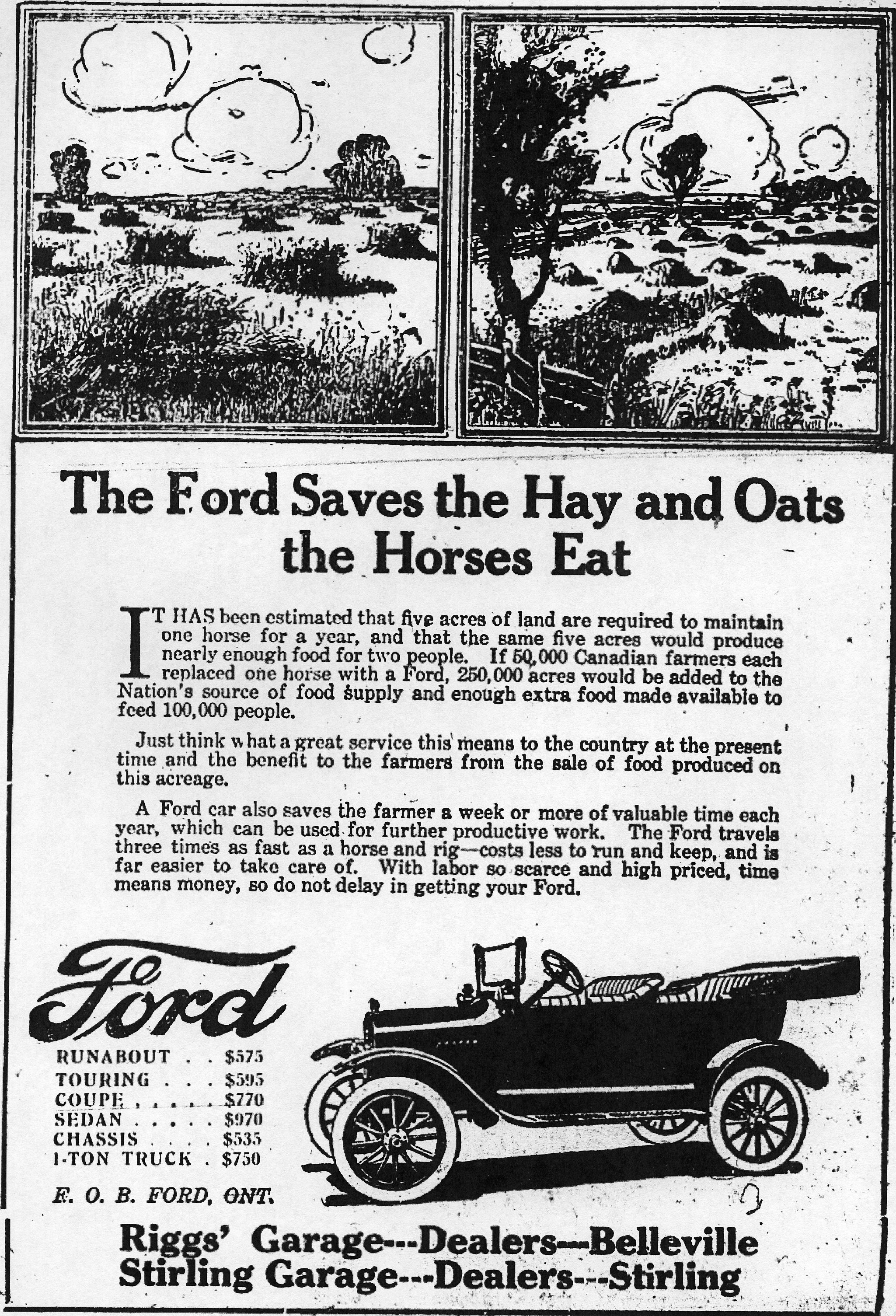
Ford advertisement

“The Ford Saves the Hay and Oats the Horses Eat. It has been estimated that five acres of land are required to maintain one horse for a year, and that the same five acres would produce nearly enough food for two people.

A Ford car also saves the farmer a week or more of valuable time each year, which can be used for further productive work. The Ford travels three times as fast as a horse and rig—costs less to run and keep, and is far easier to take care of.

Ford Runabout $575; Touring $595; Coupe $770; Sedan $970; Chassis $535; 1-Ton Truck $750.

Riggs Garage—Dealers—Belleville. Stirling Garage—Dealers—Stirling.”
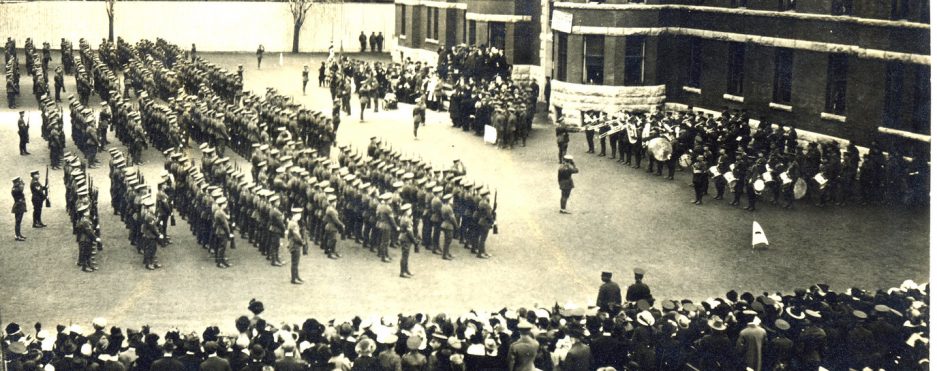
100 Years Ago: Long Service Medal for Capt. J. V. Doyle, John Bradshaw Wounded, Poster for Bell Telephone, William Gillespie Killed in Action, Daylight Saving

The Intelligencer April 12, 1918 (page 3)

“Long Service Medal. Lieut.-Col. Barragar has received the long service medal of Capt. J. V. Doyle which he is forwarding to him to France where he is on active service. Capt. Doyle left Belleville with the 155th Battalion and was transferred to another Battalion for service at the front. Capt. Doyle has been connected with the Canadian militia for twenty-one years.”

The Intelligencer April 12, 1918 (page 3)

“Wounded in the Shoulder. Mrs. John Bradshaw, residing at 158 Church street in this city today received the following telegram which refers to her husband: Sincerely regret to inform you, four one two nought eight seven Pte. Jno. Bradshaw, Infantry, officially reported admitted to field ambulance depot, April 3rd 1918; gunshot wound right shoulder; will send further particulars when received. Director of Records.

Pte. Bradshaw enlisted and went overseas with the 39th Battalion from here in 1915, and had been in the firing line for some months.”

The Intelligencer April 12, 1918 (page 5)

Ad for Bell Telephone

“Telephone Economy. The Need of the Hour. The telephone, by the very nature of the work it does, is a powerful agent making for economy and efficiency. Without it, business would slow down with a fatal reaction on war effort.

But the increasing scarcity of telephone material of all kinds, and of skilled labor demands that our subscribers should practice a rigid telephone economy.

We ask your co-operation in our efforts to keep our service equal to war-time demands.

The Bell Telephone Company of Canada.”

The Intelligencer April 12, 1918 (page 7)

“Made Supreme Sacrifice. Mrs. John Gillespie, residing at Plainfield, Thurlow township, has received notification from the Director of Records at Ottawa that her son, Private William Gillespie had been killed in action. Deceased was about 35 years of age and unmarried. Some months ago he enlisted at Kingston and was engaged for a considerable time in assisting in the bakery in connection with a military camp in England. He had not been at the front for any great period when he was killed.

Private Gillespie was well known in this vicinity where he was born and lived all his life. His father died some time ago. In addition to the mother, two brothers and a sister survive. Mr. Thos. Gillespie, residing on Catherine street in this city is an uncle of the deceased.”

[Note: Private William John Gillespie died on April 2, 1918. He is commemorated on Page 414 of the First World War Book of Remembrance.]

The Intelligencer April 12, 1918 (page 7)

“Daylight Saving. Commencing Monday 15th the leading Merchants of Belleville will open their places of business at 8.30 and close at 5.30 to enable their staffs to get on the land.”