100 Years Ago: Harry McCreary Wounded, Footbridge Repaired, War Workers and Victory War Club Gather, Quinte Chapter I.O.D.E. Entertains

The Intelligencer April 1, 1918 (page 3)

“Pte. McCreary Probably Fatally Wounded. Mr. and Mrs. Andrew McCreary, of this city, have received the following word from Ottawa about their third son who has been serving in France with the Canadian Expeditionary Forces now for over a year:

‘Sincerely regret to inform you 187112 Private Harry Earl McCreary, infantry, officially reported dangerously wounded one casualty clearing hospital March 28th, 1918, gunshot wounds head, face and skull fractured. Director of Records.’

Harry went overseas with the 197th Battalion from Winnipeg with the rank of Sergeant and reverted to a private in order to get on to France. Since serving there he received the stripe of Corporal and the last heard from him was that he was in charge of a gang of trackmen assisting in keeping up the railway lines of communication within the fighting zone. Pte. McCreary was at one time an employee at the Ritchie Company’s Store. Those who know him best are proud of him and his service to the Empire and are resting content that he fell while courageously performing his duties. We trust that he may be spared to again take his place among us here and fill to overflowing the dull spots in life with his wit and cheerful comradeship.”

The Intelligencer April 1, 1918 (page 7)

“Open for Traffic Tomorrow. Repairs to the footbridge, which was considerably damaged by the recent flood, have been vigorously prosecuted and the structure will be open for traffic tomorrow. This will be welcome news to pedestrians, who have been compelled for some days to use either the upper or lower bridge.”

The Intelligencer April 1, 1918 (page 7)

“War Workers Foregather. The War Workers and Victory War Club spent a pleasant afternoon last Tuesday, the members and visitors indulging in refreshments and a social cup of tea. The six dozen eggs which Mrs. Doran and Mrs. Bailey donated, were drawn for. Mrs. Huffman, Grove St., having the lucky number, $50.15 realized from the eggs. Mrs. R. Black’s, Canary Bird, won by Miss Ridley, $5.65. Mrs. Shooner’s handmade yoke, was won by Miss Harold, $10.20.

Two boxes were packed and made ready for shipment. Box No. 1 contained: 36 pairs socks, 36 towels, 36 cakes soap and 2 dusters. Box No. 2—13 hot water bottle covers, 24 binders, 10 hospital shirts, 2 hospital quilts, 10 suits pyjamas, 144 hospital chiefs, 2 pneumonia jackets, 12 stretcher caps, 6 housewives, 24 towels, 2 dusters.

President, Mrs. M. MacMullen; Secretary, Mrs. W. A. Woodley.”

The Intelligencer April 1, 1918 (page 7)

“A Profitable Affair. Under the auspices of Quinte Chapter I.O.D.E., a unique entertainment was given in the City Hall on Saturday evening which delighted all present. During the day booths, where candies, home-made cooking, fancy work, aprons, etc., were on sale were liberally patronized.

From 11.30 to 1.30, luncheons were served, and many availed themselves of the opportunity to partake of the good things provided. Cafeteria, was from 4 to 8. The ladies having charge of the affair were handsomely rewarded for their efforts. Proceeds were for purchasing of wool for socks for the boys overseas, also for Red Cross works in general.”

100 Years Ago: Ernest Edward Brown Dies of Wounds, Category B Men Called for Noncombatant Service, New Meat and Wheat Eating Restrictions, Leonard Cannon Invalided Home, Charles H. Wills Wounded, Poster for Food Production

The Intelligencer March 30, 1918 (page 1)

“Belleville Soldier Died of Wounds. Another Bellevillian has made the supreme sacrifice for King and country, the hero being Private Ernest E. Brown, who enlisted with the 155th Battalion here, and was connected with the signalling corps. He had only been in active service in France since New Years. Pte. Brown was well known in the city and his death will be sincerely regretted by all who knew him and sympathy will be extended to bereaved relatives. The message bearing the sad intelligence, was as follows:

Allen Brown, 37 Herkimer Street. Deeply regret to inform you 636290 Pte. Ernest Edward Brown, infantry, officially reported died of wounds, First Casualty Clearing Hospital, March 22nd, gunshot wounds in head, arms, legs multiple. Director of Records.”

[Note: Private Ernest Edward Brown died on March 22, 1918. He is listed on Page 375 of the First World War Book of Remembrance.]

The Intelligencer March 30, 1918 (page 1)

“Category ‘B’ Men To Be Called. Ottawa. Men in category B will be called out at once. …  Category B men are liable for overseas, but not for combatant service. They are being called out because of the necessity of securing more men for railway construction and similar service. …

The  military service council is, therefore, issuing instructions to registrars to take immediate steps to call up such men. Under the procedure heretofore adopted questions arising in regard to the exemption of men in medical category B on other grounds were postponed until men in the same medical category should be called up; and these men, as well as their employers and relatives, will, therefore, be given an opportunity of presenting claims for their exemption.”

The Intelligencer March 30, 1918 (page 2)

“New Restrictions In Meat And Wheat Eating Are Ordered. Ottawa. A radical change in restaurant regulations has been ordered by the Canada Food Board. …  The board also gives notice that on and after June 1, 1918, no person shall operate a public eating place without having first obtained a license from the Canada Food Board. The regulations do not apply to military, lumber, logging, mining, instruction and fish-curing camps and hospitals. …

Sandwiches made from wheat bread and pork, beef or veal may only be served at railway lunch counters, but only at any time and at all times to bona fide travellers. Public eating houses shall not serve sandwiches filled with beef, veal or pork during hours and on days that these meats are prohibited.

Bread shall not be placed on tables in public eating houses until the first course is served. No more than two ounces of standard flour bread or rolls, or any product made from standard flour shall be served to one person, unless on special request for second serving. …  Bread as a garnish, except under poached eggs, is prohibited. Wheat flour dumplings in hot pies, meat stews or soup, are prohibited. …

Not more than half an ounce of butter or oleomargarine may be served except upon special request, and then not more than half an ounce may be given.

Sugar receptacles shall not be left on dining-tables or counters, except in railway trains or steamships. Not more than two teaspoons of equal weight of cane sugar shall be served for the purpose of sweetening beverages.”

The Intelligencer March 30, 1918 (page 7)

“Invalided Home. Pte. Leonard Cannon, of Tweed, who enlisted and went overseas with the 155th Battalion from here has been invalided home. He is suffering from severe shrapnel wound on the knee.”

The Intelligencer March 30, 1918 (page 7)

“Wounded in Leg. Mr. C. J. Wills, residing at 122 Yeomans street, in this city, yesterday received a message from the Director of Records at Ottawa conveying the intelligence that his son, Charles H., had been severely wounded in the leg. The young officer left Belleville with the 155th Battalion, being at the time Sergt. Major Instructor. His many friends in the city will hope for his speedy and permanent improvement. He had been in France some time.”

The Intelligencer March 30, 1918 (page 14)

“Are you Selling your Soul for the Lure of the City? An Announcement Addressed Particularly to Single Men—and Their Employers.

Get away for a moment from the clamour of the street; go into your room, at once, or to-night if you are not now at home, and ask yourself this question: ‘Have I actually done anything that could count as National Service for my country during the forty bloody months of her suffering?

Outside of our armed forces only one kind of civilian labour ranks as National Service for men. That is Service on a farm. Organized Labour Endorses This Crusade—Remember That!

Men and women will look hard at the clerks in stores, offices, warehouses and factories. We are down to elementals to-day, and our people will  not tolerate the thought that while so many of our sons are perishing in the bloody struggle in France, so many men are doing work that can easily and efficiently be done by women without sacrifice to their womanhood or health.”

100 Years Ago: Rely on News from Canadian Press, Regulations for Serving Meat, Ad for Corby Whiskey Deliveries, Notice for Military Service Act Exempted Men, Flood Cleanup

The Intelligencer March 28, 1918 (page 1)

“ ‘Keep Cool’ Good Advice Just Now. As an inevitable accompaniment of the trying period through which we are passing, the usual rumors and canards are in circulation regarding the situation on the battlefront and every day the Intelligencer is called up by persons in all parts of Hastings county to deny reports of hundreds of thousands of Germans captured.

It is a safe rule at such a time as this to be guided by the news received at newspaper offices carrying the service of Canadian Press, Limited. Through affiliation with the service of the Associated Press, news despatches received from this source may be relied upon as accurate and up-to-the-minute. No attention should be paid to ‘inside information’ which does not appear on the bulletin boards or in the news columns, and which serves merely to stampede the public and undermine the national morale.”

The Intelligencer March 28, 1918 (page 1)

“Eight Ounces of Roast Beef Only. Ottawa. Special new and radical regulations will go into effect in eating places by order of the Canadian Food Board, some of them immediately. They include provisions that beef and veal may be served at evening meal only, and not at all on Wednesday and Friday. Pork is barred except at morning meals on Sunday, Tuesday and on Monday and Saturday.

Only one serving of meats allowed one person and portions limited to eight ounces of bacon and similar portions for other meats. The new order is very drastic and will probably be extended later to private residences.”

The Intelligencer March 28, 1918 (page 4)

“Corby Whiskey Deliveries. We wish to advise the public that all orders which may be sent to the Mail Order Houses, or direct to ourselves, will be shipped promptly on the day they are received at our warehouse. A special staff has been assigned to handle the large volume of business which is now coming in and which has increased enormously since ‘bone dry’ legislation was announced on March 14th.

We have a full assortment of packages and all orders received by us up to Saturday, 6 p.m., March 30, will be shipped before midnight of that day. In view of these circumstances our customers may rest assured that they will receive delivery of such shipments because the Express Companies are authorized by the latest Order-in-Council to deliver shipments after April 1st which have been received at the Express Office before April 1st.”

The Intelligencer March 28, 1918 (page 5)

“Military Service Act. Important Announcement to All Exempted Men and to the Public Generally. In dealing with the very large number of claims for exemption brought forward for consideration in connection with Class 1 under the Military Service Act, it has occurred, as was inevitable, that as a result of false statements and difficulties put in the way of investigation, some individuals have secured exemption whose proper place is in the Army.

It is, therefore, proposed to scrutinize carefully all exemptions granted to date in order to separate those which have been granted on false or insufficient grounds from those that are well founded.

Citizens Urged to Assist. In many instances information has been furnished by members of the public which has led to the cancellation of exemptions obtained by false or misleading statements. Further co-operation of this character is invited.”

The Intelligencer March 28, 1918 (page 7)

“Busy Cleaning Up. Merchants and others on the west side of Front street are busily engaged these days in clearing ice and rubbish from their basements and back yards. In many cases cakes of ice of considerable size were carried into basements of stores and into storehouses adjoining. The task of straightening up is by no means an easy or pleasant one.”

100 Years Ago: Poster for Employers to Replace Men with Women Workers

The Intelligencer March 27, 1918 (page 10)

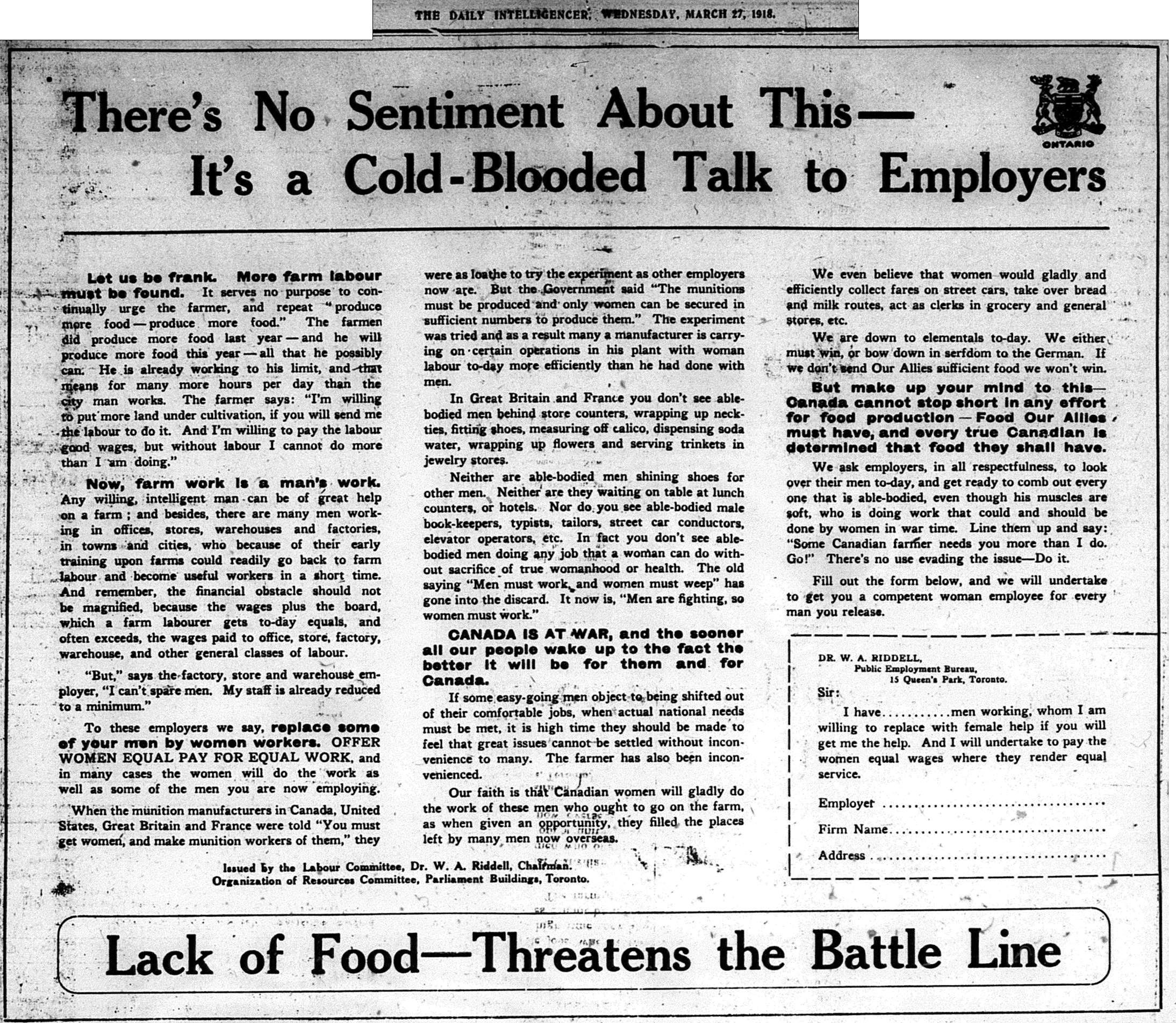
“There’s No Sentiment About This—It’s a Cold-Blooded Talk to Employers. Let us be frank. More farm labour must be found.

Now, farm work is a man’s work. Any willing, intelligent man can be of great help on a farm; and besides, there ware many men working in offices, stores, warehouses and factories, in towns and cities, who because of their early training upon farms could readily go back to farm labour and become useful workers in a short time.

‘But,’ says the factory, store and warehouse employer, ‘I can’t spare men. My staff is already reduced to a minimum.’ To these employers we say, replace some of your men by women workers. OFFER WOMEN EQUAL PAY FOR EQUAL WORK.

Our faith is that Canadian women will gladly do the work of these men who ought to go on the farm, as when given an opportunity, they filled the places left by many men now overseas.

Fill out the form below, and we will undertake to get you a competent woman employee for every man you release.”

100 Years Ago: Volunteers Needed for Food Production, George Tilley Wounded, Returned Soldier Saves Five from Flood, 18,000 Ontario Boys Respond for Farm Work, Poster for Food Production

The Intelligencer March 26, 1918 (page 4)

“Are You a Slacker? The only thing that balks German ambition is the Battle Line in France, and—the British Navy. The only thing that sustains our men on land and sea is FOOD.

The call has been sounded for volunteers to man the second main line of defence—the food line. The heroes who are facing the human torrent in France and standing between us and economic and industrial slavery must be fed, and also the brave warriors on watch day and night in fair and stormy weather on the seas.

On another page of this issue will be found a stirring appeal from the Organization of Resources Committee of Ontario stating the situation in plain words which can not be misunderstood.

Are you ready to do your whole duty in this national emergency, or will you be a SLACKER, a selfish burden to the nation in its hour of need?

Choose this day whom ye will serve—SELF, THE KAISER, or the CAUSE OF HUMANITY, LIBERTY AND RIGHTEOUSNESS.”

The Intelligencer March 26, 1918 (page 5)

“Arrived Home. Private George Tilley, who went overseas with the 155th Battalion from Belleville arrived home yesterday. He was quite seriously wounded in a battle at Vimy Ridge, but is recovering.”

The Intelligencer March 26, 1918 (page 5)

“A Brave Soldier. Pte. H. Alexander, 59006, of the 21st Battalion, a returned soldier has proved that he is a hero in more ways than one. When the flood was at its height he succeeded in carrying through the surging waters to a place of safety five persons who might otherwise have been drowned. His brave act was witnessed by a number of spectators and was favorably commented upon.”

The Intelligencer March 26, 1918 (page 7)

“Ontario Boys Respond to Call. Toronto. The drive for boy recruits for work upon the farms this spring and summer has already been carried beyond the objective set, though complete returns for the past week’s campaign have not been received. From reports available thus far the provincial organization is able to announce the enlistment of between 18,000 and 19,000 boys who are ready to do patriotic service in helping production. Ontario’s objective was 15,000. …

During the week’s campaign organizers visited every collegiate and High school in the Province, with result that 70 per cent of all the boys in attendance enrolled. An encouraging feature of the drive was that of the boys between 15 and 19 whose help was especially sought 96 per cent were enlisted. …

In addition to the boys already enrolled it is expected that there will be a considerable increase from young fellows now employed, who will leave their present posts for more essential work.

The campaign in Ontario was under the direction of W. R. Cook of the National Council of the Y. M. C. A., who had the assistance of the Y. M. C. A. organization in making the drive a success.”

The Intelligencer March 26, 1918 (page 9)

“Lack of Food—Threatens the Battle Line. The Heart of This Problem is Labour. Without More Farm Labour More Food Cannot be Produced. If you really want to serve your Country in a big practical way, register now for farm labour, or urge or assist your male employees to do so.”

100 Years Ago: Intelligencer War News, Poster for Food Production

The Intelligencer March 25, 1918 (page 4)

“Intelligencer War News.The great battle raging on the Western front has excited the keenest interest everywhere and again riveted close personal attention upon the seriousness of the German menace. Belleville, in common with all other Canadian communities, has felt the shock of conflict and the war news is eagerly read day by day and discussed on the streets and in the homes with intense interest.

The war news furnished daily by The Intelligencer to a host of readers is being very favorably commented upon for presenting in concise form the history-making events taking place on the Western front. The Intelligencer is exclusively served by The Canadian Press, Limited, with cable news from correspondents right in the war zone and chronicles daily every important happening up to the hour of going to press at four o’clock in the afternoon.

The bulletin service of The Intelligencer is also greatly appreciated and yesterday the office was besieged all day by crowds of anxious citizens eager to ascertain how the great battle was going. A special telegraph bulletin service was maintained all day to the great satisfaction of the citizens. In addition to this many telephone calls were answered and the progress of the battle announced over the wire to those at a distance. …

The Intelligencer will bend every effort to give the public the best war news service obtainable, and that this spirit is appreciated is evidenced by the fact that it seems impossible to print enough papers each day to supply the steadily increasing demand.”

The Intelligencer March 25, 1918 (page 6)

“A Week of Dedication and Preparation for the Solemn Duty Of Greater Food Production Commencing March 24th.

So imminent is disaster to the cause of the Allies through starvation—that the special Proclamation His Honor the Lieutenant-Governor, as reproduced here, has been made to —All County Councils to convene an extraordinary meeting on March 23rd to discuss ways to increase Food Production.—All clergymen to proclaim from their pulpits on March 24th the terrible truths of the 1918 food situation.—All citizens to co-operate loyally in the sacred cause of producing more Food this year.

The Crisis is with us—the time of Sowing is at Hand—the responsibility upon Ontario is great.”

100 Years Ago: County Council Discusses Food Production and Grant to Y.M.C.A., Income War Tax, Canada to Aid Vimy, Cultivation of Vacant Lots and Home Gardens, Corporal Clarke to Return, Flood in West Belleville, Medal Awarded to Hero William Frederick Bedell Given to Mother, Poster for Soldiers of the Soil

The Intelligencer March 23, 1918 (page 1)

“A special meeting of Hastings County Council was convened in this city yesterday, presided over by Thos. Montgomery, Reeve of Rawdon township. The meeting was called in pursuance of a proclamation of the Lieut.-Governor of Ontario, calling County Councils together for the purpose of discussing the all important matter of greater food production.

At the opening session Mr. J. H. Yeomans, representing the Organization of Resources Committee of the Province of Ontario, addressed the Council on the aims and methods for increased production. One of the principal crops required this year is wheat, and every farmer is asked to sow at least five acres of wheat above that sown in previous years. …

In regard to seed wheat the department has purchased 50,000 bushels of Marquis spring wheat, the most desirable kind for Ontario, to supplement the supply of seed already in the province. The seed will be distributed to various centres throughout the province in car-load lots, and from these centres will be shipped in smaller quantities to individual farmers. …

Mr. D. V. Sinclair asked for a grant of $10,000 from Hastings County Council for Y.M.C.A. war work at the front. The speaker stated that that amount had been apportioned to this county. Mr. Sinclair gave a detailed account of the use the money would be put to. …

Warden Montgomery stated that the Council should take some action in regard to the appeal made for a grant of $10,000 to the Y.M.C.A. for comforts for the boys overseas. Personally, he would favor the grant, which would only mean a slight increase in the taxation. …  Mr. Sills said he could not support a grant of $10,000, but he would support a substantial grant. If the County of Hastings gave a grant of $5,000 it would be equal to a grant of $15,000 or $20,000 given by other counties. …  The resolution of Mr. Sills re a grant of $5,000 to the Y.M.C.A. was adopted.”

The Intelligencer March 23, 1918 (page 2)

“Equal Privileges Equal Sacrifices. Canada’s war government could hardly have stopped at selective conscription of man power. Selective conscription of wealth, on the basis of ability to pay, was a corollary that sooner or later had to be adopted as an integral part of our war machine. And so the income war tax came into being.

Like the law conscripting the manpower of the nation, the income war tax is based on the axiom that equal privileges of citizenship demand equal sacrifices. And like the law conscripting the man-power of the nation, the income war tax is designed to bear least heavily on those least able to conform to its provisions and most heavily on those best able to bear the burden of its demands. Its fairness is at once its justification and its charter of success. …

Penalties have been provided for non-fulfilment of the provisions of the act. But the Canadian people are a unit in their determination to carry the war to a successful conclusion and it is not anticipated that these will have to be invoked in the application of this most necessary measure.”

The Intelligencer March 23, 1918 (page 2)

“Canada To Comfort Devastated Vimy. There is pride and pleasure in Canada’s active participation in the rebuilding of stricken France, but the imagination is particularly touched because the town we selected through the Secours National has been granted to us and that town is one where Canada won her greatest laurels in April, 1917. …  In the hands of the Secours National that has done so much work for the French Red Cross, we can be assured that no effort will be spared to plan the new town most carefully and to raise a fitting memorial, providing funds are forthcoming.

Contributions so far have been generous, because the object appeals so strongly to those who have had relatives or friends fallen in the fight, but it must be remembered that only by the united effort of the whole people can the scheme be made completely successful.”

The Intelligencer March 23, 1918 (page 6)

“Vacant Lots and Back Yard Gardens. By Frederick Abraham, Chairman, Vacant Lot and Back Yard Garden Section, Canada Food Board. The production of food was never of more vital importance than in the year 1918. The food situation of the world is not only grave today but it will be increasingly so during the progress of the war and for a considerable time thereafter. …

The workers should be grouped on land as near their homes as possible. In this connection it will be found that, except in rare cases, the average individual, otherwise employed, has only sufficient time and strength to cultivate a lot 50 x 100 feet. It is desirable that the growth of standard vegetables only should be encouraged such as potatoes, beets, carrots, peas, beans, lettuce, onions, parsnips, etc. These are high in food value and are easily grown by those who will volunteer for this work, many of whom will be amateurs. …

It is the intention of the Board to again prohibit the eating of canned vegetables, in Eastern Canada to October 15th, in Western Canada to November 1st, 1918. This will further emphasize the necessity of garden production on the widest possible scale.

In many places very effective work was done by the firemen and the police. Their gardens were often models in this connection and an incentive to other groups.”

The Intelligencer March 23, 1918 (page 7)
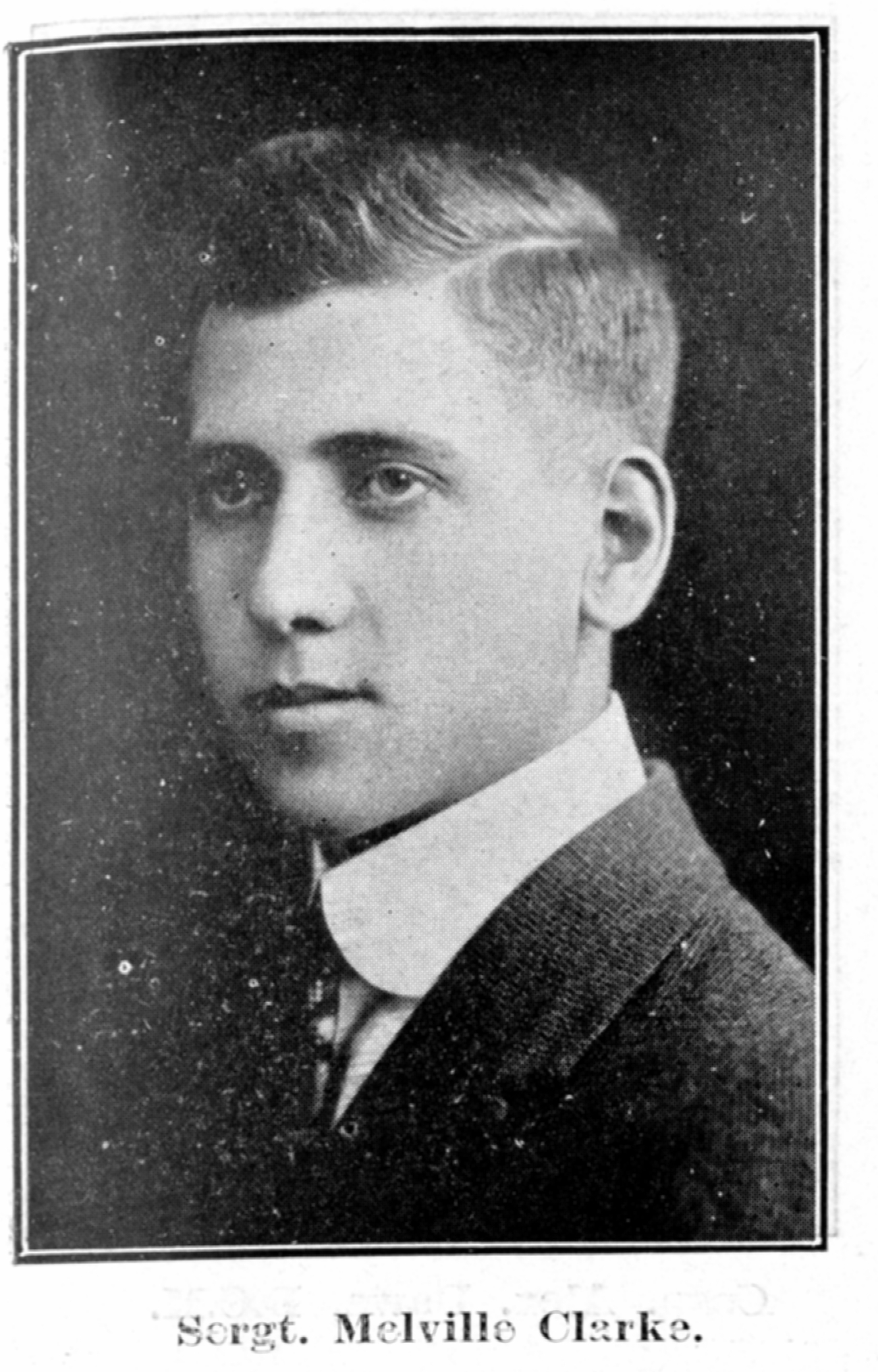
“Corp. Clarke Returning. Mr. and Mrs. W. P. Clarke, 93 Front Street, received a telegram last evening from their son, Corp. E. Melville Clarke, stating that he had arrived at Halifax, and would be home in a few days. Corp. Clarke is one of the ‘Firsts’ having left Belleville in August, 1914, under the command of Lt.-Col. O’Flynn and Major Ponton with whom he served in the ‘Fighting Second,’ and afterwards under the late Cap’t. ‘Billy’ Hudson.

He took part in all the engagements of this battalion for over two years, when he was forced to leave the line owing to a breakdown in his health and has since been attached to the staff of Bear Wood Convalescent Hospital, Wokingham, England.”

The Intelligencer March 23, 1918 (page 7)

“Inconvenience to Residents. Residents in the western portion of the city were last night inconvenienced to a considerable extent owing to the flooded conditions of the streets. The warm weather yesterday caused a heavy flow of water from off Coleman flats, and this flowed over Boswell Street and Moira Street to a depth of a foot, making it impossible for pedestrians to navigate Coleman Street.

Henry and Catherine Streets were also flooded to such an extent that residents in order to reach their homes had to be conveyed in vehicles which were kept in operation until the close of the entertainment in the Opera House. The situation today was much improved.”

The Intelligencer March 23, 1918 (page 7)

“Young Hero Honored At Stirling. An important ceremony took place at Stirling last evening in the presentation to Mrs. Ida Bedell of the Military Medal won by her soldier son, Pte. W. F. Bedell, who gave his life for his King and country at the battle of Passchendaele, after winning distinction for outstanding bravery on the field of action which was rewarded with royal recognition. Mrs. Bedell, the mother of the young hero, resides at Harold, but the patriotic citizens of Stirling arranged a public ceremony.

The Stirling Town Hall was filled to the doors, and the ceremony was solemn and impressive. Brigadier General T. D. R. Hemming of Kingston, made the presentation, and spoke with deep feeling and eloquence of the heroic deeds of the young soldier, who gave his life so gallantly in the great cause of world freedom.

Lt. Col. E. D. O’Flynn, of Belleville, made a stirring patriotic speech with eloquent reference to the heroism of the young soldier. Dr. Bissonette of Stirling, also spoke feelingly and the chair was ably filled by Thos. Montgomery, Reeve of Rawdon Township, and Warden of Hastings County. A musical program was also given.”

[Note: Lance Corporal William Frederick Bedell died on November 24, 1917. He is commemorated on Page 199 of the First World War Book of Remembrance.]

The Intelligencer March 23, 1918 (page 9)

“Heed The Call BOYS! This is your opportunity to serve your King and Country—Enlist right now in the S. O. S. Soldiers of the Soil.

You couldn’t look the boys who are going straight in the eye if you proved a slacker in this emergency. 25,000 boys are wanted in Canada—15,000 from Ontario—from 15 to 19 years of age.

Thousands of Ontario boys made good on the farms last year and earned from $12.00 to $30.00 a month and board. You can, too. A Bronze Badge of Honour will be awarded for three months’ service—Show your mettle by earning the right to wear this war decoration.

Canada Food Board, Ottawa. Shun!—Eyes Right. Hands Right. Hearts Right—Boys of the Farm Brigade!”
 

100 Years Ago: Poster for Soldiers of the Soil, Jack Wallbridge Returns

The Intelligencer March 22, 1918 (page 5)

“200,000 Soldiers Can Be Fed By 25,000 Boys. A boy, working on a farm, can produce, every day, food sufficient to feed eight soldiers—estimating that a boy does half the work of a man.

The 25,000 boys wanted for the S.O.S. Soldiers of the Soil could feed 200,000 Canadian soldiers every day. That would, indeed, be work well done—for there is desperate need of food overseas.

Farm work is not an easy job to tackle. It will test your mettle. But no real Canadian boy, who has any brothers, relatives or friends overseas, will hesitate about going on the farm and ‘doing his bit’ in this grave emergency.

Canada Food Board, Ottawa. Pack the Farm Battalions—From the Front Rank to the Rear.”

The Intelligencer March 22, 1918 (page 7)

“Youthful Warrior Returns. Private Jack Wallbridge, youngest son of Mrs. John Wallbridge, Massassaga, is home from the front. He enlisted in the 254th Quinties Own Battalion, Belleville, December, 1916. Transferred as a volunteer to the 243rd Highland Battalion, Kingston. Left for overseas April, 1917. He was drafted from the 5th Canadian Reserve Battalion into France in August, served three months in the front line as a bomber, also as stretcher bearer, during the Passchendaele battle.

Private Wallbridge was recalled by his family, owing to his extreme youth being only sixteen years of age. He is now awaiting his discharge, and will continue to serve his country in the greater food production at his home on the farm.”


100 Years Ago: Sons of Soil in Khaki Uniform, Poster for Soldiers of the Soil, First Contingent Soldiers Return, More “First Men” Arrive

The Intelligencer March 21, 1918 (page 1)

“ ‘Sons of Soil’ in Khaki Uniform. Ottawa. The Canada Food Board has approved of a standard uniform for the older boy soldiers of the soil, who are being enlisted this week in most of the Provinces for service on the farms. The uniform is smart and at the same time well suited to farm work. It consists of the shirt and pants of militia khaki with brass S.O.S. buttons. They will be sold to the boys, by retailers, at $3.50 per suit, or separately at $1.70 for the shirt and $1.80 for the pants. In addition to the suit the uniform will also consist of a harvester straw hat, pinned up at one side with a one-inch red, white and blue band.

The appearance of the entire uniform is neat and attractive, despite the fact that little regard has been had for its ability. The Board has also approved of the bronze badge of honor which will be awarded to every soldier of the soil who completes three months of satisfactory service on a farm this year. The badges will be presented during the summer at public gatherings. All boys between the ages of thirteen and nineteen are eligible for the badges.”

The Intelligencer March 21, 1918 (page 6)

“When Mother Says: ‘Do you want to go, Son?’ Think of the other Canadian boys, just a few years older, who are holding the fighting line in France, exposed to shot and shell, rain and cold, mud and dust. You wouldn’t feel worthy to shake hands with them when they come back unless you, too, did something big—self-sacrificing—and difficult—to help win the war.

The call to fill the ranks of the Soldiers of the Soil is your big war opportunity. The crucial need of the Allies today is food—more food—and yet more food—so to mother

Speak right up and say: ‘I’m proud to join the S.O.S. Soldiers of the Soil.

Canada Food Board, Ottawa.

The Intelligencer March 21, 1918 (page 7)

“Home on Furlough. In addition to the names published in The Intelligencer yesterday of returned heroes others arriving here were gunners Geo. Hope and Harry Dillnut, Ptes. Geo. Lancaster and Jas. Gordon, all of whom were members of the 1st Canadian contingent. The two former left Belleville with the 34th Battery and both saw considerable fighting. Pte. Leslie Gordon, of this city, who went overseas with the 59th Battalion also arrived home.”

The Intelligencer March 21, 1918 (page 7)

“ ‘First Men’ Arrive. Mayor Platt, Col. Ponton, and Richard Arnott, constituted a civic reception committee which welcomed returned soldiers arriving in Belleville yesterday on the G. T. R. flyer. Among a number who left the train here was George Lancaster, one of the original ‘First’ who left here when the war began. He gained fame and honor as the Bomber of the 2nd Battalion in which capacity he gave Fritz many an uneasy moment, and was the father of many military funerals behind the Hun lines. Bomber Lancaster crossed the sea with Major Dick Ponton and Major Ed. O’Flynn. He has two brothers in France, one of whom is now in hospital with fifteen wounds.

Other returned men greeted by the representatives of the citizens were Pte. Oulson, of Allisonville, a member of the 2nd Battalion and a ‘First’; Corp. Hill, of Madoc, with the 21st Batt., Pte. Anson, of the 59th Batt., and several of the 155th boys going to Campbellford.”

100 Years Ago: Few First Contingent Soldiers Return to Belleville Area, Colors of 80th Battalion to Be Placed in St. Thomas’ Church, Flood in Belleville, Poster for Soldiers of the Soil, Forestry Service Overseas, Poster for Royal Flying Corps

The Intelligencer March 20, 1918 (page 1)

“Soldiers Returned. Mayor Platt and others of this city yesterday made every effort to ascertain if there were any Bellevillians of the first contingent, who were returning home, but their efforts proved fruitless. A few of our boys did however arrive here at an early hour this morning, but the time of their arrival was not announced and a reception could not be accorded them.

They were, however, not members of the first contingent, in fact some had only been overseas but a short time. Those from the city and vicinity who arrived were Sergt. MacDonald, Privates G. Ward, S. Ray, G. Gorman, Gunners Hopkins, McBride and Privates Coughlin, A. Chapman, Pte. Kiser, O’Brien and Sanders.”

The Intelligencer March 20, 1918 (page 1)

“Depositing of Colors. At the morning service at St. Thomas’ Church on Sunday April 28th the colors of the 80th Battalion will be deposited in the church for safe-keeping. His Lordship Bishop Bidwell of Kingston will be present and conduct the service, which will be of an impressive nature. The colors, it will be remembered, were the gift of the Ketcheson families in this district to the battalion previous to going overseas.”

The Intelligencer March 20, 1918 (page 1)

“Flood Conditions. At the hour of 2  o’clock this afternoon there was scarcely any change to note in the situation of that portion of the west side of Front Street flooded yesterday owing to the water in the Moira River overflowing its banks on account of the ice jam. The ice was still held intact at the footbridge but it was apparent that a break was liable to occur at any time. This field of ice extends from the foot bridge to some distance beyond the upper bridge.

From Lazier’s mill on the Canifton Road to Corbyville there is a considerable field of ice and this is liable to come down at any time. Should it arrive before the present jam has been carried down to the mouth of the river more trouble and inconvenience will certainly ensue.

Pedestrians on the west side of the river to-day were compelled to reach Front Street either by way of the upper or lower bridge as water to a depth of two or three feet is in the gangway leading to the foot bridge from Front Street. During last night the jam of ice moved slightly, but was held owing to the firm condition of the ice just below the lower bridge. Back yards from the foot bridge to the upper bridge are still covered with water as are many of the basements of stores in that section. Some of the merchants were compelled to have stoves placed in their stores as furnaces were extinguished by high water.”

The Intelligencer March 20, 1918 (page 5)

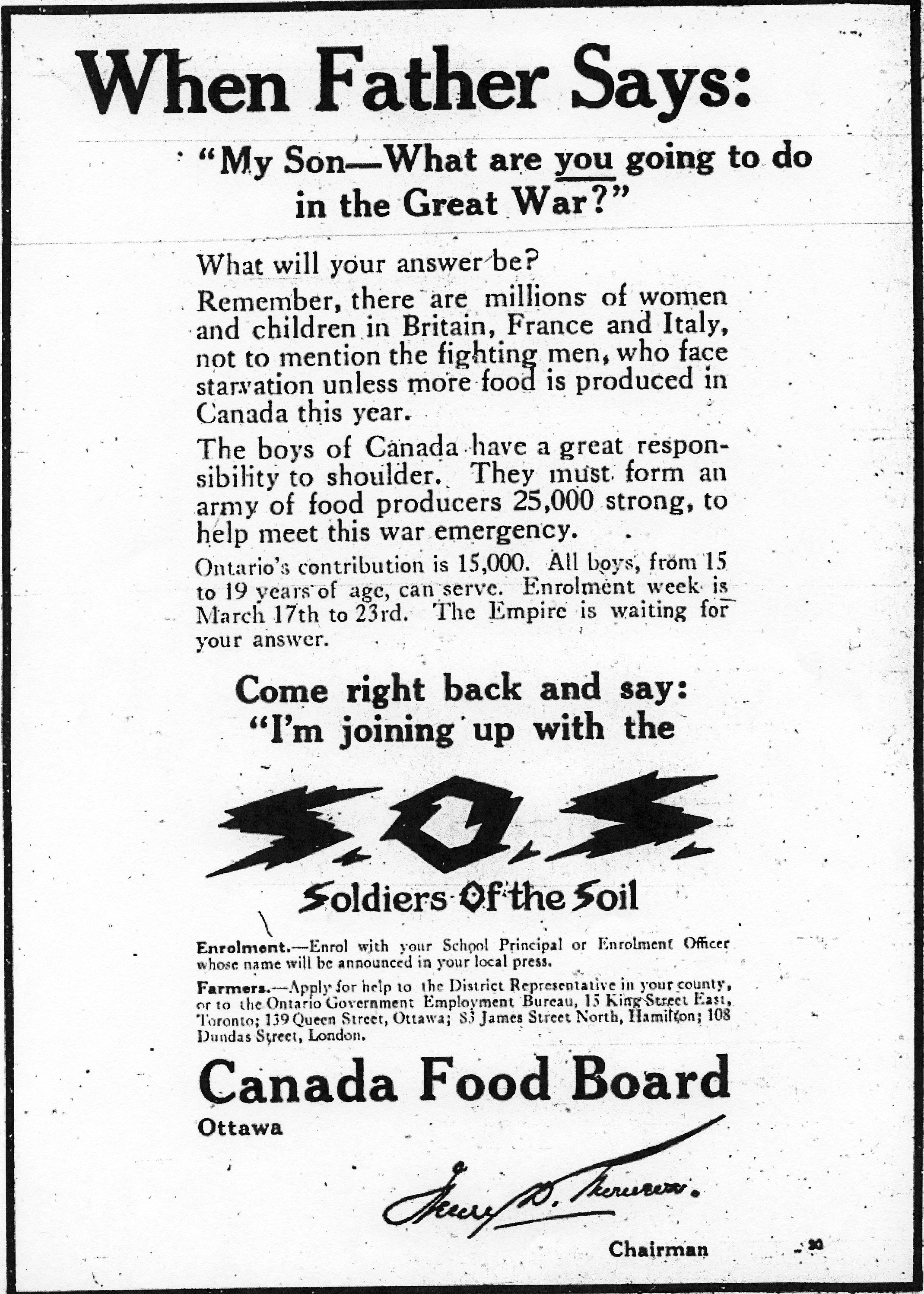
“When Father Says: ‘My Son—What are you going to do in the Great War? What will your answer be? Remember, there are millions of women and children in Britain, France and Italy, not to mention the fighting men, who face starvation unless more food is produced in Canada this year.

The boys of Canada have a great responsibility to shoulder. They must form an army of food producers 25,000 strong, to help meet this war emergency.

Come right back and say: ‘I’m joining up with the S. O. S. Soldiers of the Soil.’ Canada Food Board, Ottawa.”

The Intelligencer March 20, 1918 (page 7)

“With the Foresters. Capt. Fleming has received an interesting letter from his son, Lieut. Alan S. Fleming on active service duty in the Forestry service overseas. Lieut. Fleming went overseas in April 1916 with 1,600 men and the force has been increased to 1,800 and is rendering valuable service to the cause of the Allies. He received his commission overseas being promoted for merit and is now on the personal staff of Gen. MacDougall, Officer Commanding.

Lt. Fleming speaks very highly in his letter of the military record and the personal popularity of Capt. ‘Bill’ Schuster who has been in charge of the traffic department of the Forestry Unit since it arrived in the Old Country and was so successful in that capacity that he was promoted from Lieutenant to Captain with good prospects of a Majority.

Capt. Schuster is at present home on furlough and expects to return to active duty in the near future. Capt. Schuster is highly esteemed by the military authorities overseas as a capable officer and his unfailing good nature and cheery optimism has won him great popularity with the men of the Forestry Unit rank and file. Lieut. Fleming speaks very highly of Capt. Schuster’s kindness to him.”

The Intelligencer March 20, 1918 (page 7)

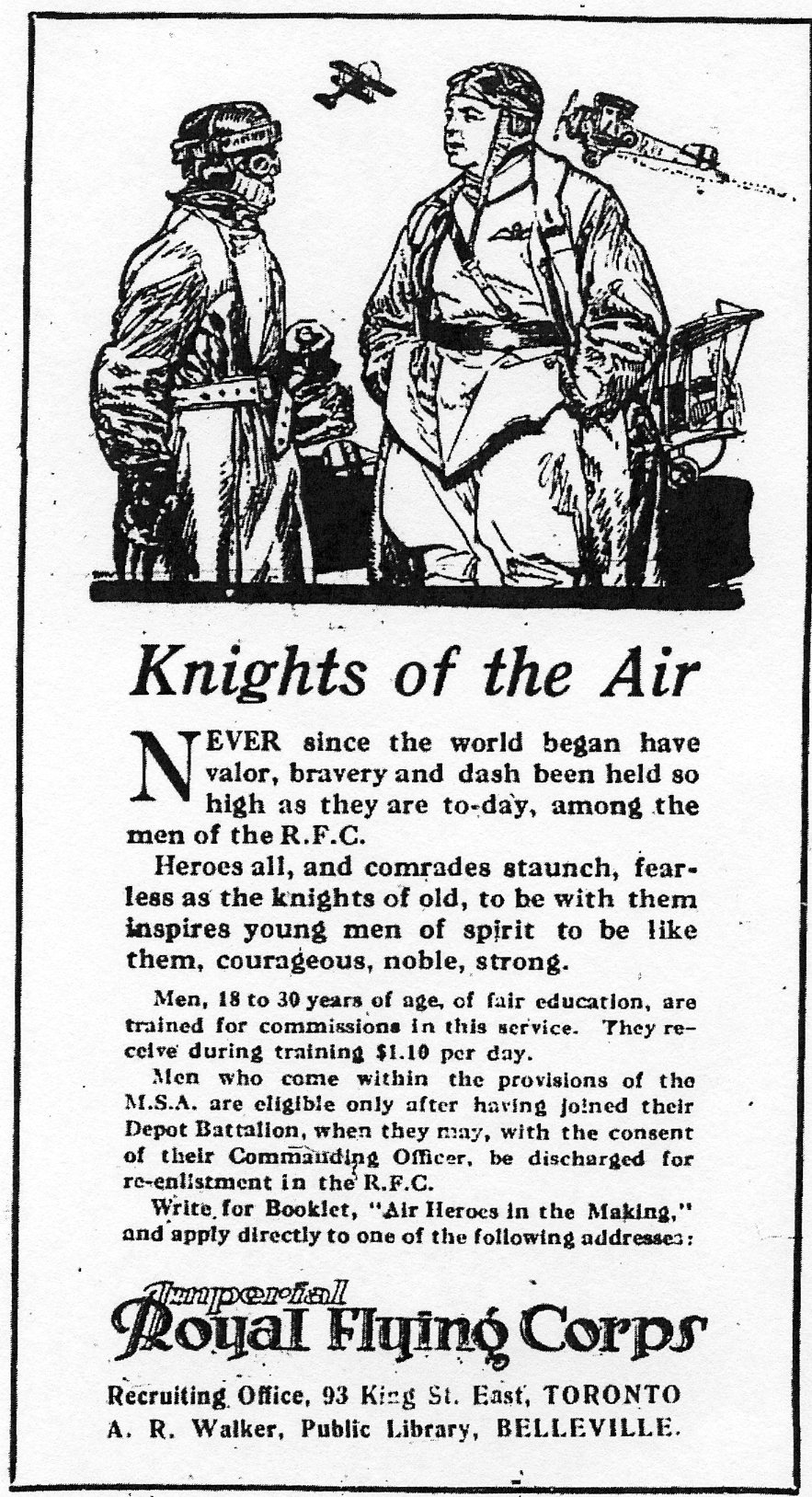
“Knights of the Air. Never since the world began have valor, bravery and dash been held so high as they are to-day, among the men of the R.F.C. Heroes all, and comrades staunch, fearless as the knights of old, to be with them inspires young men of spirit to be like them, courageous, noble, strong.

Imperial Royal Flying Corps. Recruiting Office, A. R. Walker, Public Library, Belleville.”